What anatomical feature supports the wood bison's sweeping motion to uncover buried forage in winter?
Answer
A complex of ligaments and muscles supporting the forward-reaching hump structure.
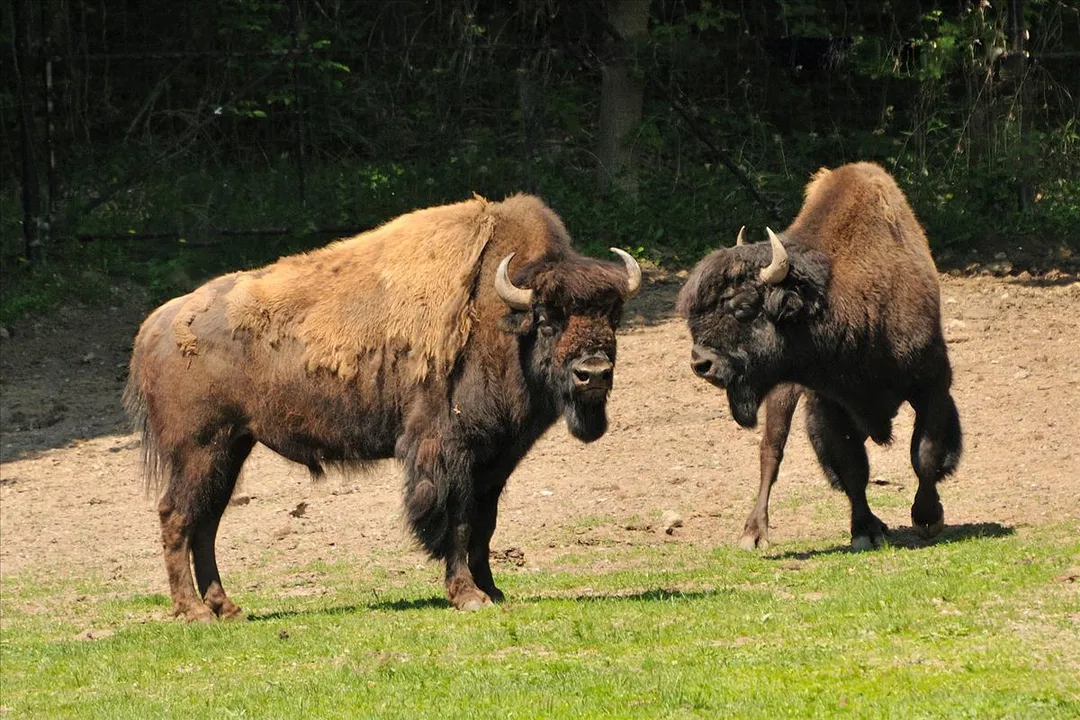
The ability to access forage under deep snow is facilitated by a highly specialized musculoskeletal system concentrated in the neck and shoulder region. The characteristic, distinct hump visible on the wood bison's back is not merely an accumulation of fat; rather, it is supported by a robust collection of ligaments and muscles. This complex structure is specifically evolved to power the forceful, forward-reaching, and sweeping motions required to effectively displace deep snowdrifts. This mechanism ensures the bison can reach the buried graminoids, although this demanding physical exertion results in a massive expenditure of limited winter energy reserves.
Related Questions
What percentage of the Toronto Zoo wood bison diet constitutes sedges and grasses?What specific body part does the wood bison employ to clear deep snowdrifts for forage access in winter?Which two specific woody plant leaves are incorporated into the wood bison's summer diet when available?What does the classification 'obligate grazer' signify regarding the wood bison's primary food source?During the brief autumn period, what important dietary component might wood bison consume in open canopy forests?How do wood bison grazing habits contribute to plant diversity and soil nutrient cycling in their habitat?What plant is consumed as a specific winter alternative when preferred grasses are inaccessible due to snow?What anatomical feature supports the wood bison's sweeping motion to uncover buried forage in winter?What historical practice, alongside altered flood patterns, contributed to the encroachment of woody species like willow?How does the wood bison's diet affect direct food competition with species preferring browse in northern ecosystems?