Regarding sexual dimorphism in *Kobus ellipsiprymnus*, which sex possesses horns?
Answer
Only the males
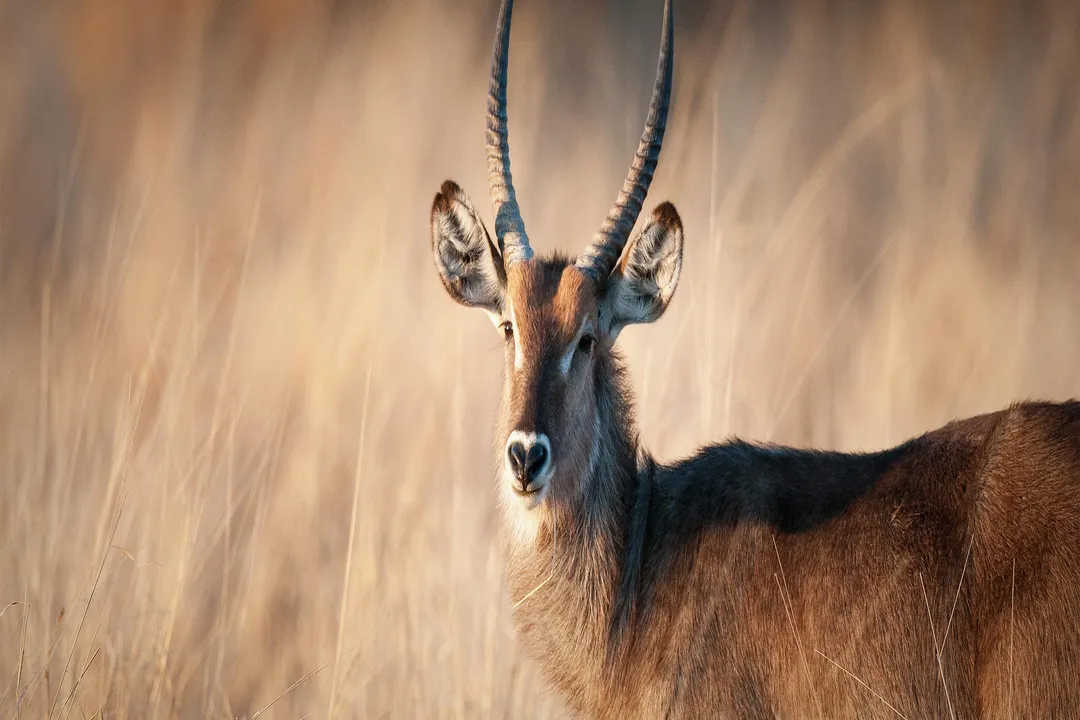
A significant biological feature tied to the Waterbuck's role within its genus is its sexual dimorphism regarding horns. Only the adult males are equipped with these structures. These magnificent horns are long, heavily ringed, and curve backward before sweeping upward in a distinctive lyre shape. They serve crucial functional roles, acting as vital tools for both defense against predators that might target the herd and for establishing dominance among males during competition over territory and mating opportunities.
Related Questions
What primary physical characteristic defines the Order Artiodactyla for the Waterbuck?What physical feature inspired the specific epithet *ellipsiprymnus* for *Kobus ellipsiprymnus*?What defines the horns found on members of the Family Bovidae like the Waterbuck?What key structure signifies the Waterbuck's placement in Phylum Chordata?How does the white rump patch visually distinguish the Defassa Waterbuck from the Common Waterbuck?What ecological niche is strongly suggested by the grouping within the Genus *Kobus*?Which defining characteristic of Class Mammalia is explicitly tied to the Waterbuck's survival in African temperature swings?Regarding sexual dimorphism in *Kobus ellipsiprymnus*, which sex possesses horns?According to global standards, how should the binomial name *Kobus ellipsiprymnus* be written?What ecological function does the Genus *Kobus* classification primarily summarize about the Waterbuck?