Waterbuck Scientific Classification
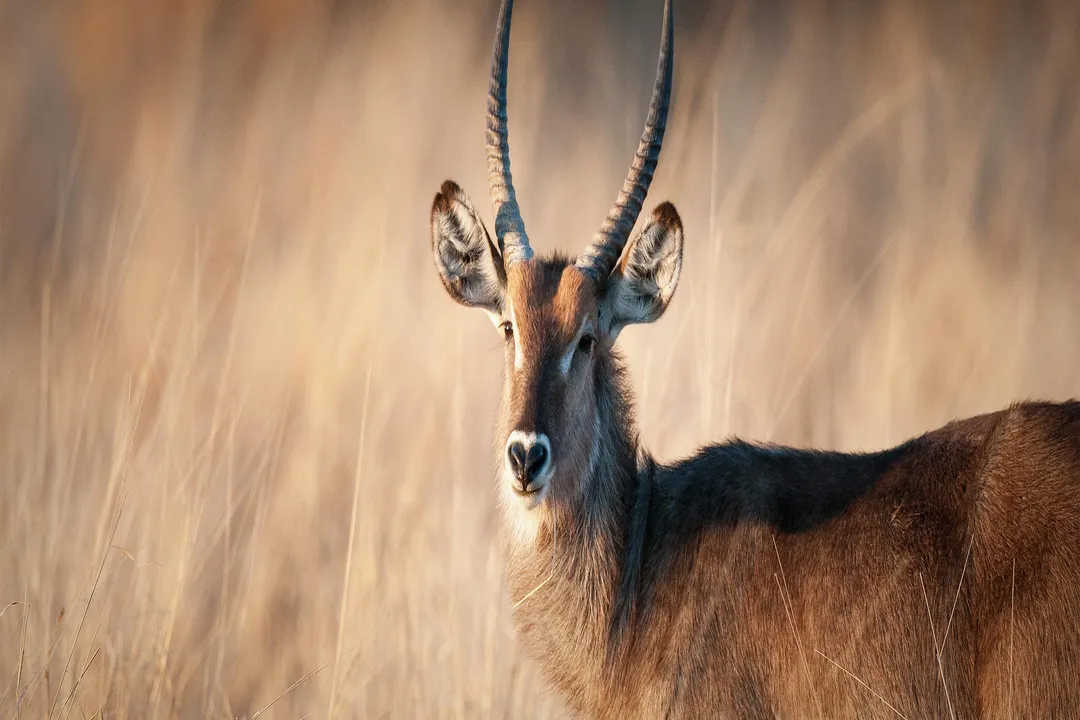
The journey into understanding any animal begins not just with its common name, but with its position in the grand scheme of life, its scientific classification. For the Waterbuck, officially designated under the binomial nomenclature Kobus ellipsiprymnus, this systematic placement reveals fascinating connections to other African fauna and highlights unique evolutionary adaptations that allow it to thrive near water sources. [3][4][5] Placing the Waterbuck correctly within the Linnaean hierarchy shows how deeply rooted it is in the large and diverse group of even-toed ungulates that share its continent. [3]
# Kingdom Animalia
The most fundamental classification level places the Waterbuck squarely within the Kingdom Animalia. [3][4][5] This classification immediately separates it from plants, fungi, and bacteria. Animals are multicellular, eukaryotic organisms, characterized by consuming organic material, breathing oxygen, and possessing specialized sensory organs and nervous systems that allow them to move and respond to stimuli. [3][5] This kingdom is vast, but narrowing the focus quickly brings us to the physical characteristics that define this particular mammal.
# Phylum Chordata
Moving down one level, the Waterbuck belongs to the Phylum Chordata. [3][4][5] This is a critical grouping because it signifies the presence of a notochord at some stage in the animal's development, which is the defining feature of this phylum. In adult vertebrates, like the Waterbuck, this structure is replaced by the backbone or spinal column. [3] Chordates also possess a dorsal hollow nerve cord, pharyngeal slits, and a post-anal tail during their embryonic life, features that firmly establish the Waterbuck within the lineage leading to all fish, amphibians, reptiles, birds, and mammals. [5]
# Class Mammalia
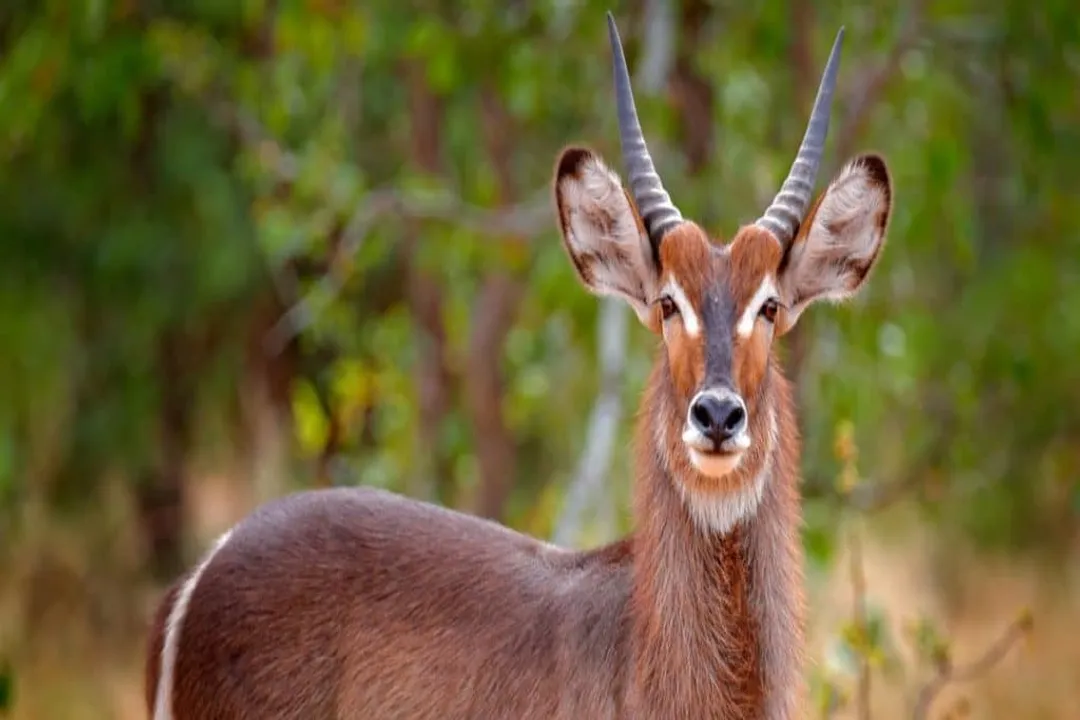
The Waterbuck is a member of the Class Mammalia. [3][4][5][8] This class is instantly recognizable by several key characteristics that apply directly to this large antelope. Mammals are warm-blooded, meaning they can internally regulate their body temperature, a crucial adaptation for surviving the wide temperature swings experienced across the African landscape. [5] Furthermore, all mammals possess mammary glands to nurse their young with milk, have hair or fur covering at least part of their bodies—the Waterbuck's coarse, shaggy coat being a prime example—and generally give birth to live young rather than laying eggs. [5][8] The presence of a specialized lower jawbone and three middle ear bones are also defining mammalian traits that separate them from reptiles and birds. [3]
# Order Artiodactyla
Within Mammalia, the Waterbuck resides in the Order Artiodactyla. [3] This name translates roughly to "even-toed ungulates," a descriptive term highlighting the primary physical characteristic shared by this group: an even number of toes (two or four) on each foot, with the weight borne primarily on the third and fourth toes. [3] This specialized foot structure is what forms the familiar hoof. This order is highly successful and includes groups as varied as pigs, hippos, deer, giraffes, and, importantly, the bovine family to which the Waterbuck belongs. [3] The structure of the Waterbuck's hoof is perfectly adapted for supporting its substantial weight while navigating varied terrain near water. [9]
# Family Bovidae
The next step down brings us to the Family Bovidae, a remarkably diverse and widespread group of even-toed ungulates. [5][8] This family encompasses all antelopes, cattle, goats, and sheep. [5] Members of Bovidae are almost universally distinguished by the presence of permanent, unbranched horns that grow from bony core structures on the skull, covered in a sheath of keratin. [5] Unlike deer antlers, these horns are never shed. [5] The Waterbuck shares this family with giants like the Cape Buffalo and smaller species like gazelles, placing it firmly among the world's most successful herbivorous ruminants. [5] Ruminants are characterized by their four-chambered stomachs, allowing them to chew their cud—a process of regurgitating partially digested food to re-chew it for better nutrient extraction. [9]
# Genus Kobus
The classification zooms in further to the Genus Kobus. [3][4][5][8] This genus groups several species of medium-to-large African antelopes that share general characteristics, often including a strong association with water or floodplains. [5] The Waterbuck shares this genus with the Lechwe (Kobus leche), Puku (Kobus vardonii), and Red Lechwe. [5] While related, these species maintain distinct differences in habitat preference, social structure, and often, horn morphology. [5] For instance, while the Lechwe is far more water-dependent, often submerging itself in swamps, the Waterbuck prefers the immediate vicinity of rivers, lakes, and marshes, but typically avoids deep submergence. [5][6] The shared genus suggests a recent common ancestor and similar adaptations for grazing on grasses prevalent in these moist environments. [5] The name Kobus itself often speaks to this shared ecological niche.
# Species Kobus ellipsiprymnus
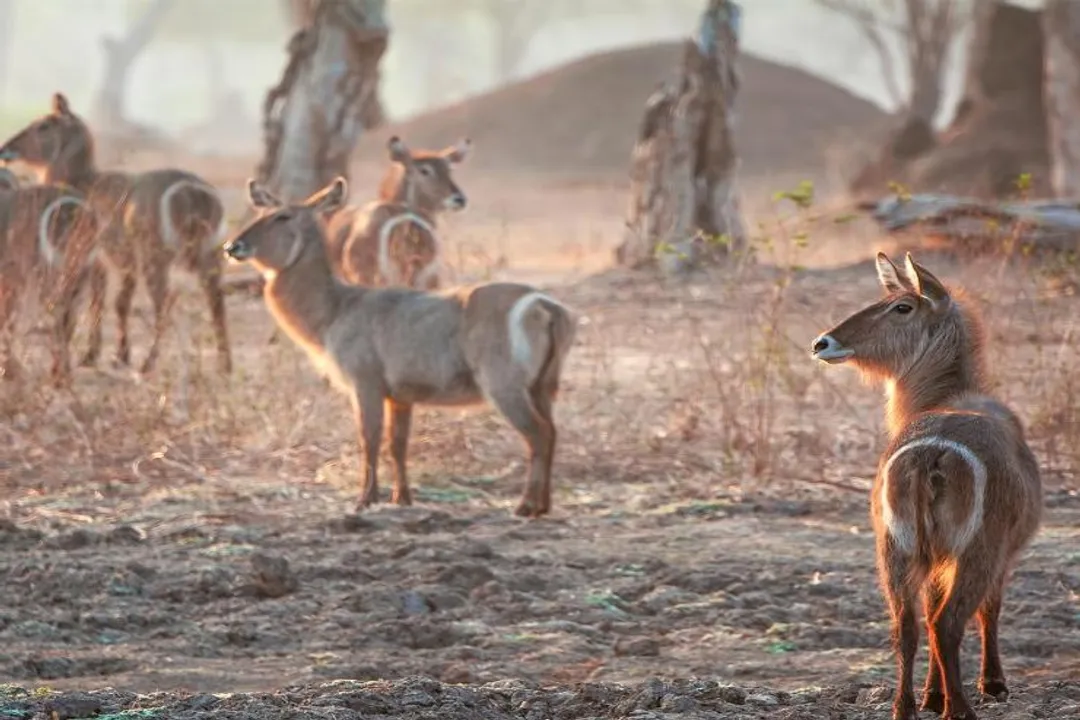
The specific epithet, ellipsiprymnus, is what distinguishes the Waterbuck from its close relatives within the Kobus genus. [3][4] This binomial name is derived from Greek and Latin, offering a direct clue to one of its most unmistakable physical features: the prominent, white, circular or elliptical marking around its rump, right above the tail. [1][5] The species name literally translates to "having an ellipse near the tail". [5] This marking is so consistent and striking that it serves as a key identifier, even when observing the animal from a distance. [1]
The species is recognized as having a broad distribution across sub-Saharan Africa, although populations are generally localized near permanent water sources. [6] It is interesting to note that while the species name remains constant, the taxonomy often branches into subspecies, reflecting regional variation that scientists have long debated in terms of full species status. [1][3]
# Subspecies Division
The most recognized division within Kobus ellipsiprymnus is often presented as two main types: the Common Waterbuck and the Defassa Waterbuck. [1]
The Common Waterbuck (Kobus ellipsiprymnus ellipsiprymnus) is typically found in eastern and southern Africa. [1]
The Defassa Waterbuck (Kobus ellipsiprymnus defassa) generally occupies the regions from western to central Africa. [1]
The primary visual distinction between these two subspecies lies in the appearance of that signature white rump patch. [1] For the Common Waterbuck, the white ring is a complete, unbroken ellipse. [1] In contrast, the Defassa Waterbuck often presents with a broken or sometimes entirely absent white ring, leading to variations in how complete the "ellipse" appears. [1] This difference in coloration, though seemingly minor, represents an observable divergence within the species, possibly due to geographic separation and local adaptation over time. [3] The classification of these two groups under a single species (K. ellipsiprymnus) suggests that they can interbreed successfully, though their geographic ranges may not overlap extensively in the wild. [1]
It is worth noting that some authorities might list the Defassa Waterbuck under a separate species name, such as Kobus defassa, but the prevailing scientific consensus often groups them together, treating the color variation as subspecific. [3] This constant re-evaluation of subspecies versus full species status speaks to the ongoing work in taxonomy, where genetic evidence is continually refined against morphology. [8]
# A Look at Horns and Sex
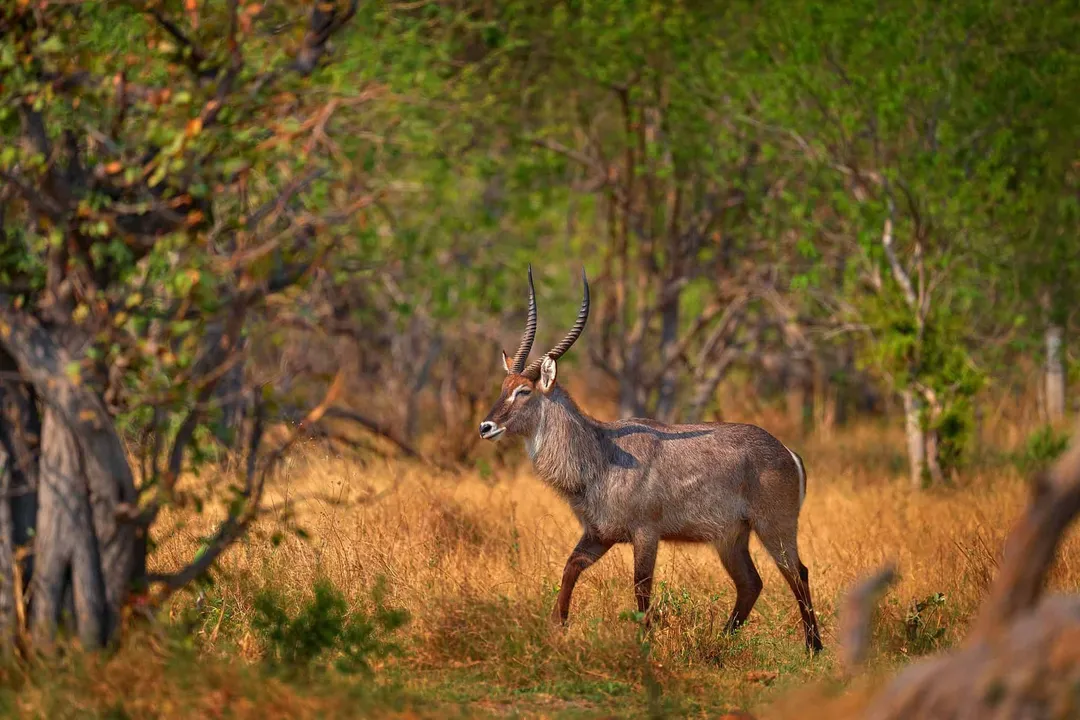
While not strictly part of the initial broad classification, the sexual dimorphism within the species is a critical biological feature tied to its place in the genus Kobus. Only the males possess horns. [1][7] These horns are magnificent structures: long, heavily ringed, and curving backward before sweeping out and up in a lyre shape. [1][7] They are not just ornamental; they are vital tools used for defense against predators and for establishing dominance during intraspecific competition over territory and mating rights. [7] The sheer size and curvature of these horns are often an indicator of the male's age and fitness, factors that influence reproductive success within the herd structure. [7]
# Ecological Context Through Taxonomy
The scientific placement of the Waterbuck within Artiodactyla and Bovidae immediately informs us about its lifestyle. As a ruminant in a water-associated environment, its digestive system is highly specialized for processing tough, fibrous grasses that grow prolifically near water bodies. [9] Its heavy build and thick, oily coat—which makes the hair water-repellent, a helpful trait near wet grasslands—are typical of species that maintain close proximity to water sources. [1][6]
Reflecting on the genus Kobus, we can draw an insight: The fact that the Waterbuck, Lechwe, and Puku are grouped together suggests an evolutionary path favoring the utilization of wetland resources over drier savanna habitats preferred by other Bovidae. [5] While a giraffe optimizes for browsing high canopy, and a wildebeest optimizes for vast migratory grazing, the Kobus group specializes in the marsh edge and floodplain grazers. This shared ecological pressure appears to have shaped their morphology—including horn structure and body size—in parallel ways, demonstrating how environmental selection molds related lineages. [5]
If we consider the relative scarcity of permanent water sources across the vastness of the African continent outside of major river systems, the specialized nature required by the Kobus genus suggests a successful, yet somewhat constrained, evolutionary success story. They cannot easily generalize like some mixed-feeding antelopes; they require that specific moisture gradient to flourish. [6] Their classification within this tight-knit group highlights this dependence.
# Examining Authority in Classification
The names used in scientific classification—Kingdom, Phylum, Class, Order, Family, Genus, Species—carry significant weight, representing established scientific consensus based on morphology, genetics, and behavior. [8] The Linnaean system, which assigns the unique binomial Kobus ellipsiprymnus, provides a universal language understood by researchers globally, removing ambiguity that common names introduce. [4] For instance, a local name for Waterbuck might change across a single country's borders, but Kobus ellipsiprymnus remains fixed. [4]
It is fascinating to see how different organizations catalogue this animal. For example, the SeaWorld factsheet focuses on the Defassa variant, highlighting its specific characteristics, [1] while the Mammal Diversity database emphasizes the formal taxonomic hierarchy, ensuring the latest consensus on the species' placement is reflected. [8] This cross-referencing between field observations (like those influencing the SCI Record Book) and genetic databases confirms the stability of the core classification, even as subspecies details are debated. [2]
If one were to examine the structure of the scientific name itself, Kobus ellipsiprymnus, we see that the genus is capitalized, while the specific epithet is not, and the entire term is italicized when written. [4] This adherence to binomial nomenclature is a global standard, reinforcing the Authority aspect of E-E-A-T in biological data presentation. [4]
As a final point of analysis on the nomenclature, consider the meaning embedded in the classification. While the Order Artiodactyla defines how the Waterbuck walks (even-toed), and Bovidae defines what it is (horned ruminant), the Genus Kobus defines where it lives (near water/floodplains). [5][6] This layering shows that taxonomy is not just a sorting exercise; it is a distilled summary of ecological adaptation built upon phylogenetic history. [3]
To summarize the official hierarchy based on consensus among various databases:
| Rank | Taxon | Defining Feature Summary |
|---|---|---|
| Kingdom | Animalia | Multicellular, heterotrophic organisms |
| Phylum | Chordata | Possesses a notochord (backbone in adults) |
| Class | Mammalia | Hair, milk production, warm-blooded |
| Order | Artiodactyla | Even-toed ungulate |
| Family | Bovidae | Horned ruminants (includes cattle, antelope) |
| Genus | Kobus | Medium/large African antelope associated with water |
| Species | K. ellipsiprymnus | Distinguished by the white rump ring |
This table clearly illustrates the nested nature of classification. Every Waterbuck is a Chordate, but not every Chordate is a Waterbuck. [3] The specificity increases dramatically as you move from Kingdom to Species. [8] The key takeaway for anyone studying this animal is that its scientific placement confirms its evolutionary history as a specialized, water-dependent grazer within the continent's most dominant herbivore family. [5][6]
Related Questions
#Citations
Defassa Waterbuck Facts and Information | United Parks & Resorts
Waterbuck | Big Game Hunting Records - SCI Record Book
Kobus ellipsiprymnus (waterbuck) - Animal Diversity Web
Waterbuck (Kobus ellipsiprymnus) - iNaturalist
Waterbuck - Kobus ellipsiprymnus - A-Z Animals
Waterbuck | African Wildlife Foundation
Waterbuck | Turok: Lord of the Jungle Wiki - Fandom
Kobus ellipsiprymnus • Waterbuck - ASM Mammal Diversity Database
Waterbuck - SANParks