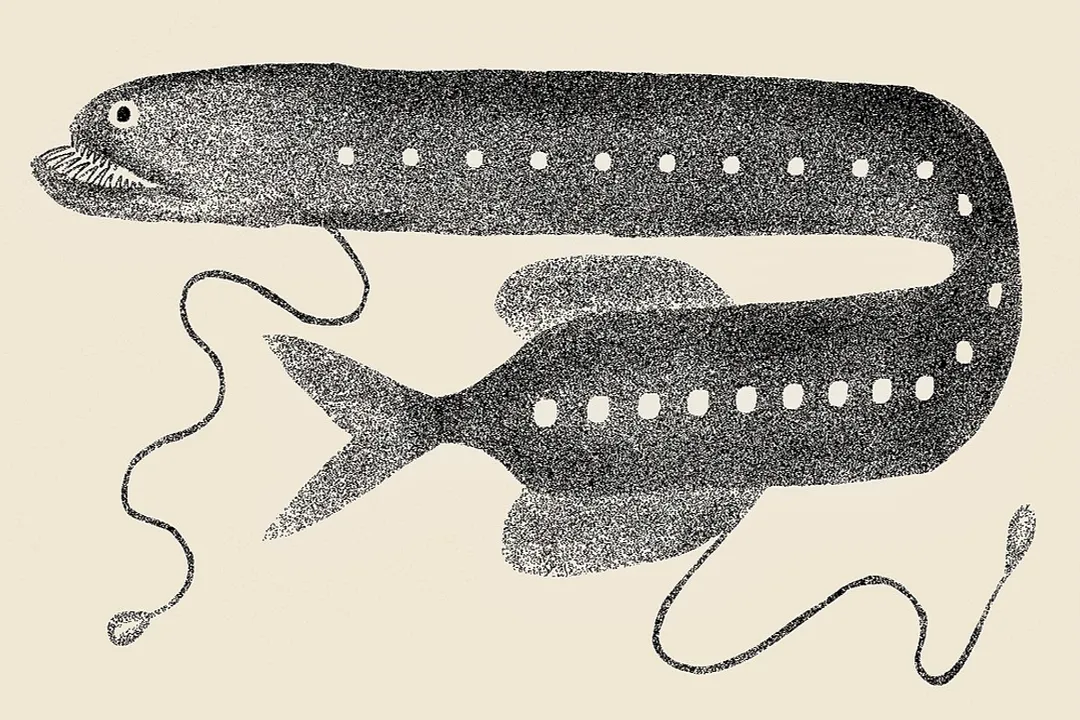
Reaching 75 kilograms in the aphotic zone suggests what ecological strategy for the alleged Giant Dragon Fish?
Access to high caloric intake, possibly from marine snow or larger fauna
A fish achieving a mass of 75 kilograms in the aphotic zone, a region generally characterized by resource scarcity, implies an extraordinary and highly successful ecological adaptation regarding feeding. Such massive biomass demands substantial and consistent caloric intake, which is generally unavailable through standard methods like passive feeding on marine snow alone. Therefore, a predator of this size would logically need to successfully prey upon larger, actively swimming fauna found in the bathypelagic zone, such as small squid or lanternfish, or exploit a highly concentrated, energy-rich localized food web. This scale of growth forces ecological speculation regarding a predator capable of sustaining such an apex role in its specific depth range.