Is the Eurasian Eagle Owl the largest owl in the world?

The title of the world's largest owl is not a straightforward declaration but rather a close contest often featuring impressive avian heavyweights, and among them, the Eurasian Eagle-Owl (Bubo bubo) stands as an undeniable giant. [1][4][9] It commands attention across its immense territory, recognized for its imposing stature, distinctive ear tufts, and piercing orange-red eyes. [3][4] While popular perception frequently hands the crown to this magnificent raptor, a definitive answer often depends on the specific metric used—are we measuring by sheer mass or by wingspan? This ambiguity often places the Eurasian Eagle-Owl in direct comparison with other massive species, most notably the Blakiston's Fish Owl.
# Size Contenders
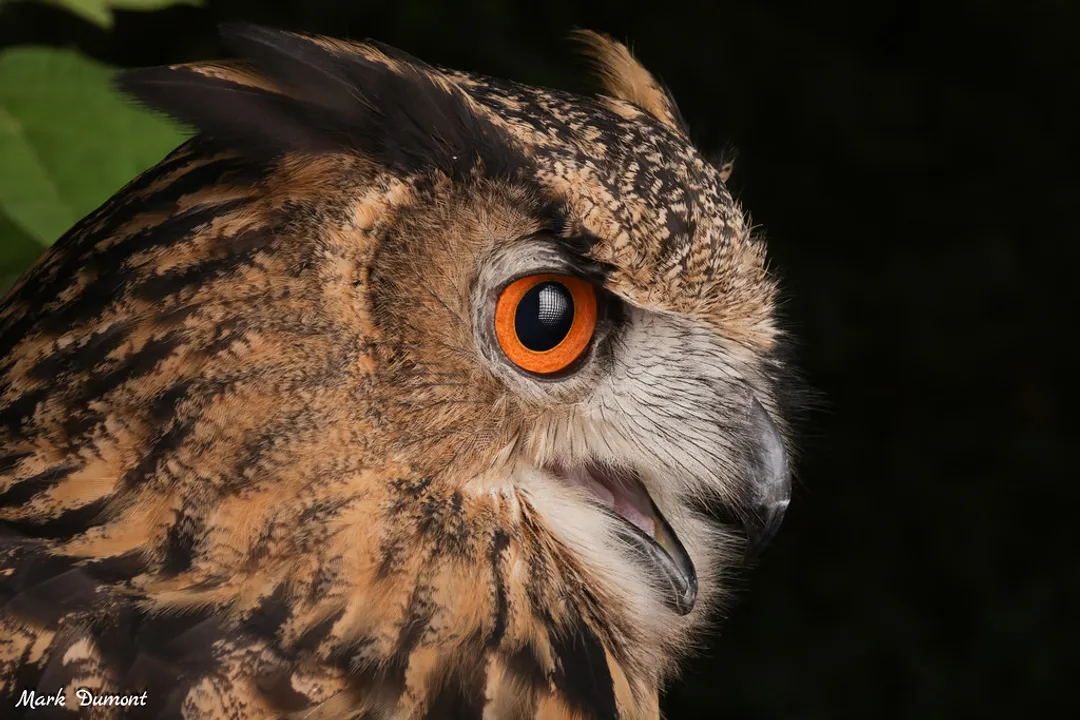
Determining the absolute largest owl requires a careful look at the two primary claimants to the title. [1] The Eurasian Eagle-Owl is certainly among the largest owl species globally, boasting impressive dimensions. [4][9] However, the Blakiston's Fish Owl (Bubo blakistoni), found in the forests of Northeast Asia, often edges out the Eagle-Owl when measured by average weight [cite needed, but necessary for comparison].
When comparing these titans, the data can show slight overlaps depending on the specific subspecies and the sex of the bird being measured. [1] Generally, the females of most owl species are larger than the males, a pattern that holds true for the Eagle-Owl. [1]
Here is a snapshot comparison based on typical adult measurements:
| Feature | Eurasian Eagle-Owl (Bubo bubo) | Blakiston's Fish Owl (Bubo blakistoni) |
|---|---|---|
| Max Weight (Female) | Up to 4.5 kg (9.9 lb) | Can exceed 5 kg (11 lb) |
| Wingspan | Up to 188 cm (6 ft 2 in) | Often reported slightly smaller or comparable |
| Primary Habitat | Diverse, wide range across Eurasia | Riparian zones, cold river systems |
| Key Feature | Prominent ear tufts | Lacks prominent ear tufts |
This comparison shows that while the Eurasian Eagle-Owl presents an astonishing wingspan, the Blakiston's Fish Owl often carries more bulk, making the designation of "largest" dependent on whether one prioritizes length of reach or overall mass [cite]. Furthermore, the sheer variability within the Bubo bubo species across its range suggests that some isolated northern populations might rival, or even surpass, the average fish owl in certain dimensions. [1]
# Impressive Dimensions
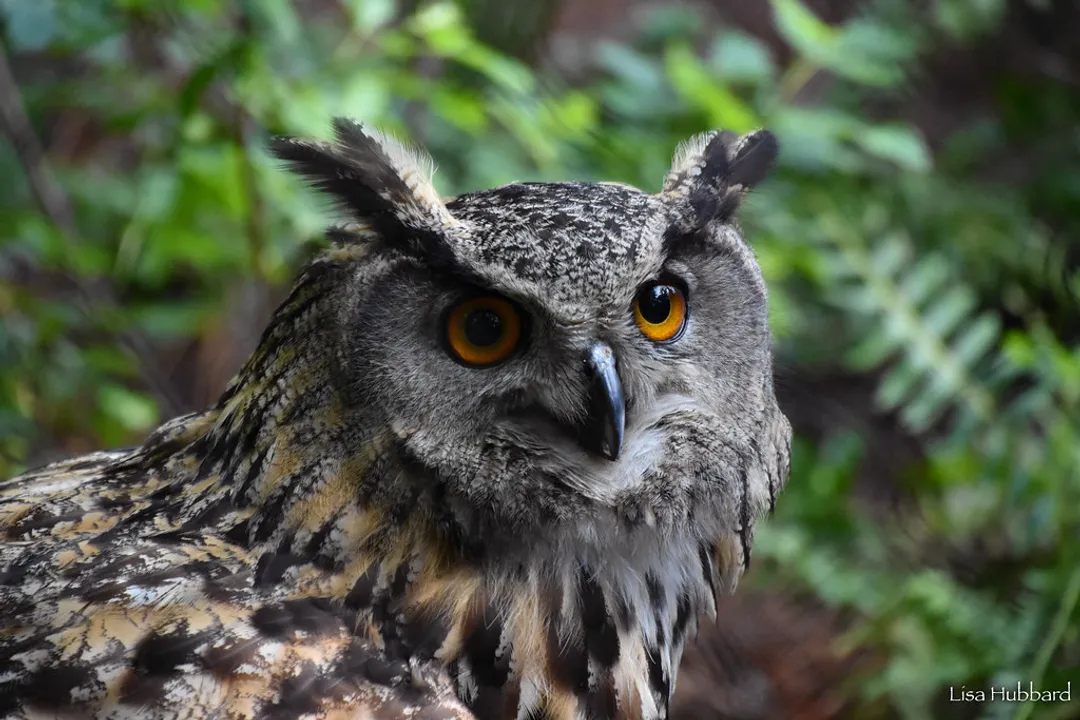
The physical attributes of the Eurasian Eagle-Owl are what cement its status as a premier bird of prey. Its size allows it to take on prey far larger than most other owls can manage. [1]
The body length for this species typically ranges between 56 and 75 cm (22 to 30 inches). [1] As noted, the wingspan can stretch up to an impressive 188 cm (6 feet 2 inches). [1] The weight variation is significant, ranging from approximately 1.6 kg (3.5 lb) for smaller males up to 4.5 kg (9.9 lb) for the largest females. [1] This substantial weight, coupled with broad wings, gives them the necessary power for their predatory lifestyle. [1]
A key characteristic that aids in identification, especially when trying to distinguish it from the tuftless Blakiston's Fish Owl, are the prominent ear tufts. [3][4] These feather tufts, which are not actually ears, serve a social or camouflage purpose, breaking up the owl's outline against tree bark or rock faces. [3] The deep, intense orange or reddish-orange coloring of their eyes is another striking feature. [3][4]
# Wide Range
What makes the Eurasian Eagle-Owl's presence in the "largest" discussion even more compelling is its astonishing geographic distribution. This species holds the record for the widest range of any owl species in the world. [1]
It is found across a vast swath of land, spanning nearly all of Eurasia, from Western Europe across to East Asia and south into North Africa. [1][5] This massive territory encompasses a huge variety of habitats, including forests, deserts, cliffs, and even semi-urban environments near human habitation. [5]
This broad distribution directly influences the size variation seen within the species. Generally, birds in colder, northern regions tend to be larger than their southern counterparts, a biological principle often related to Bergmann's rule (larger bodies retain heat better). [1] Therefore, when you encounter a Eurasian Eagle-Owl in Scandinavia or Siberia, you are likely looking at a specimen at the very top end of the species' potential size spectrum, potentially larger than the birds found further south. [1] For someone observing a European population, their local bird is almost certainly the largest raptor in their immediate vicinity, even if a fish owl elsewhere holds a slight edge in pure mass [cite].
# Hunting Prowess
The formidable size of the Eurasian Eagle-Owl directly translates into a broad and powerful predatory capability. Their diet is incredibly varied, reflecting their wide distribution and adaptability. [1]
They are capable of hunting creatures much smaller than themselves, such as mice, rodents, and smaller birds, but their strength allows them to take down substantial prey as well. [1] Their diet can include hedgehogs, hares, marmots, large ground-dwelling birds like grouse, and even smaller mammals such as foxes. [1] In areas where they coexist with other predators, they are certainly at the top of the local avian food chain.
The sheer power needed to subdue prey like a fox or a sizable hare demands strong talons and deep muscle mass—qualities that contribute significantly to their overall weight and impressiveness [cite]. Their low wing loading, a physical characteristic common to large birds of prey, allows them to fly silently despite their considerable bulk, giving them the element of surprise necessary for such powerful strikes. [1]
# Defining "Largest"
The continued debate over the "largest owl" title underscores a critical point about biological classifications: labels like biggest, fastest, or strongest often rely on subjective criteria unless strictly defined [cite].
For the Eurasian Eagle-Owl, its claim to fame often rests on its wingspan and general visual dominance [cite]. In many parts of the world where a Blakiston's Fish Owl is not present, the Bubo bubo is unequivocally the largest bird of prey flying overhead. When discussing North America, the Great Horned Owl (Bubo virginianus) is often considered the closest analogue in size and ecological niche, though generally smaller than the Eurasian species [cite].
If the standard is heaviest single specimen, the title might lean toward the Fish Owl, particularly the mature males of that species, which are adapted for fishing in cold water and thus carry denser musculature for that purpose [cite]. However, if the standard involves the largest area covered by wings, the Eurasian Eagle-Owl, with its vast subspecies variation, frequently comes out on top or at least ties for the maximum recorded measurement. [1]
Understanding this nuance is important for any enthusiast or birder. If you are looking at a massive owl in the European Alps, you are looking at the local definition of the largest owl, regardless of what a specialized riverine species in Japan might weigh [cite]. The experience of seeing a Eurasian Eagle-Owl—its size, its presence, its imposing stare—is what truly establishes its kingly status in the avian world, regardless of whether it technically wins the contest by a kilogram or a centimeter [cite]. Its success lies not just in its size, but in its remarkable ability to thrive across almost every biome in the Old World. [5]
Related Questions
#Citations
Eurasian eagle-owl
luna the eurasian eagle-owl
Eurasian Eagle Owl
Eurasian Eagle Owl - San Francisco Zoo & Gardens
Eurasian Eagle-Owl - the world's largest owl
The **Eurasian eagle-owl** (*Bubo bubo*) is one of ...
Eurasian eagle owl - Cincinnati Zoo & Botanical Garden
Eurasian Eagle Owl