Is the emperor tamarin a new world monkey?
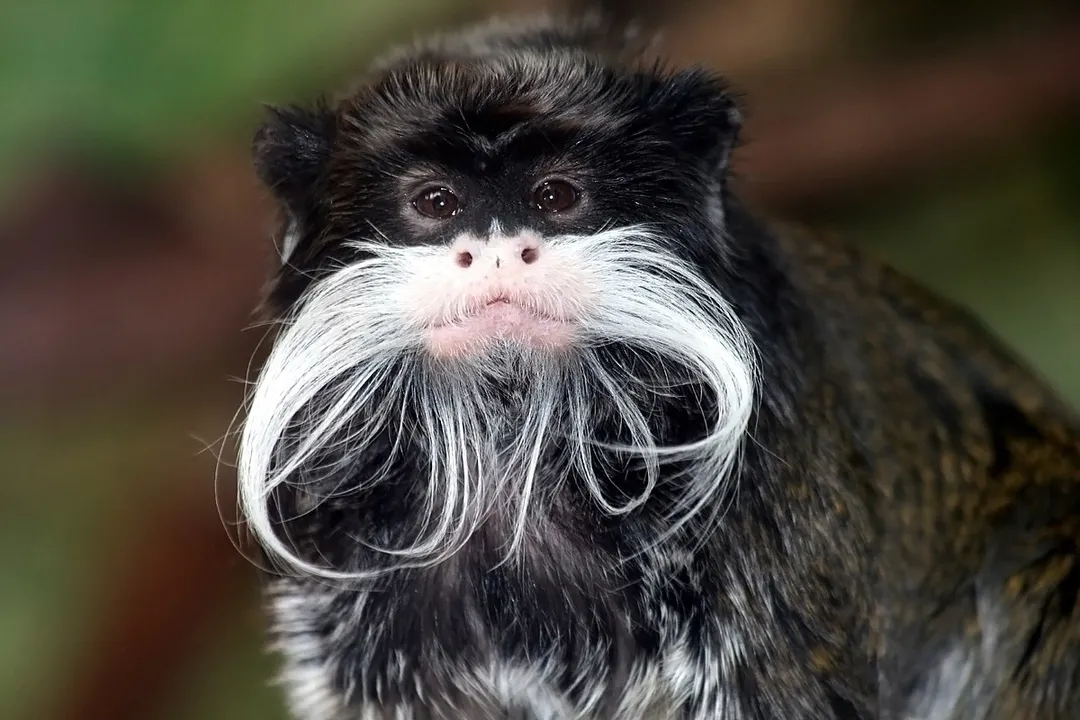
The emperor tamarin, with its striking white mustache contrasting sharply against its dark face, is indeed classified as a member of the New World monkeys. This classification places it within the primate suborder Platyrrhini, separating it fundamentally from the Old World monkeys found across Africa and Asia. [1][5] While their shared ancestry connects them as primates, the evolutionary split that created these two major groups occurred millions of years ago, resulting in distinct anatomical and geographic characteristics that define them today. [1]
# Primate Geography
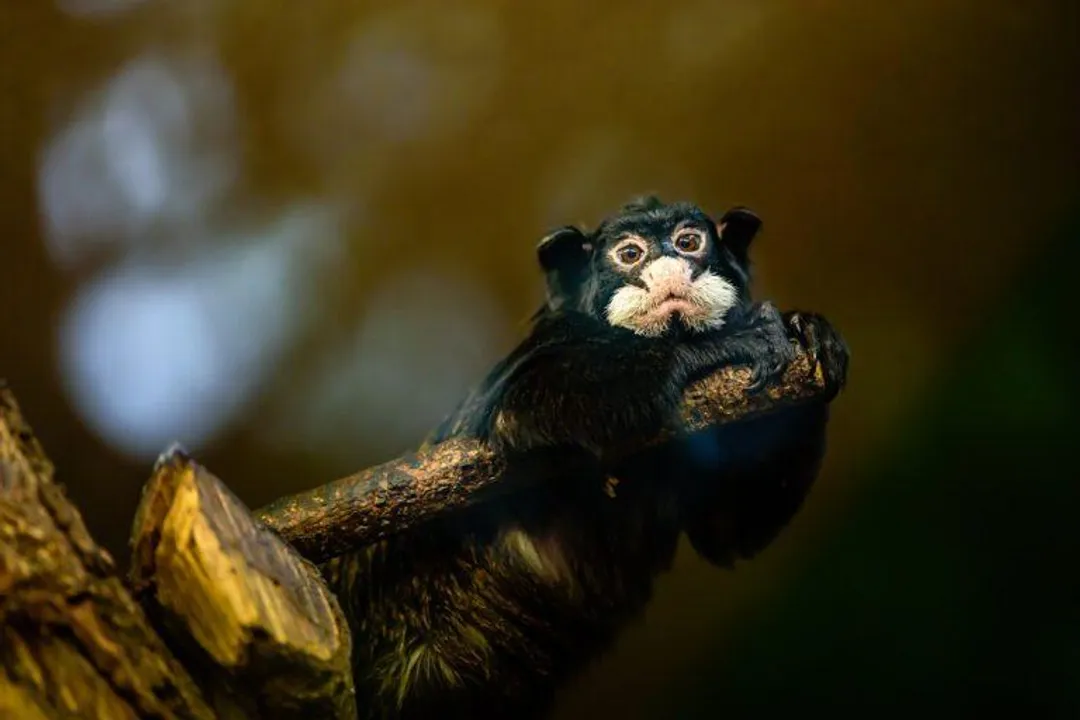
The designation "New World monkey" is primarily geographical, referring to the primates native to the Americas, spanning from Central to South America. [1] The emperor tamarin, scientifically known as Saguinus imperator, makes its home exclusively in the Amazon basin, specifically inhabiting parts of Brazil, Bolivia, and Peru. [1][2] This puts them firmly in the Platyrrhini group, a term derived from the wide, flat noses these monkeys possess, a key feature distinguishing them from the Old World monkeys (Catarrhini), whose nostrils point downward. [1] Another anatomical difference often observed, though not always visible in every species, is that many New World monkeys, including some tamarins, possess fully or partially prehensile tails—tails capable of gripping—which Old World monkeys lack. [1] The tamarin's classification is a direct result of its geographical origin and its underlying skeletal structure, independent of its famous facial hair.
# Taxonomy Defined
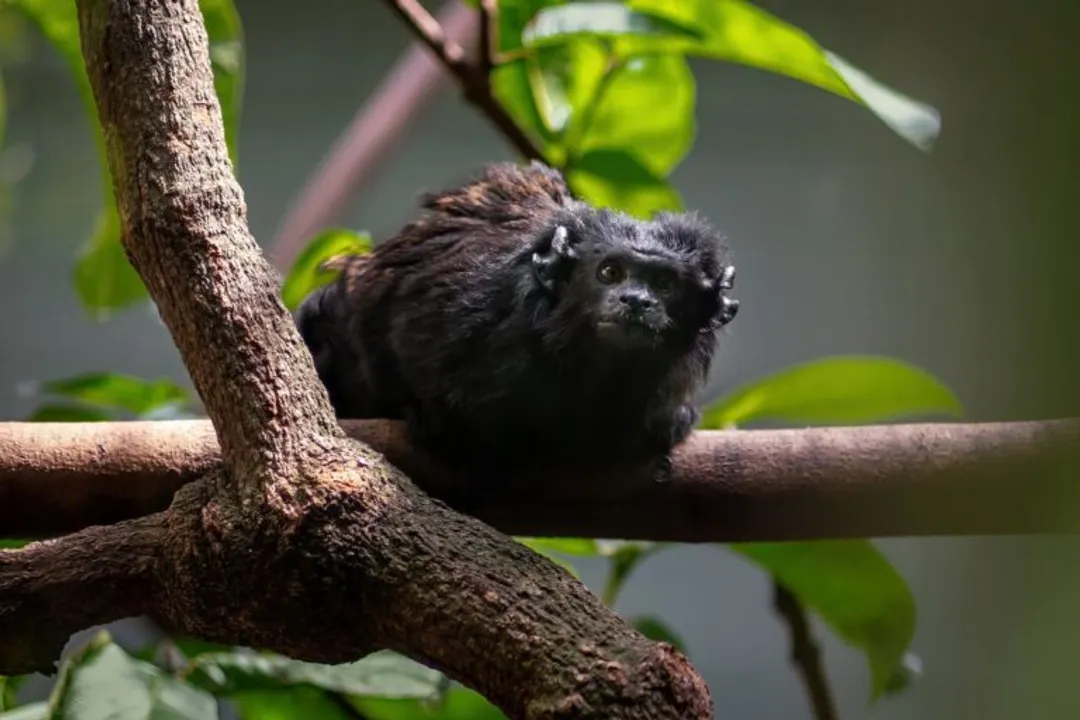
To understand the tamarin’s place in the primate world more precisely, we can look at its taxonomic hierarchy. The emperor tamarin belongs to the family Callitrichidae. [1][5] This family is quite small and includes not only tamarins but also marmosets. [1] What sets the Callitrichidae family apart within the New World monkeys is their size and dentition; they are among the smallest primates in the world. [7][1] Unlike larger monkeys in the New World, callitrichids possess specialized teeth that allow them to gouge tree bark to access sap and gum, a critical dietary component. [1] The genus Saguinus specifically encompasses all tamarins. [1] The species name imperator directly references the resemblance of the tamarin’s impressive white mustache to that of the German Emperor Wilhelm II, for whom the species was eventually named. [1][2] This naming convention highlights the most defining characteristic of the species.
# Royal Appearance
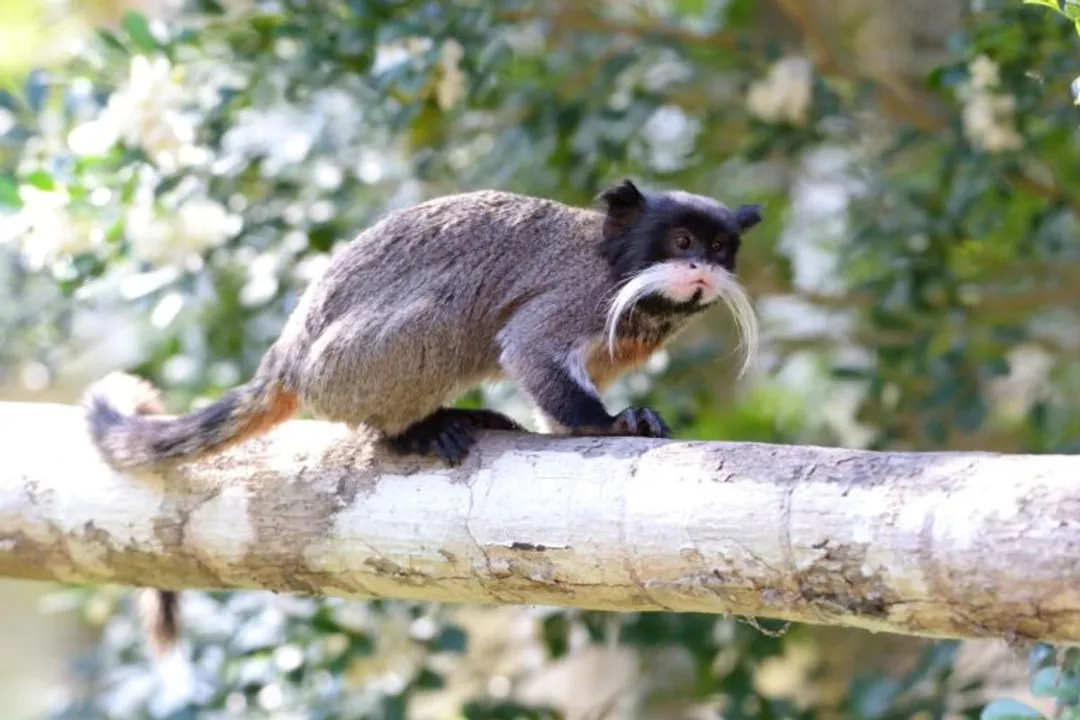
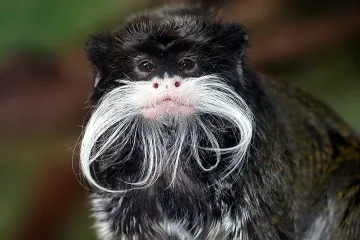
The most immediately recognizable feature of the emperor tamarin is its magnificent, bushy white mustache that extends laterally from its face, giving it a dignified, if slightly comical, appearance. [1][2][3][6] This feature gives the animal its moniker, linking it visually to imperial history. [2] Beyond this facial decoration, the animal is quite small, generally described as a diminutive primate. [7] Its body fur is typically dark brown or blackish, often contrasting with reddish-brown or grayish fur visible on its shoulders and the upper parts of its back. [1] The combination of size and coloration helps it blend into the dense understory, despite the conspicuous facial feature that often catches the eye of observers. [1]
For many small primates, the speed and agility necessary to navigate their environment are paramount. The emperor tamarin, moving quickly through the canopy, relies on its small stature to reach branches that might not support heavier primates. This agility is critical when feeding on tiny insects or extracting sticky sap, requiring delicate, fast movements rather than brute strength. Their small size effectively carves out a specific ecological niche, minimizing direct competition with larger monkey species residing in the same forest layers. [4]
# Amazonian Distribution
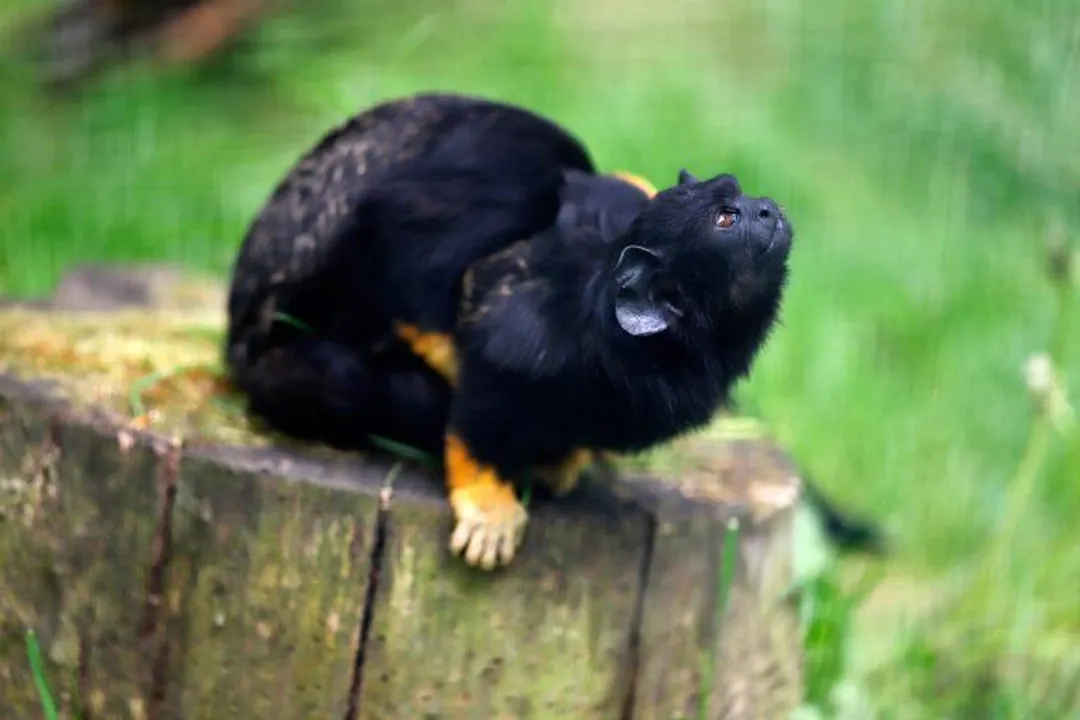
The emperor tamarin is endemic to the South American rainforests, a habitat requiring adaptation to high humidity, dense vegetation, and a year-round supply of food sources. [1][2] The specific range includes the western Amazon region, covering areas of southeastern Peru, northwestern Bolivia, and western Brazil. [1] They prefer the lower strata of the forest, often dwelling in the dense undergrowth and secondary growth areas rather than the high emergent canopy. [1] This preference for lower levels is practical for a small animal that relies on quick bursts of movement between close branches and vines, minimizing exposure to high-flying predators that patrol the upper canopy. Understanding their precise geographic boundaries is increasingly important for conservation efforts, as deforestation in these specific regions directly impacts their survival. [2]
# Social Structure
Emperor tamarins exhibit complex social behaviors typical of many primates. They live in relatively small family groups, which usually consist of an adult breeding pair and their offspring from various litters. [1] These groups are territorial and spend their days engaged in group activities such as foraging and resting together. [1] They are diurnal, meaning their activity peaks during the daylight hours. [1] Within the group dynamics, there is often a cooperative element, especially concerning the raising of the young. While the mother gives birth, the father and older siblings frequently participate in carrying and caring for the infants, often carrying them on their backs. [1] This communal care strategy helps ensure the survival rate of the offspring in a challenging environment where resources, though abundant, require constant vigilance to secure.
# Dietary Specialization
The diet of the emperor tamarin reflects its small size and specialized adaptations. They are omnivores, but their foraging strategy is particularly diverse, showing adaptations beyond simple fruit eating. [1][2] While fruits and insects form a substantial part of their caloric intake, the family Callitrichidae, to which they belong, has a unique reliance on tree exudates—things like gum, sap, and nectar. [1] The specialized lower incisor teeth act like chisels, allowing them to gnaw small holes into tree bark to access this energy-rich, sticky substance. [1] This reliance on exudates provides a steady, predictable food source even when ripe fruits are temporarily scarce. Insects, caught through active foraging and pouncing, provide necessary protein. [1] Analyzing their diet reveals a high degree of resourcefulness; they are not limited to the seasonal availability of fruit but can switch to slower, more reliable energy sources when necessary.
# Conservation Notes
Like many small, specialized rainforest inhabitants, the emperor tamarin faces pressures from habitat loss. [1] As populations of these animals are dependent on the intact structure of the Amazonian forest, any fragmentation or destruction of their habitat directly threatens their ability to find mates, forage effectively, and maintain territory. [2] Conservation strategies often focus on protecting the specific forested corridors they inhabit across Peru, Bolivia, and Brazil. [1] While specific threat levels can vary depending on the subspecies and the region surveyed, the general awareness surrounding the preservation of their unique ecosystem is key to their long-term survival.
For those interested in supporting these unique primates, understanding which particular subspecies resides near a specific research or conservation effort can sometimes clarify where support efforts are most effective, as the range maps for the two recognized subspecies, S. i. imperator and S. i. subgrisescens, only partially overlap. [1]
Related Questions
#Citations
Emperor tamarin - Wikipedia
Emperor Tamarin Animal Facts - Saguinus Imperator
Sal and Feta, Emperor Tamarins | Lincoln Park Zoo
The emperor tamarin (Saguinus imperator) is a species ... - Facebook
Tamarins | New England Primate Conservancy
Bearded emperor tamarin - National Zoo
The Emperor tamarin is a diminutive primate species from Peru ...
Emperor Tamarin | FictionRulezForever Wiki - Fandom
Saguinus imperator (emperor tamarin) - Animal Diversity Web