In which environmental condition does the White Crappie generally seem to tolerate or prefer over the Black Crappie?
Answer
Warmer and more turbid waters
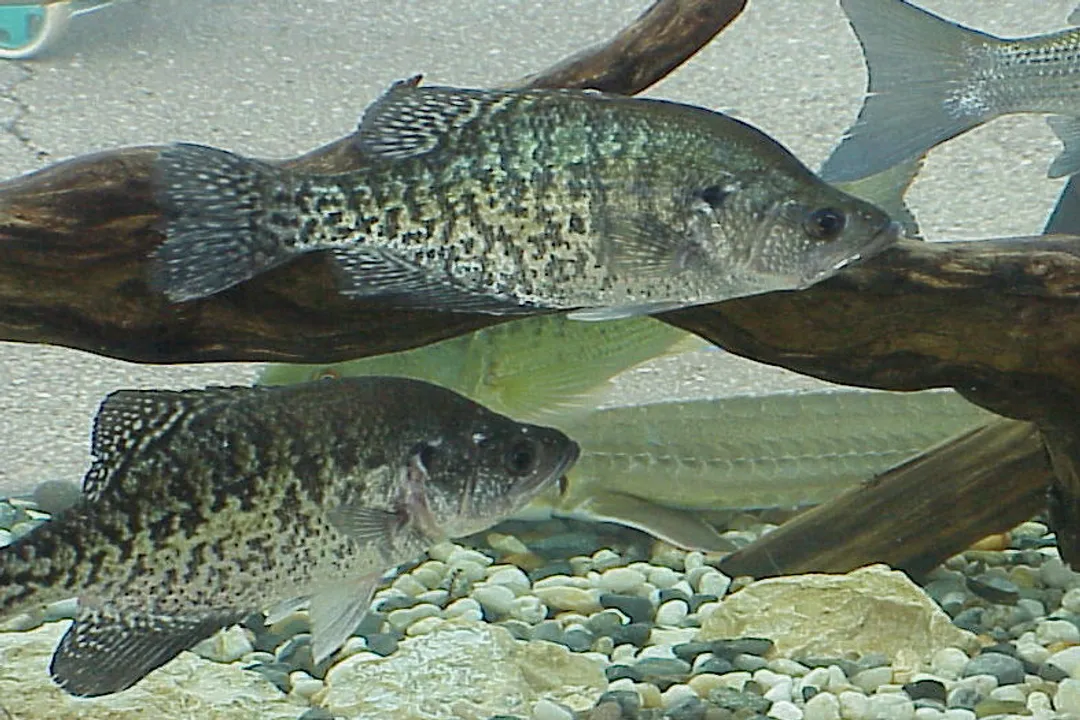
Ecological divergence within the genus *Pomoxis* leads to slightly different habitat preferences between the two crappie species. The White Crappie (*P. annularis*) has demonstrated a greater tendency to inhabit and thrive in waters characterized by higher levels of turbidity, meaning murkier or cloudier conditions, often alongside warmer temperatures. Conversely, the Black Crappie tends to dominate in clearer environments where rooted aquatic vegetation is abundant. This ecological separation suggests that the White Crappie's vertical barring pattern may offer superior camouflage in the lower visibility of turbid water compared to the spotted pattern of its cousin.
Related Questions
What is the Phylum classification for the White Crappie (*Pomoxis annularis*)?How many dorsal fin spines typically differentiate the White Crappie (*P. annularis*) from the Black Crappie (*P. nigromaculatus*)?What is the common designation for the Family Centrarchidae, which includes *P. annularis*?What does the Latin species name *annularis* translate to, describing the White Crappie's characteristic markings?Which Class groups the White Crappie, characterized by bony spines or rays supporting its fins?In which environmental condition does the White Crappie generally seem to tolerate or prefer over the Black Crappie?Which genus classification groups the White Crappie along with the Black Crappie (*P. nigromaculatus*)?What specific type of scales, featuring tiny, tooth-like projections, are characteristic of *P. annularis* morphology?Which major North American drainage system is identified as part of the native territory for *Pomoxis annularis*?What is the IUCN Red List conservation status assigned to the widespread White Crappie population?