In high-desert scrubland or rocky outcrops where different venomous snakes overlap, what is the primary safety indicator for recognition?
Answer
Recognizing the rattle
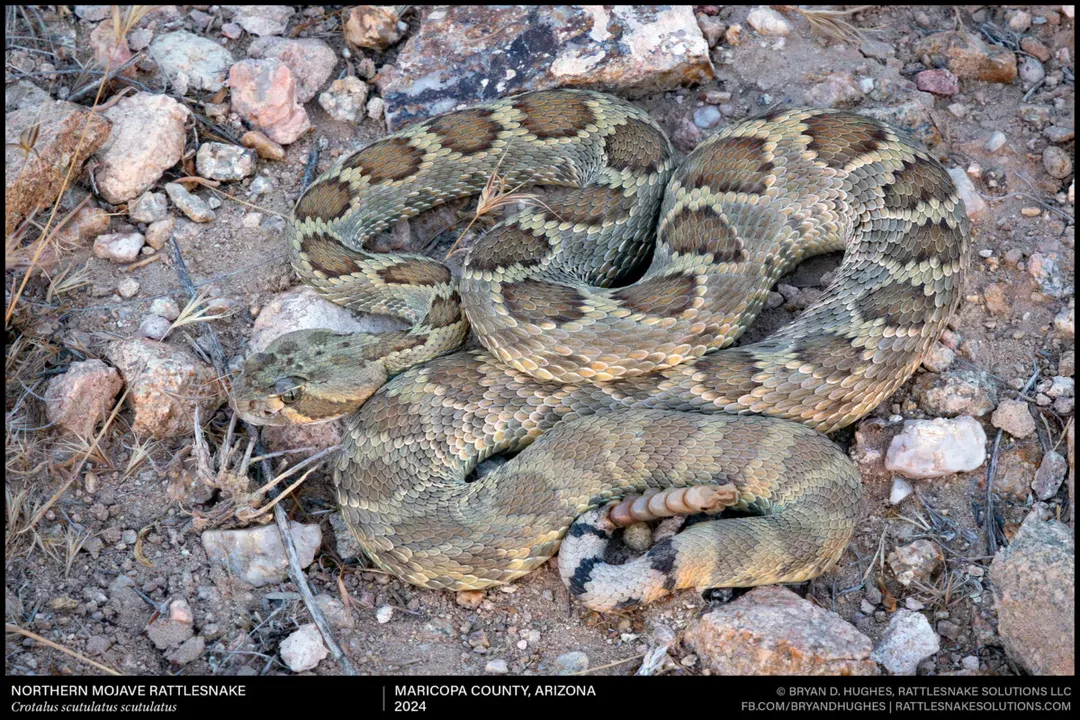
When assessing potential hazard in environments where different venomous snakes overlap, recognizing the presence of the rattle is cited as the primary safety indicator, rather than relying solely on skin pattern.
Related Questions
What dual toxicological threat defines the danger of the Mojave rattlesnake bite?What severe systemic effect can result specifically from the neurotoxins in the venom?What primary local damage is caused by the hemotoxins in the venom?What factor causes the specific severity and reaction profile of a Mojave rattlesnake bite to vary geographically?In the context of venom toxicity measurement using the $ ext{LD}_{50}$ value, what does a lower value signify for *Crotalus scutulatus* venom?Why might a victim initially underestimate the severity of a bite from a highly neurotoxic Mojave rattlesnake?What must the specific antivenom used for treatment be effective against?What characteristic gives the *Crotalus scutulatus* the common moniker, the Mojave Green Rattlesnake?What makes relying solely on the characteristic 'green' coloration risky when identifying this snake in stressful encounters?In high-desert scrubland or rocky outcrops where different venomous snakes overlap, what is the primary safety indicator for recognition?According to the text, what clinical reality underscores the need for immediate medical attention after a confirmed Mojave strike?