How does the skin structure of Zebu generally contrast with *Bos taurus taurus*?
Answer
Zebus tend to have more sweat glands per square centimeter and a thinner hide
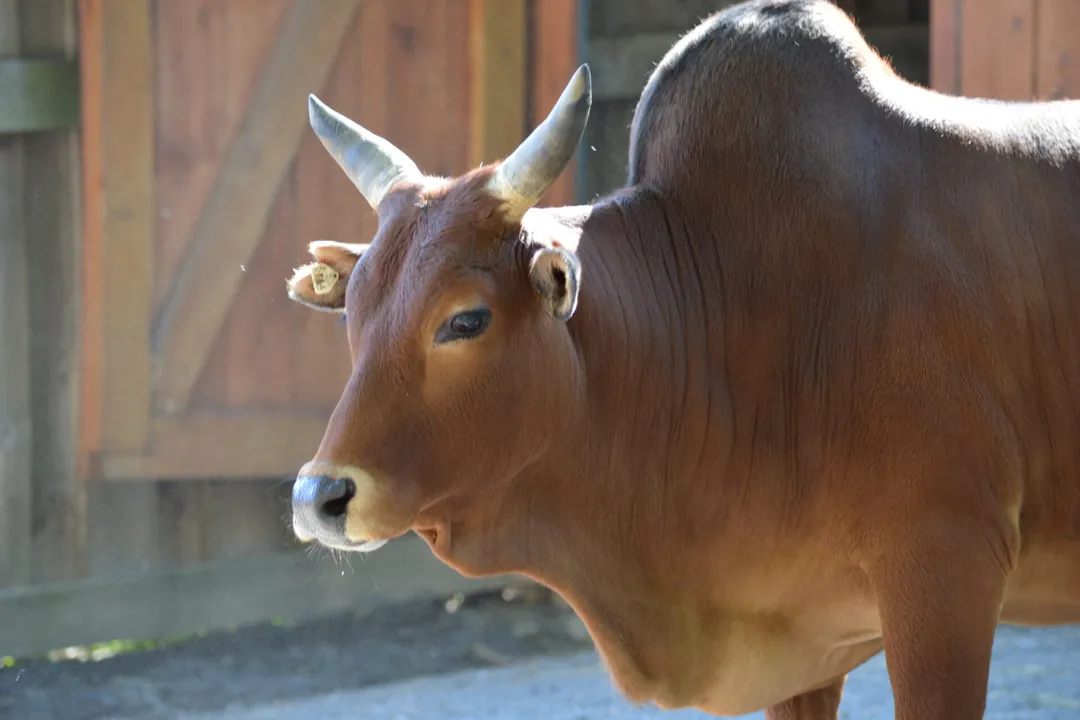
One crucial physiological difference contributing to Zebu adaptation for hot climates relates to their skin structure. Zebus possess a greater density of sweat glands per square centimeter compared to their European counterparts. Additionally, their hide tends to be thinner. These characteristics, combined with the large dewlap, enhance their capacity for efficient heat dissipation and coping with high environmental temperatures. This physiological profile represents an evolutionary response to the tropical and subtropical environments where *B. taurus indicus* developed, contrasting sharply with the adaptations of cattle bred for cooler, temperate zones.
Related Questions
What physical feature immediately identifies the Zebu cattle lineage?What is the accepted subspecies designation for Zebu within *Bos taurus*?What genetic reality supports classifying Zebu and European cattle as subspecies?Which extinct wild bovine lineage is the common ancestor of Zebu and European cattle?Where did the domestication event for Zebu (*B. taurus indicus*) primarily occur?Which morphological feature in Zebu aids significantly in thermoregulation?Which Zebu-derived composite breed is very common in the Americas?Within which taxonomic Family are Zebus grouped alongside goats and sheep?How does the skin structure of Zebu generally contrast with *Bos taurus taurus*?Which specific Zebu breed is noted for high milk yield compared to draft types?