How does the primary diet of *E. sarcitrella* larvae functionally distinguish it from *Tineola bisselliella*?
Answer
E. sarcitrella targets stored vegetable matter or detritus, while T. bisselliella specializes in animal fibers like wool and silk.
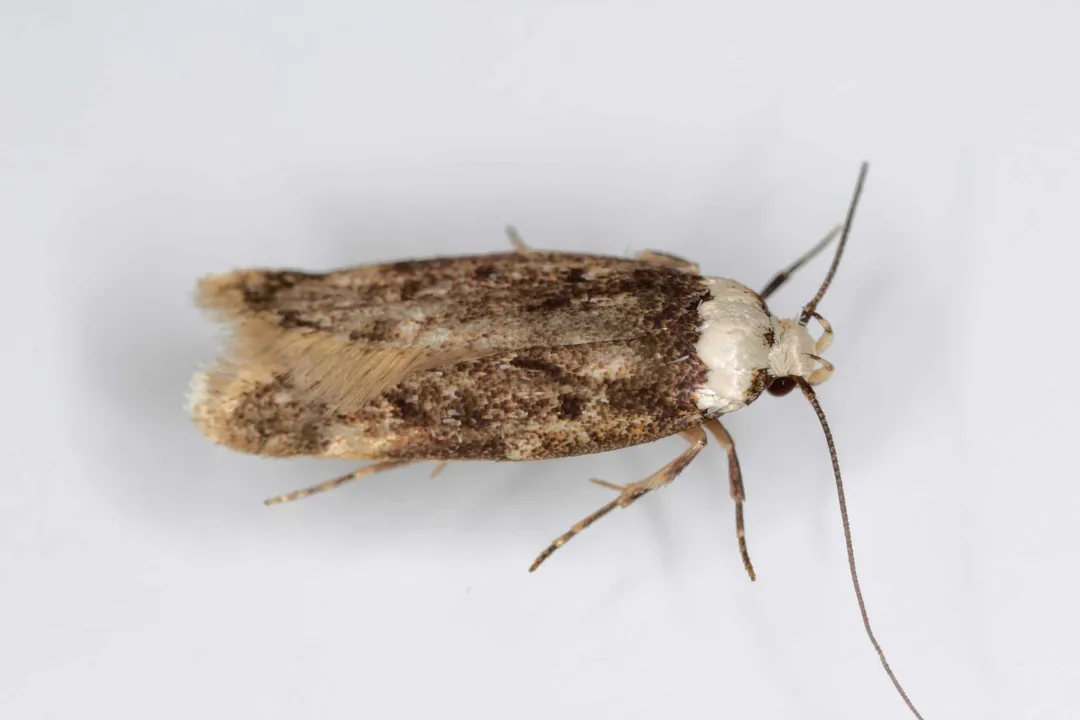
Although both are small moths sometimes found indoors, their evolutionary paths have led to distinct dietary specialization. *Tineola bisselliella*, known as the true clothes moth, is specialized to digest keratin, meaning its larvae feed on animal-based materials such as wool, silk, feathers, or dried animal debris. In contrast, *E. sarcitrella* focuses its larval feeding on plant-based materials, specifically dry seeds, stored vegetable matter, and general accumulated detritus, indicating a difference rooted in their respective scientific classifications and associated biological adaptations.
Related Questions
What is the specific epithet in the binomial nomenclature *Endrosis sarcitrella*?What visual characteristic gives the White-shouldered House Moth its common name?What characteristic universally defines all organisms placed in the Order Lepidoptera?What primary nutritional source do the larval stages of *E. sarcitrella* typically consume in indoor environments?What fundamental traits define membership in the Phylum Arthropoda, to which *E. sarcitrella* belongs?What typical wingspan range is associated with the adult *Endrosis sarcitrella* moth?Which two family classifications are cited as currently debated placements for the White-shouldered House Moth?What is the biological term for the complete metamorphosis cycle experienced by the Order Lepidoptera, including *E. sarcitrella*?How does the primary diet of *E. sarcitrella* larvae functionally distinguish it from *Tineola bisselliella*?What key trait distinguishes the Class Insecta within the Phylum Arthropoda for identification purposes?