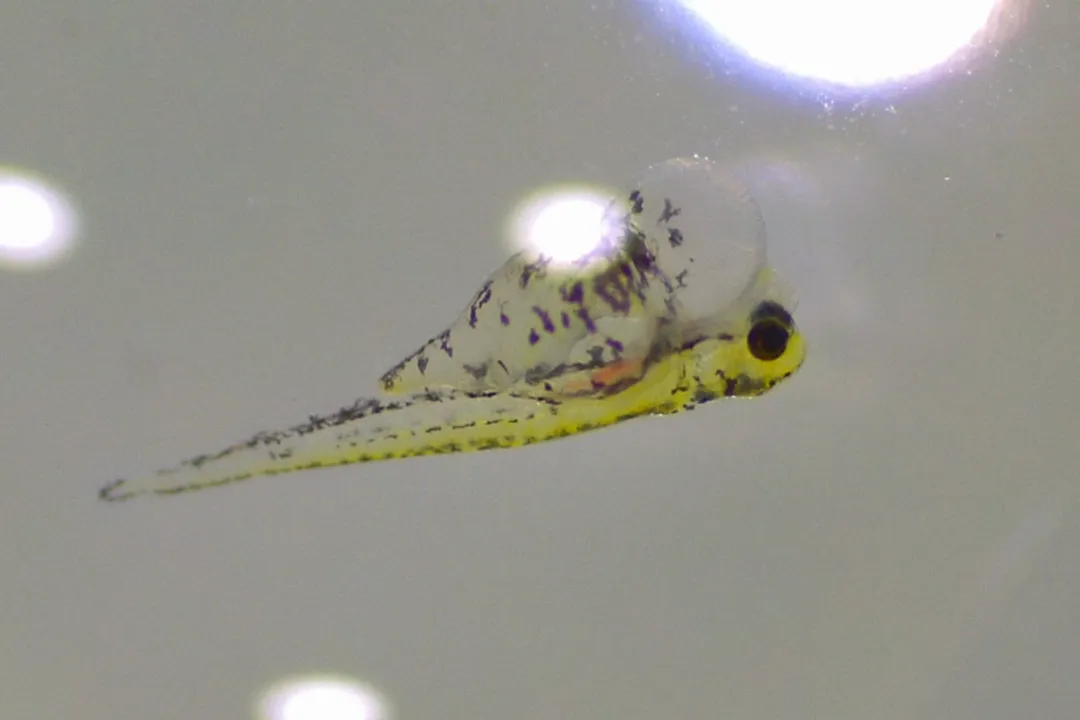
How does membership in Phylum Chordata support zebrafish research relevance to humans?
It confirms shared organ systems and genetic homologies with humans.
The placement of *Danio rerio* within the Phylum Chordata is significant for biomedical research because it inherently means that the organism shares fundamental evolutionary structures, including the basic organization of organ systems and underlying genetic architecture, with all other vertebrates, including humans. This homology allows researchers studying development, toxicology, or disease progression in zebrafish to extrapolate findings with a high degree of confidence to vertebrate biology. While genome sequencing and habitat adaptation are relevant aspects of zebrafish study, they stem from specific attributes rather than the high-level shared architecture indicated by Chordata membership.