Zebrafish Scientific Classification
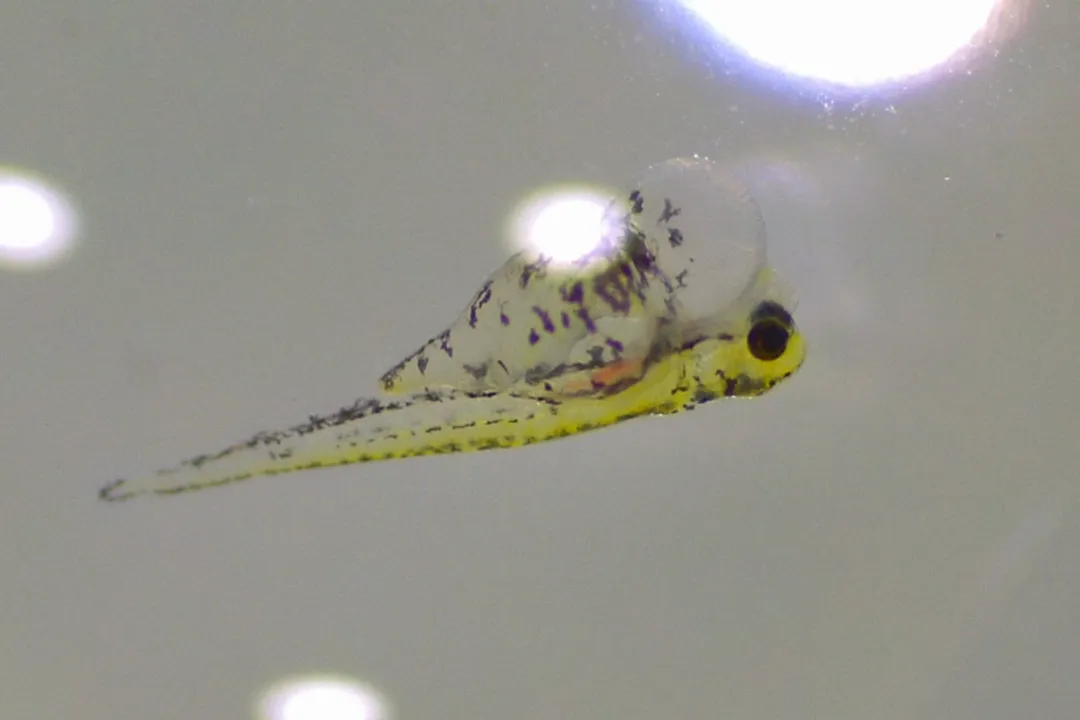
The seemingly simple, striped creature known universally as the zebrafish carries within its scientific designation a rich history and a precise location within the tree of life. Understanding its formal classification, moving from the broadest category down to its specific species name, is akin to reading a detailed biography that explains its biology, evolutionary relationships, and suitability for scientific inquiry. [1][4] This systematic naming convention, often called Linnaean taxonomy, is not just an academic exercise; it is the foundational map that allows biologists across the globe to communicate without ambiguity about this valuable model organism. [7]
# Kingdom Animalia
At the very beginning of this biological map lies the Kingdom, Animalia. [1][2][3] To be placed here signifies that the zebrafish is a multicellular, eukaryotic organism that obtains energy by consuming other organisms, rather than producing its own food through photosynthesis, which separates it from plants and algae. [1] Furthermore, animals typically exhibit organized tissue structures and possess specialized sensory organs, characteristics that define the vast diversity found within this kingdom. [3] The zebrafish shares this high-level grouping with everything from microscopic invertebrates to massive whales, indicating that its classification needs to become far more specific very quickly to pinpoint its identity.
# Phylum Chordata
Moving a step deeper, the zebrafish belongs to the Phylum Chordata. [1][2][3] This is a critical placement, as it groups the zebrafish with all vertebrates, including amphibians, reptiles, birds, and mammals. [3] The defining features of chordates, which must be present at some stage of the organism’s life cycle, are a hollow nerve cord running down the back, a stiff, flexible rod called the notochord, pharyngeal slits, and a post-anal tail. [1][3] For the zebrafish, the notochord provides essential skeletal support during its embryonic and larval stages, even though it later develops a more complex internal skeleton made of bone. [5] This phylum membership immediately tells a researcher that the zebrafish possesses the fundamental genetic architecture shared by all backboned animals, making its cellular processes highly relevant to human biology. [9]
# Class Ray Fins
The next rank distinguishes major groups of fish based on skeletal structure, placing the zebrafish in the Class Actinopterygii. [1][5] This massive class is often referred to as the ray-finned fishes, a name that directly describes their unique fins. [5] Unlike lobe-finned fish (like lungfish or coelacanths, which are evolutionarily closer to land vertebrates), the fins of the zebrafish are supported by thin, bony spines or rays that radiate outward from the body. [5] This anatomical difference reflects a distinct evolutionary path taken by this group millions of years ago. The abundance of species within Actinopterygii underscores the importance of the subsequent classification steps in narrowing down the characteristics relevant to Danio rerio specifically. [1]
# Order Cypriniformes
The Order Cypriniformes further refines the zebrafish’s position, grouping it with carps and minnows. [1][3][5] This order is characterized by certain features related to its jaw structure and scales. [3] Fish within Cypriniformes often lack teeth in their mouths but possess structures called pharyngeal teeth in their throats, which they use for grinding food against the roof of the mouth—a distinct adaptation for feeding. [3] This placement tells us about the zebrafish’s ecological niche: it is fundamentally a freshwater, non-predatory species adapted to foraging, which aligns with its natural habitat in slow-moving streams and rice paddies. [3][8] Considering that the Cyprinidae family, to which it belongs, is one of the largest and most species-rich families of freshwater fish globally, the continued classification is essential for distinguishing it from thousands of closely related, yet ecologically distinct, cousins. [1][5] Because the Cyprinidae family is so vast and diverse, the specific combination of traits exhibited by D. rerio—such as its rapid external development and transparent early-stage embryos—make it stand out remarkably among its numerous relatives for laboratory use. [9]
# Family Cyprinidae
As we arrive at the Family level, the zebrafish is firmly placed in Cyprinidae. [1][3][5] This family encompasses the carps and the true minnows. [1] Members of the Cyprinidae family are generally characterized by having cycloid or ctenoid scales, a swim bladder connected to the throat, and the aforementioned pharyngeal teeth. [3][5] This shared family history means that while the zebrafish is small, its physiology and basic life processes share a deep commonality with species like common carp, though their geographical distributions are often vastly different. [8] The natural geographic range of Danio rerio is concentrated in South Asia, specifically in the drainages of the Ganges, Brahmaputra, and Mekong rivers in countries like India, Pakistan, Nepal, and Bangladesh. [8] This family grouping, therefore, frames its evolutionary story within the context of Asian freshwater ichthyology.
# Genus Danio
The genus Danio groups the zebrafish with a small number of closely related Asian minnows. [1][3] The characteristics that tie species together in a genus are much more specific than those defining a family, often relating to shared skeletal features or reproductive strategies. [3] While the sources confirm the genus, the specific distinctions between Danio species are subtle, often involving coloration patterns or body shape nuances recognizable to expert ichthyologists. [3][5] It is at this level that the biological characteristics start to align very closely with the organism studied in laboratories worldwide.
# Species Danio rerio
The final, most specific classification level is the species, given the binomial name Danio rerio. [1][2][3][4][5][6][7] This name, established by Hamilton in 1822, is what separates this exact species from every other organism on Earth. [3][5] The common name, "zebrafish," is derived from the horizontal blue or black stripes running along the flank of the adult fish. [1][5] The term rerio itself likely derives from the Bengali name for the fish. [3]
The precise scientific assignment is vital when cataloging its genetic information. For instance, when genomic data is uploaded to databases like UniProt, using the unambiguous binomial nomenclature, Danio rerio, ensures that researchers globally are looking at the exact same genetic blueprint, preventing the ambiguities that could arise if one lab referenced the "zebra fish" and another referenced the "zebra danio". [4][7] The standardized name anchors all knowledge, from its molecular pathways to its ecological role.
# Taxonomy in Data
To illustrate the stratification of its classification, the following table summarizes the formal hierarchy for Danio rerio based on established biological records: [1][2][3][5][6]
| Taxonomic Rank | Group Name | Defining Characteristic Context |
|---|---|---|
| Kingdom | Animalia | Multicellular heterotroph |
| Phylum | Chordata | Presence of a notochord/nerve cord |
| Class | Actinopterygii | Ray-finned structure |
| Order | Cypriniformes | Jaw structure, lack of true teeth in mouth |
| Family | Cyprinidae | Shared traits with carps and minnows |
| Genus | Danio | Closely related Asian minnows |
| Species | D. rerio | Distinctive striped pattern and specific genetics |
This hierarchical arrangement directly impacts the study of its genetics. [4] Because the zebrafish genome has been extensively sequenced and annotated, its established taxonomic placement allows scientists to quickly compare its genes to those of other sequenced species, such as humans or mice, to better understand conserved biological processes like development or disease progression. [4][9]
# Distribution and Classification
The classification system also intersects with biogeography, although the wild distribution contrasts with its current global presence due to the pet trade and research use. [8] While native to South Asia, [8] its status in places like the United States is classified as non-native or introduced according to agencies like the USGS Nonindigenous Aquatic Species (NAS) database. [8] This classification note is crucial for resource managers and environmental agencies to differentiate between established native fauna and organisms that pose potential ecological risks if they establish wild, breeding populations outside their native range. [8] The fact that its classification places it as a highly adaptable freshwater species explains why, despite being introduced, it can thrive where conditions mimic its native lentic (slow-moving water) habitats. [3][8]
The acceptance of Danio rerio as a standard biological model, evidenced by its entry in specialized databases like Genomics Senescence Information Center, stems directly from the high confidence in its taxonomic identity. [4] A clear taxonomic assignment ensures that when researchers publish findings on, for instance, aging or regeneration—key areas of zebrafish research—the results are attributable to the specific species and not a misidentified relative. [4][9]
# Research Relevance
The well-defined scientific classification is inextricably linked to the zebrafish’s utility in research. [9] Its small size, relatively simple care requirements, and most importantly, the clarity of its early embryonic development—where structures like the heart and central nervous system can be observed non-invasively—have cemented its status. [9] Its place within Chordata [3] confirms that it shares organ systems and genetic homologies with humans, meaning that studies on its development or toxicology often yield data directly applicable to vertebrate biology. [9]
An interesting point arising from this classification structure is how selective pressure has shaped the D. rerio genome within the Cyprinidae family. [5] While many of its relatives are bottom-feeders or grazers, the zebrafish evolved behaviors and physiology that allowed it to thrive in slightly more turbulent, seasonally variable waters of the Ganges basin, traits which researchers now exploit. For instance, its schooling behavior and tolerance for slight temperature fluctuations are aspects of its specific species identity that are critical for maintaining healthy laboratory colonies. [1][3] The systematic classification, therefore, acts as a starting point, where each subsequent level reveals a set of adaptations that ultimately made Danio rerio the iconic model organism it is today. [9]
Related Questions
#Citations
Zebrafish - Wikipedia
Danio rerio - Taxonomy - PubChem
Danio rerio, Zebra danio : aquarium - FishBase
Zebra danio or zebrafish (Danio rerio) longevity, ageing, and life ...
Danio rerio - Animal Diversity Web
Danio rerio (F.Hamilton, 1822) - GBIF
Danio rerio (Zebrafish) | Taxonomy - UniProt
zebra danio (Danio rerio) - Species Profile
Zebrafish 10 facts - Understanding Animal Research