How do yellowjackets' predatory targets compare to those of some paper wasps?
Answer
Yellowjackets are often more aggressive tackling larger, tougher prey like adult grasshoppers.
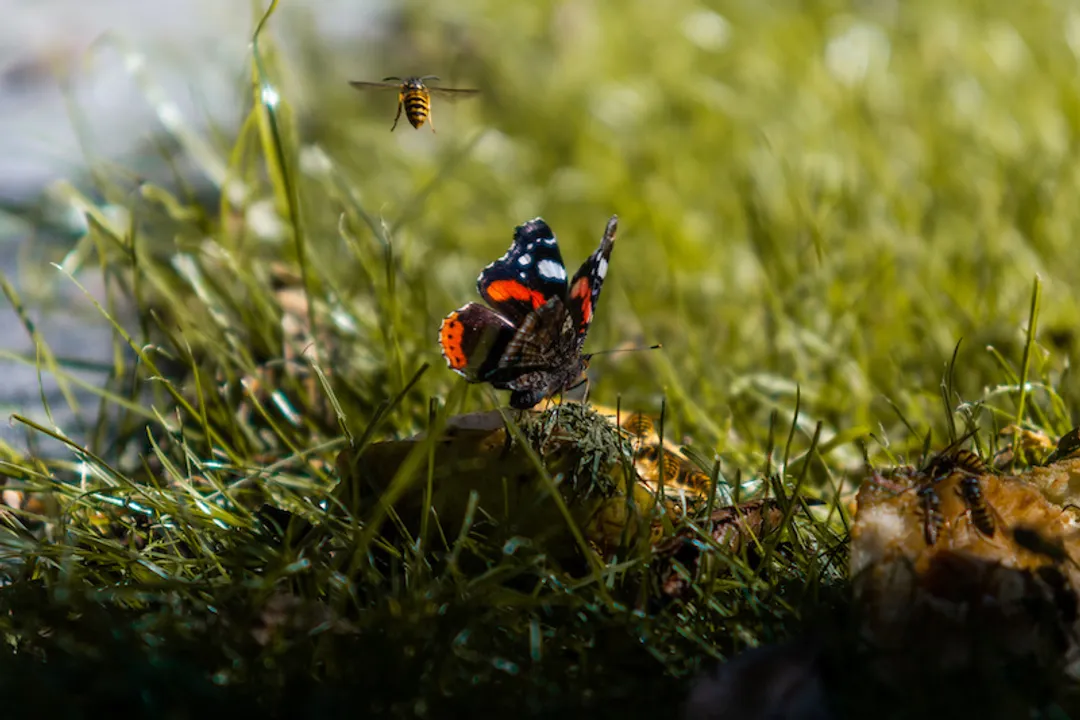
The predatory style of yellowjackets exhibits a difference when contrasted with close relatives like paper wasps. While paper wasps sometimes exhibit a preference for soft-bodied larvae, yellowjackets are noted for being more aggressive and capable of tackling larger, tougher prey items, such as adult grasshoppers or even bees. This aggressive predatory drive allows them to consume a wide variety of insects efficiently, acting as broad-spectrum natural pest controllers within their ecosystem.
Related Questions
What specific nutrient do yellowjacket larvae require for rapid growth?What primary energy source do adult yellowjackets need for sustaining flight and foraging activities?What specific sweet substance excreted by aphids provides carbohydrates for adult yellowjackets?Which specific creature is mentioned as a predatory target for feeding yellowjacket larvae?When does the yellowjacket shift toward opportunistic scavenging of human food sources typically become prominent?If a worker yellowjacket is observed feeding on a piece of fallen fruit, what need is it primarily meeting?How do yellowjackets' predatory targets compare to those of some paper wasps?What specific protein component is recommended for a late-season decoy feeding station?How do adult female yellowjackets deliver protein-rich food to the developing larvae inside the nest?What factor directly links to the overall predatory rate of the yellowjacket colony's worker force?