How do the small eyes of the Wels Catfish relate to its primary senses?
Answer
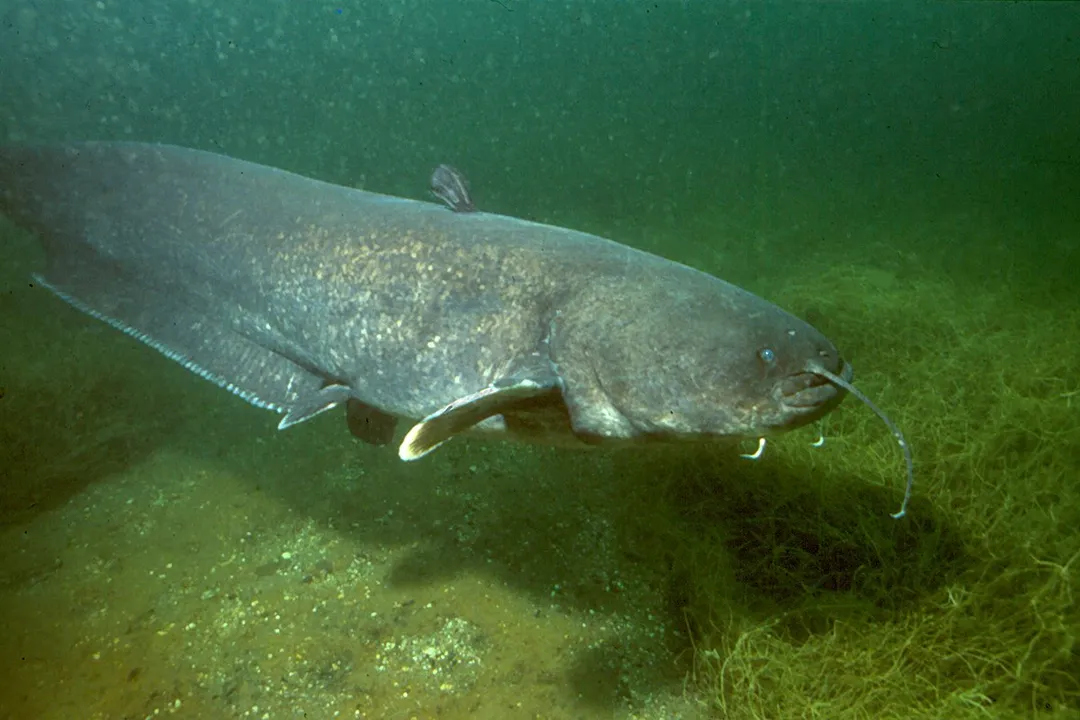
The eyes are small in proportion, emphasizing reliance on tactile and chemosensory input
The Wels Catfish exhibits a specific trade-off in its sensory development, which is characteristic of organisms inhabiting dimly lit or turbid waters. Its eyes are relatively small when compared to the overall massive size of its head. This reduction in reliance on sight is compensated for by the highly developed sensory apparatus surrounding the mouth, specifically the eight barbels. The sophistication of its tactile and chemosensory input is sufficient to locate food effectively, lessening the evolutionary pressure for large, energy-intensive visual organs.
#Videos
Wels Catfish Facts: a GIANT Catfish | Animal Fact Files - YouTube
Related Questions
How many total barbels emanate from the head region of the Wels Catfish?What feature covers the Wels Catfish body instead of traditional scales?What often occurs with the exceptionally long anal fin of the Wels Catfish?What characteristic color markings may be present on younger Wels Catfish specimens?What adaptation makes the Wels Catfish head ideal for foraging along the substrate?What documented total length potential do Wels Catfish individuals sometimes exceed?How do the small eyes of the Wels Catfish relate to its primary senses?What is the distinguishing feature regarding the dorsal fin origin on the Wels Catfish?How do the four short barbels on the lower jaw function compared to the upper pair?What is the general coloration of the Wels Catfish back and sides, aiding camouflage?