How do the four short barbels on the lower jaw function compared to the upper pair?
Answer
The shorter ones might offer fine-tuned, immediate contact sensing near the mouth
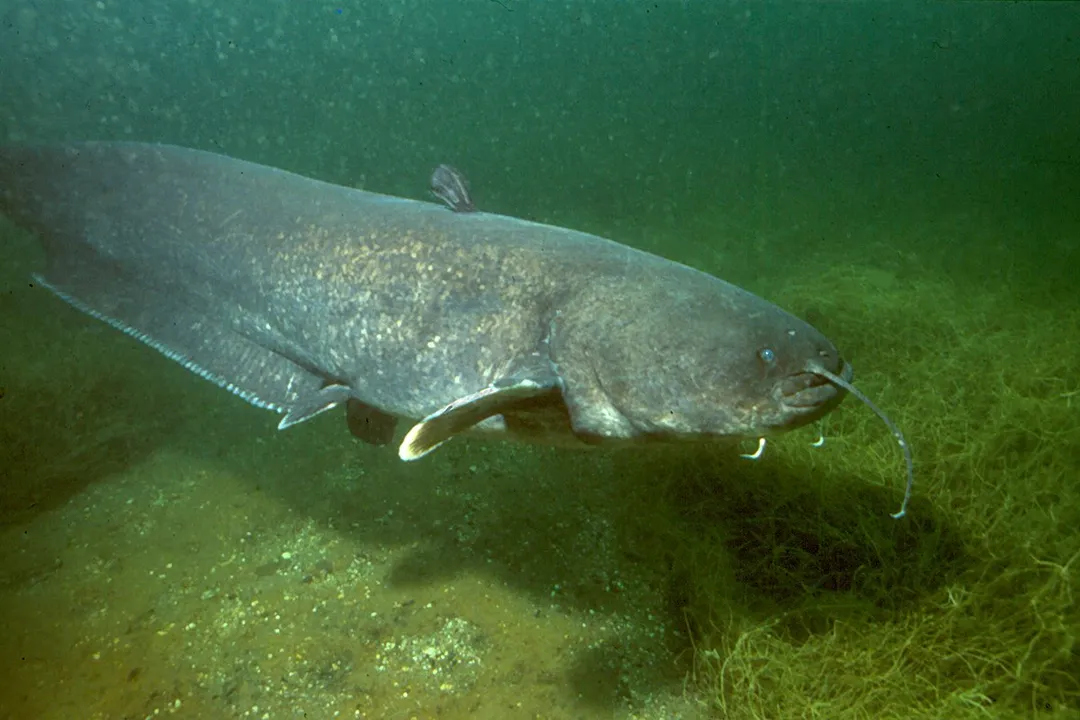
The eight barbels likely function differently based on their position and length, creating a multi-tiered sensory array. The two very long maxillary barbels on the upper jaw are suggested to act as longer-range chemical antennae, sweeping the water column above the fish to detect passing prey or disturbances from a distance. Conversely, the four shorter barbels situated on the lower jaw are thought to provide fine-tuned, immediate contact sensing. They are ideally positioned to inspect potential food items directly upon contact or when the fish is foraging immediately near the river or lake bed.
#Videos
Wels Catfish Facts: a GIANT Catfish | Animal Fact Files - YouTube
Related Questions
How many total barbels emanate from the head region of the Wels Catfish?What feature covers the Wels Catfish body instead of traditional scales?What often occurs with the exceptionally long anal fin of the Wels Catfish?What characteristic color markings may be present on younger Wels Catfish specimens?What adaptation makes the Wels Catfish head ideal for foraging along the substrate?What documented total length potential do Wels Catfish individuals sometimes exceed?How do the small eyes of the Wels Catfish relate to its primary senses?What is the distinguishing feature regarding the dorsal fin origin on the Wels Catfish?How do the four short barbels on the lower jaw function compared to the upper pair?What is the general coloration of the Wels Catfish back and sides, aiding camouflage?