How do the nesting habits of the Hoiho contrast with those of Rockhopper Penguins (Eudyptes chrysocome)?
Answer
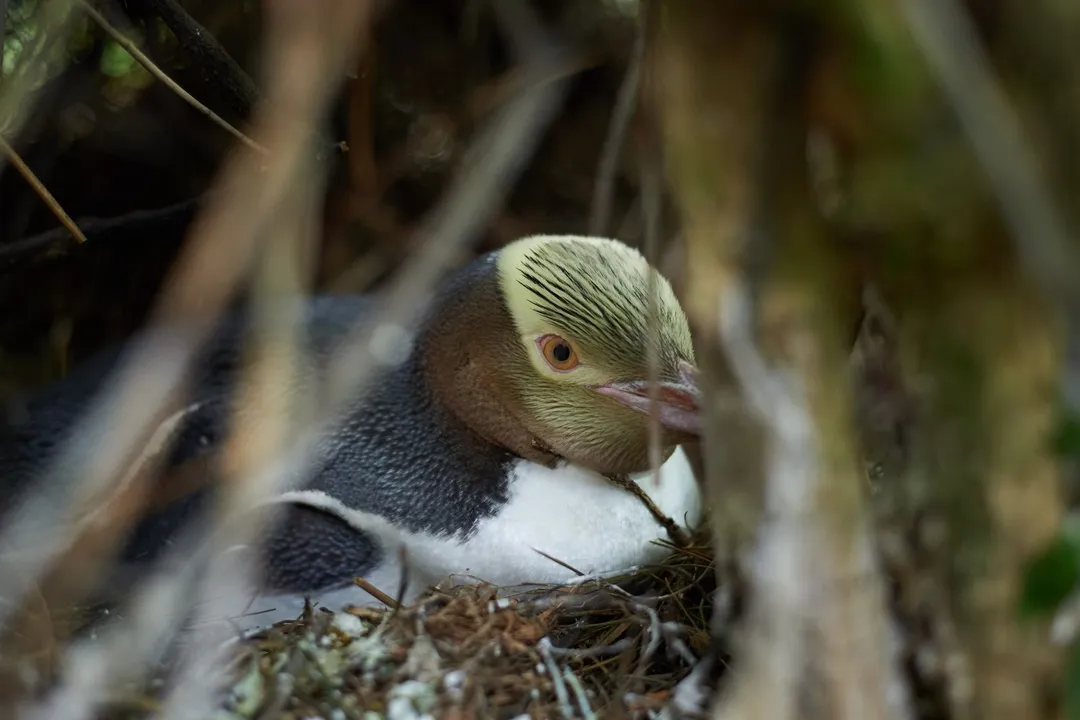
Hoiho colonies are often deep within coastal forests, unlike the colonial nesting on open expanses
The ecological niche occupied by the Yellow-Eyed Penguin is distinct from many other penguin species, which influences conservation needs. Specifically, the Hoiho exhibits specialized morphological and behavioral adaptations reflected in its nesting locations, often establishing colonies deep within coastal forests. This solitary or semi-colonial preference contrasts sharply with species like the Rockhopper Penguin (Eudyptes chrysocome), which typically breeds in dense colonies situated on open, often icy or rocky, expanses, demonstrating a significant divergence in required habitat management.
Related Questions
What classification aspect makes the Megadyptes genus unique among penguin genera?To which Māori name does the Yellow-Eyed Penguin correspond?What is the derivation meaning behind the species name antipodes?What is the official IUCN Red List classification for Megadyptes antipodes?What visual trait gives the Yellow-Eyed Penguin its common name?In which avian Order is the Yellow-Eyed Penguin classified alongside all other penguins?What is the approximate translation of the genus name Megadyptes?Which genus contains the Emperor Penguin, differing from Megadyptes at the genus level?How do the nesting habits of the Hoiho contrast with those of Rockhopper Penguins (Eudyptes chrysocome)?What key feature signifies the Hoiho's classification under the Phylum Chordata?