What is special about the yellow-eyed penguin?
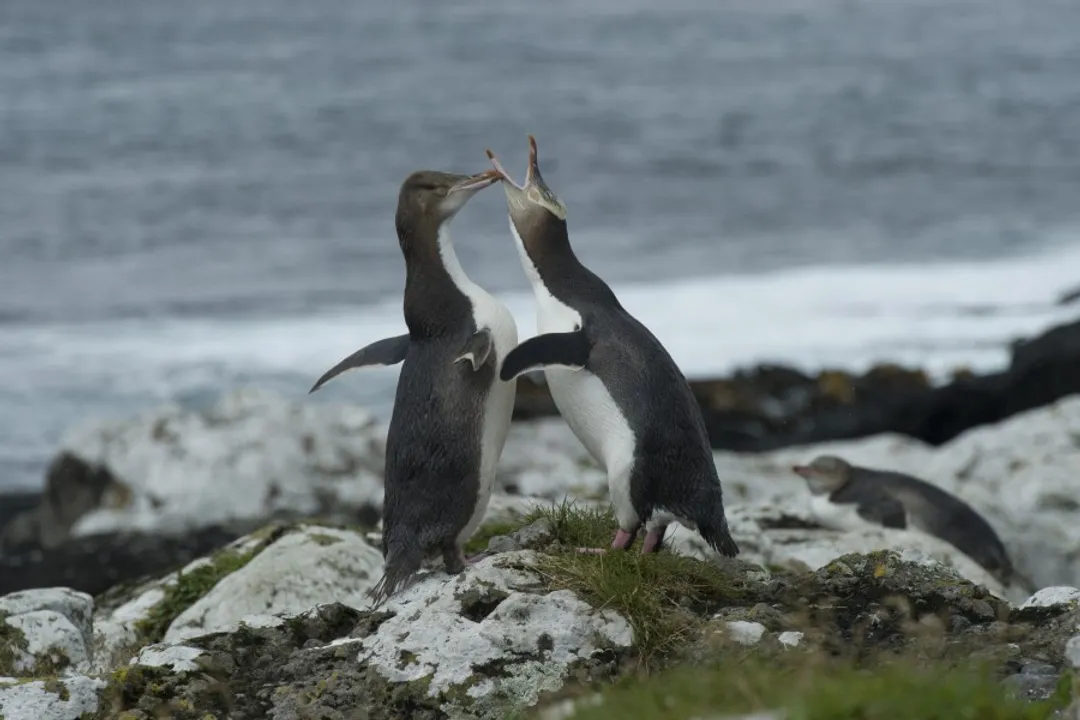
The yellow-eyed penguin, known to Māori as Hoiho, commands attention not just for its striking looks but because it represents a truly unique lineage within the world of penguins. While many associate penguins with large, dense colonies packed shoulder-to-shoulder on Antarctic ice or rocky shores, the Hoiho presents a distinctly different picture of penguin life in the temperate zones of New Zealand. [4] This medium-sized species carries a rather somber conservation status, making its distinct characteristics all the more important to recognize and understand. [4][5]
It is their appearance, however, that provides the most immediate clue as to why they are special. The common name derives directly from the most obvious feature: a pale yellow band of feathers that circles the eye and extends around the back of the head. [2][4] This yellow eye-ring contrasts sharply with the bird's otherwise sober plumage, which consists of dark, slate-grey or blue-grey feathers on the back, head, and flippers, set against a crisp white front. [2]
# Unique Markings
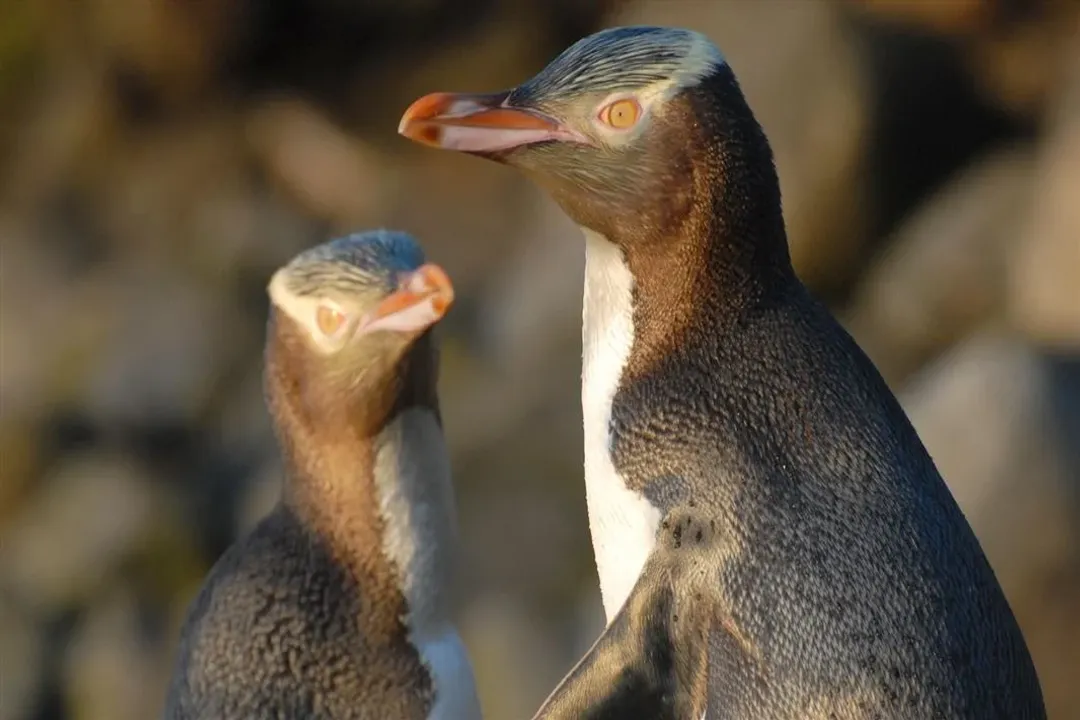
Adult yellow-eyed penguins typically stand between 65 and 75 centimeters tall. [7] Their weight can fluctuate, generally falling in the range of 5 to 8 kilograms. [2] These birds are generally recognizable year-round due to these features, although juvenile birds lack the bright yellow coloration, possessing a duller, greyish-yellow band instead. [2]
When observing a colony, or rather, a loose aggregation of these birds, one might notice a slight variation in their facial markings based on age and maturity, which is key for differentiating them in the field. [2] For seasoned researchers, the combination of their specific feather coloration and that defining yellow band helps separate them immediately from other regional species, like the Southern Rockhopper penguin, which possesses dramatic crests of yellow and black feathers above the eye rather than an enveloping ring. [9]
# Solitary Habits
Perhaps the most significant departure from typical penguin behavior is the Hoiho's preference for solitude. Most penguin species are highly social, breeding, nesting, and foraging in large, noisy groups, often referred to as colonies. [4] The yellow-eyed penguin, conversely, is known for being unusually solitary. [1][2]
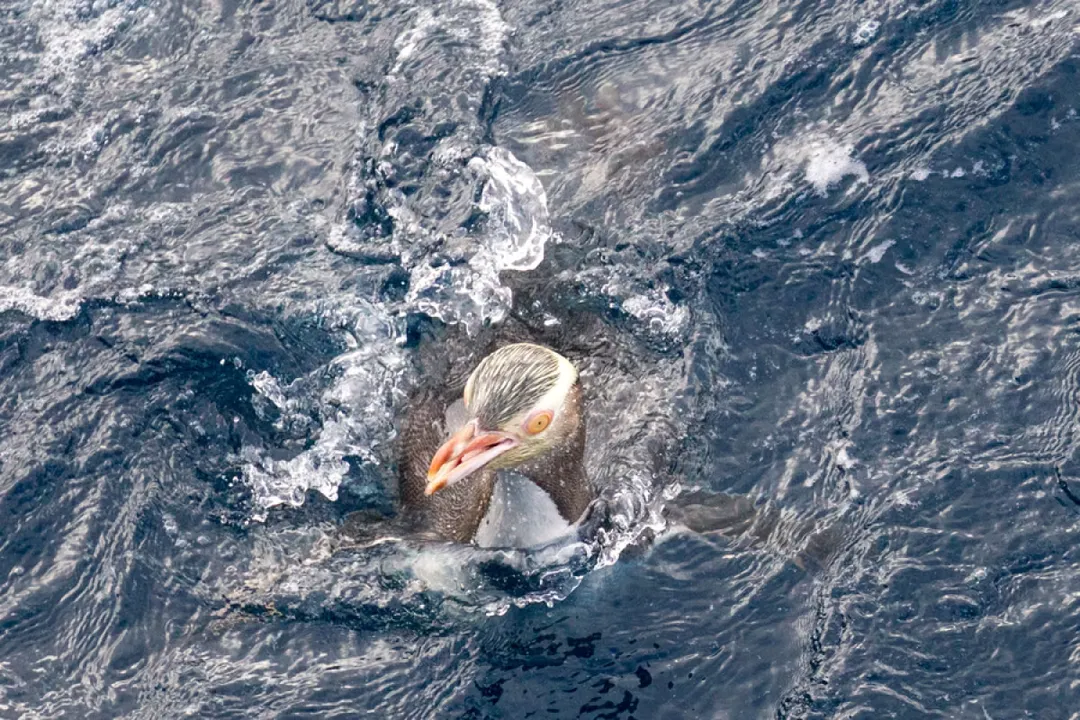
This tendency towards isolation manifests in several ways. When foraging for food, yellow-eyed penguins typically hunt alone, diving and searching for sustenance by themselves. [4] When they return to shore to their nesting areas, they often come back individually rather than in mass arrivals, which makes for a much quieter and less bustling shoreline presence compared to their gregarious relatives. [4]
It is fascinating to consider the evolutionary pressures that might favor this non-colonial strategy. In environments where cover is abundant, perhaps the risk of predation from the sea or land is better mitigated by distributed, rather than concentrated, nesting sites. While other penguin species rely on sheer numbers for defense against aerial predators, the Hoiho’s requirement for dense coastal scrub suggests an adaptation to utilize sheltered, dispersed nesting locations, minimizing the visual signature of a large group. [4] This inherent need for space also impacts breeding success; pairs require significant separation between nests, sometimes several hundred meters apart. [4]
# Habitat Needs
The distribution of the yellow-eyed penguin is concentrated on New Zealand's mainland southeast coast, Stewart Island, and the subantarctic Auckland and Campbell Islands. [1][4] Unlike many other penguin species that favor open, exposed beaches or ice platforms, the Hoiho has a strong affinity for forested or densely vegetated coastal areas. [4]
They frequently choose to build their nests well away from the immediate high-tide line, sometimes venturing up to a kilometer inland into dense coastal scrub or forest cover. [4] This preference for shaded, well-hidden nesting sites offers protection from the elements and potentially from terrestrial predators. [4] An interesting observation noted by field workers is the variation in foraging range, which can extend significantly depending on the availability of prey in local waters. [2]
A typical diet for the Hoiho centers around small, schooling fish, such as sprats and silversides, alongside arrow squid. [2] To catch this fare, they are capable divers. While precise maximum depths can vary, researchers have recorded them diving to depths exceeding 100 meters in their search for food. [2]
# Conservation Status
Despite their intriguing natural history, the Hoiho population faces significant challenges. They are classified as one of the rarest penguin species globally. [2][5] In New Zealand, their conservation status is formally recognized as Endangered. [4]
Several interconnected factors contribute to their precarious situation. Predation remains a major concern, particularly from introduced mammalian predators that can easily access their relatively isolated but accessible nesting sites on the mainland. [4] Habitat degradation along the coast also limits suitable, undisturbed breeding areas. [4] Furthermore, disease outbreaks have periodically caused significant mortality events within the population. [4]
To give a clearer picture of the species' defining characteristics gathered from field observations, a quick summary is helpful:
| Feature | Detail | Source Basis |
|---|---|---|
| Distinguishing Mark | Pale yellow eye-ring and band | [2][4] |
| Social Structure | Unusually solitary; hunts and nests alone | [1][4] |
| Typical Height | 65–75 cm | [7] |
| Primary Habitat | Dense coastal scrub, often inland | [4] |
| Conservation Status | Endangered (Rarest penguin species) | [4][5] |
An actionable note for anyone interested in supporting their survival centers on respecting their spatial requirements. Because pairs need such large buffers of space between nests—often requiring a trek through dense vegetation—any proposed coastal development or track maintenance near known habitats must account for this dispersal requirement, which is far greater than the small footprint needed for a single nest box used by colonial species. [4] It underscores that conservation for the Hoiho is as much about space and privacy as it is about protection from direct threats.
Ultimately, the yellow-eyed penguin stands apart due to this unique blend of visual distinction, solitary sociality, and reliance on specific temperate forest environments for breeding—a combination rarely seen among other members of the penguin order. [1][4]
#Videos
Yellow Eyed Penguin: the RAREST PENGUIN?! Animal Fact Files
Related Questions
#Citations
Yellow-Eyed Penguin - Oceanwide Expeditions
Yellow-eyed penguin - Wikipedia
Yellow-Eyed Penguin Facts and Information | United Parks & Resorts
Yellow-eyed penguin/hoiho: Sea and shore birds
10 Amazing Facts about Yellow-eyed Penguins
Megadyptes antipodes (yellow-eyed penguin) - Animal Diversity Web
Yellow-Eyed Penguin: Facts, Habitat, Surprising Height & More | Fahlo
Yellow Eyed Penguin: the RAREST PENGUIN?! Animal Fact Files
YELLOW-EYED PENGUIN - IUCN Penguin