Yellow-Eyed Penguin Scientific Classification
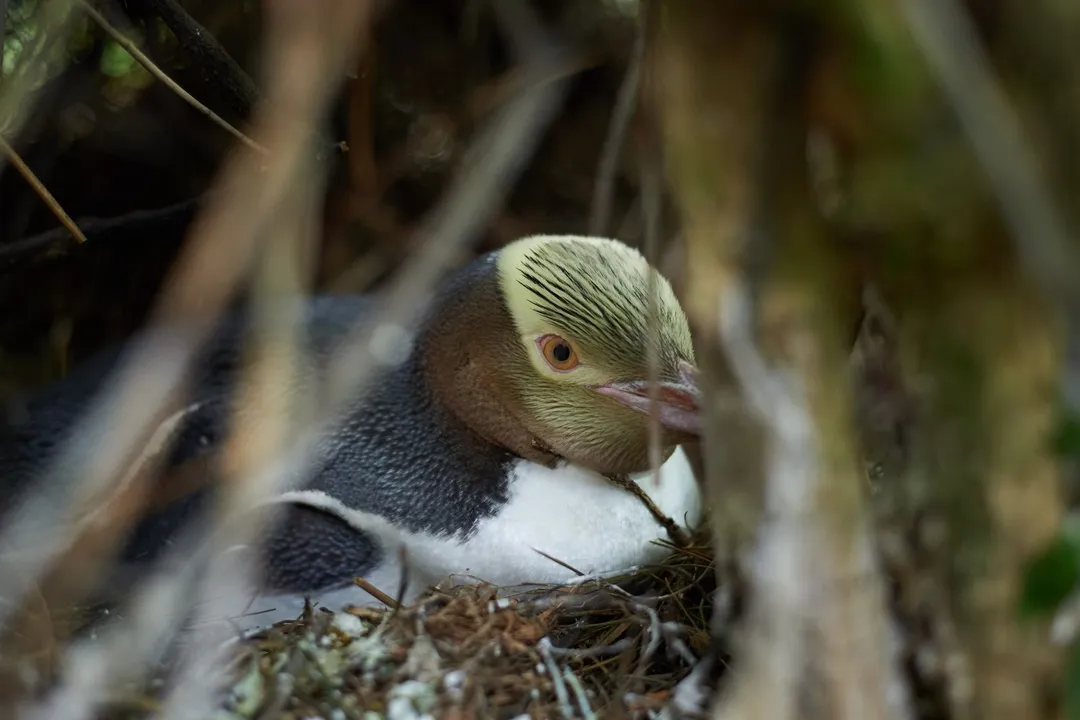
The Yellow-Eyed Penguin, known to the Māori people as Hoiho, commands attention not only for its striking appearance but also for its distinct position within the avian world. Understanding this magnificent creature requires a close look at its scientific placement, the formal structure that defines its evolutionary relationships and biological standing. This classification system, built upon centuries of observation, places the Hoiho in a unique corner of the penguin family tree, a singularity that speaks volumes about its ancient lineage and geographical isolation.
# Linnaean Ranks
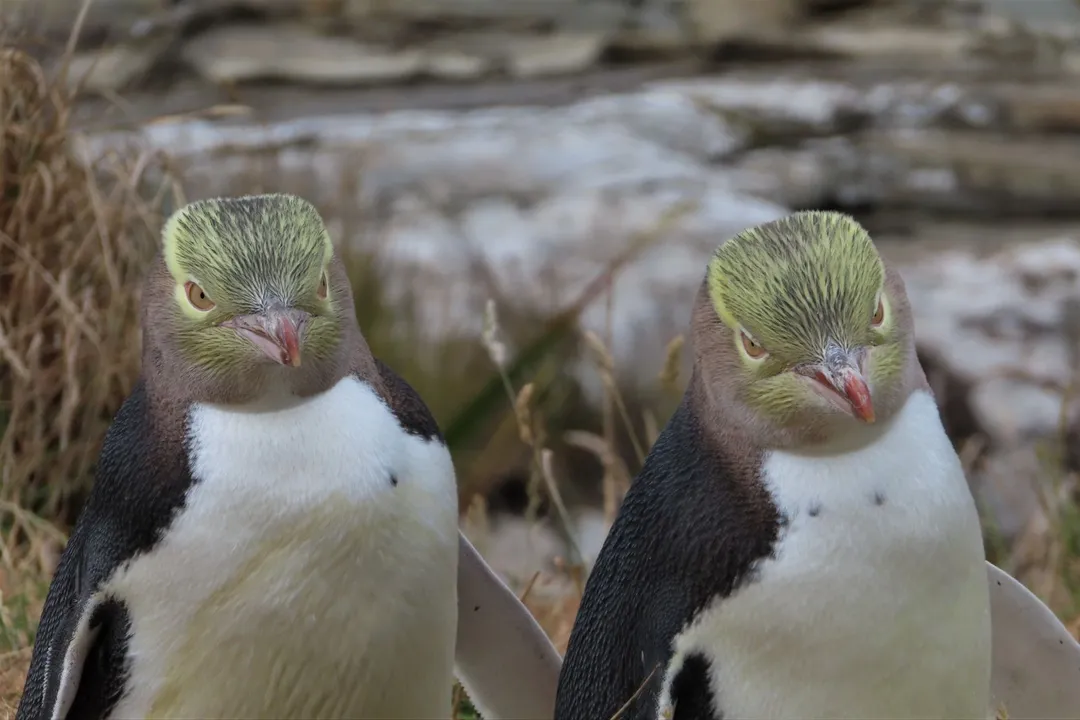
The formal scientific ordering of the Yellow-Eyed Penguin follows the standard Linnaean hierarchy, tracing its ancestry from the broadest biological categories down to its unique species designation.
# Kingdom and Phylum
At the highest level, the Hoiho belongs to the Kingdom Animalia, placing it firmly within the realm of multicellular, heterotrophic organisms. Following this, it is classified under the Phylum Chordata, signifying that at some stage in its development, it possessed a notochord, a dorsal nerve cord, an endostyle, and a post-anal tail—features common to all vertebrates. This membership connects it to fish, amphibians, reptiles, and mammals.
# Class and Order
Moving down, the species is placed in the Class Aves, the bird group, characterized by feathers, beaks, and the laying of hard-shelled eggs. Within Aves, the order is Sphenisciformes, which is the taxonomic grouping dedicated entirely to penguins. Unlike many other bird orders, Sphenisciformes is relatively small, containing only one family, making the identity of "penguin" quite specific.
# Family and Genus
The family level is Spheniscidae, encompassing all extant (living) penguin species. What immediately sets the Yellow-Eyed Penguin apart, however, is its genus: Megadyptes. This genus is monotypic, meaning it contains only one recognized living species, Megadyptes antipodes. This isolation at the genus level is a significant biological marker, suggesting a long, independent evolutionary path separate from the lineages that gave rise to other major penguin groups.
# Species Identification
The official binomial nomenclature is Megadyptes antipodes. This scientific name is crucial, as it is universally understood regardless of local language. The species name, antipodes, is derived from the Greek meaning "opposite the feet," referencing its native habitat in the South Antipodes Islands, although it is now primarily associated with the coasts of New Zealand.
# Genus Singularity
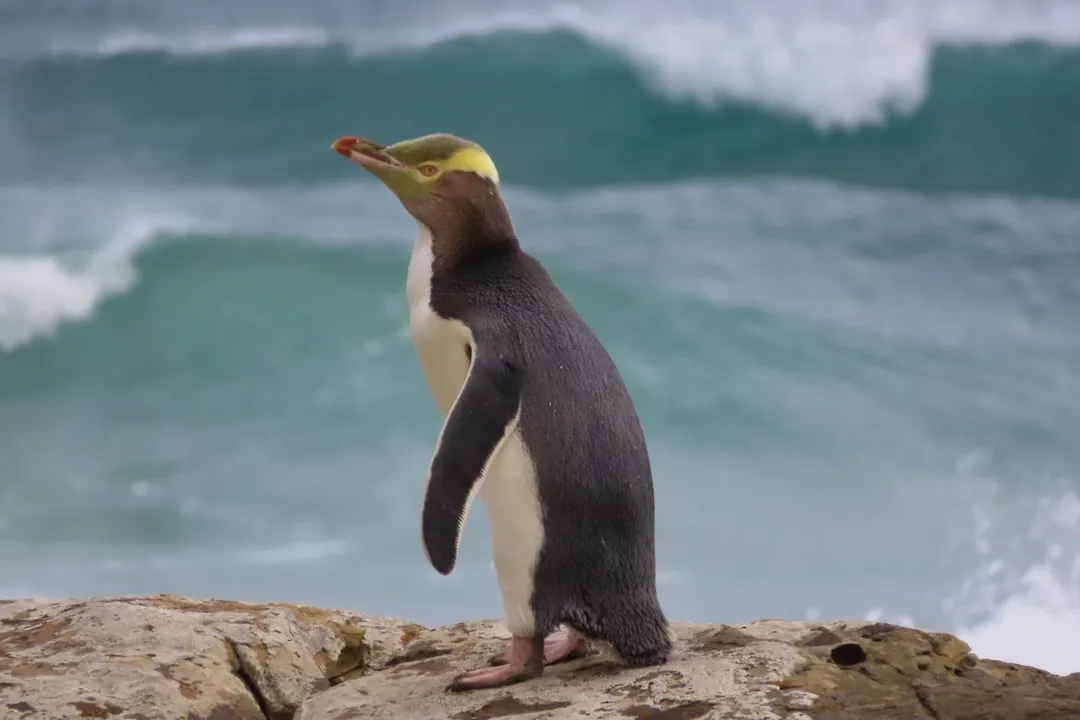
The genus Megadyptes represents a fascinating case study in avian evolution. While many penguin genera, such as Aptenodytes (Emperor and King penguins) or Pygoscelis (Brush-tailed penguins), contain two or more closely related species, Megadyptes stands alone with M. antipodes. This suggests that the ancestors of the Yellow-Eyed Penguin diverged from other Spheniscidae lineages a very long time ago, developing unique morphological and ecological traits that warrant their own generic designation.
If we compare the Hoiho to other Antarctic or subantarctic penguins, this distinction becomes clearer. For instance, the Emperor Penguin belongs to Aptenodytes, while the Adelie belongs to Pygoscelis. The genetic distance separating Megadyptes from its closest relatives implies that it may hold older, more basal traits within the penguin family structure, offering scientists a living window into earlier penguin diversification.
To better visualize this comparative isolation, one can examine its placement against other well-known penguins:
| Taxonomic Rank | Yellow-Eyed Penguin (Hoiho) | Emperor Penguin | Adélie Penguin |
|---|---|---|---|
| Kingdom | Animalia | Animalia | Animalia |
| Phylum | Chordata | Chordata | Chordata |
| Class | Aves | Aves | Aves |
| Order | Sphenisciformes | Sphenisciformes | Sphenisciformes |
| Family | Spheniscidae | Spheniscidae | Spheniscidae |
| Genus | Megadyptes | Aptenodytes | Pygoscelis |
| Species | M. antipodes | M. canescens | P. adeliae |
This table highlights that while both penguins share the same Kingdom, Class, Order, and Family, the split occurs very early at the Genus level, confirming the unique evolutionary trajectory of the Hoiho.
# Naming Meaning
Deconstructing the scientific name provides insight into the species' historical description. Megadyptes translates roughly to "large diver," reflecting the general aquatic prowess shared by many penguins. The second part, antipodes, directly links the bird to the region known as the Antipodes, though their main habitat is the southeast coast of the South Island of New Zealand. The common name, the Yellow-Eyed Penguin, is perhaps the most descriptive feature evident at a glance.
# Appearance Links
The visual characteristics that give the Hoiho its common name are directly tied to its biological identity within the family. It is visually distinct from other penguin species in New Zealand, such as the Little Blue Penguin (Eudyptula minor) or the Fiordland Crested Penguin (Eudyptes pachyrhynchus).
The defining trait is the pale yellow iris and the distinctive, broad band of yellow feathers that encircles the eye and extends around the back of the head. Adults possess this unique eye coloring and feature. In contrast to yellow-crested penguins, which often have ornamental plumes, the Yellow-Eyed Penguin's primary visual marker is this specialized periorbital coloration. Furthermore, their bill is slender and slightly longer than many other penguin species, colored a muted reddish-brown to yellow. Their backs are slaty-blue-grey, contrasting with their white undersides, fitting the general pattern of countershading common in Spheniscidae.
It is worth noting that while the scientific classification places the Hoiho within the penguin family, its specific morphological adaptations—like the location of its breeding colonies, often deep within coastal forests rather than on open, icy expanses—reflect its specialized niche in the temperate New Zealand ecosystem. This ecological distinction is reflected in its classification; had it evolved in a completely different environment, it might have specialized in ways that led to an entirely different genus designation over deep time.
# Status and Classification Urgency
The scientific classification is not merely an academic exercise; it carries immediate implications for conservation efforts, particularly given the Yellow-Eyed Penguin's precarious status. Megadyptes antipodes is classified as Endangered on the IUCN Red List. This severe threat level underscores the importance of maintaining the integrity of its genus and species designation.
When a species is monotypic and critically endangered, its loss represents an irreversible loss to the entire avian order Sphenisciformes—the complete extinction of the Megadyptes lineage. Protecting the remaining populations is paramount because the genetic diversity within this single species represents the entire known evolutionary history of this unique branch of the penguin family.
The distinctiveness of the Hoiho is so pronounced that researchers continue to study whether it represents an ancient relict population or if it has undergone significant unique adaptations since separating from other penguins. This ongoing taxonomic scrutiny, combined with intensive field monitoring, is essential for developing effective management strategies that respect its unique evolutionary position. For instance, understanding that its feeding patterns and nesting habits differ significantly from, say, the densely colonial Rockhopper Penguins (Eudyptes chrysocome) means conservation action must be tailored specifically to its solitary, forest-nesting preferences, a necessity dictated by its unique classification and biology.
Related Questions
#Citations
Yellow-eyed penguin - Wikipedia
Yellow-Eyed Penguin Facts and Information | United Parks & Resorts
Megadyptes antipodes (yellow-eyed penguin) - Animal Diversity Web
Yellow-eyed penguin - Simple English Wikipedia, the free ...
Yellow-eyed Penguin Facts For Kids | AstroSafe Search - DIY.ORG
Dunedin, New Zealand | Hoiho Facts - Yellow-eyed Penguin Trust
Yellow-eyed Penguin (Megadyptes antipodes) - iNaturalist
Yellow-eyed penguin | Endangered Species, Antarctic Habitat
Yellow-eyed Penguin (Megadyptes antipodes)