How do *Bipes biporus* achieve locomotion underground without relying on typical lizard walking patterns?
Answer
They use muscular contractions to 'inch' forward underground
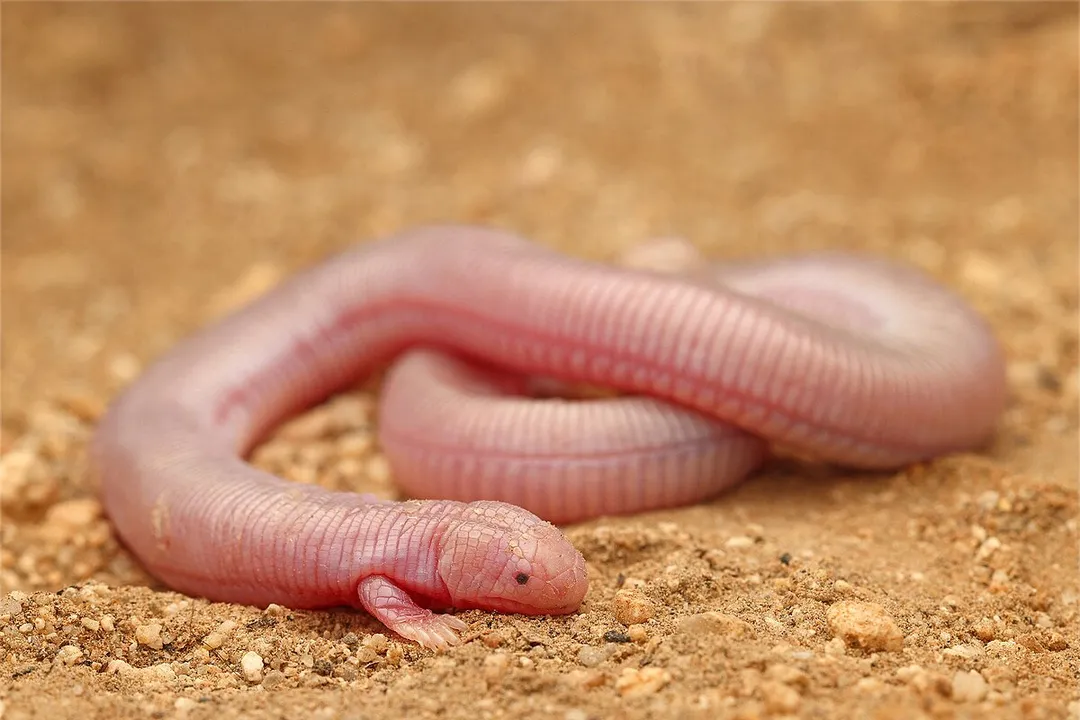
Since *Bipes biporus* lacks the typical legs for standard terrestrial locomotion, its movement underground relies on powerful, serpentine muscular contractions. These contractions allow the animal to effectively 'inch' forward through the soil matrix. The two specialized forelimbs function more as anchors or tiny shovels, providing purchase and stability against the soil as the rest of the body propels itself forward, a motion that allows efficient movement within the dense, confined space of their tunnels.
Related Questions
What specific number of limbs does the Mexican mole lizard, *Bipes biporus*, possess?To which taxonomic family does the limbless reptile *Bipes biporus* belong?What is the primary reason reliable longevity figures for *Bipes biporus* are elusive?Where are *Bipes biporus* primarily found thriving in loose, sandy soils?How does the subterranean habitat potentially influence the metabolic rate of *Bipes biporus*?What typical food sources do *Bipes biporus* consume that they encounter underground?What key biological challenge does the lack of longevity data create for herpetoculturists dealing with *Bipes biporus*?How do *Bipes biporus* achieve locomotion underground without relying on typical lizard walking patterns?What observation about *Bipes canaliculatus* reinforces the knowledge gap concerning *Bipes biporus* lifespan?What process often leads to the incidental collection of *Bipes biporus* by humans?