How did the femur length compare to the humerus length in *Xiaotingia*'s potentially flight-related arm structure?
The femur was actually longer than the humerus
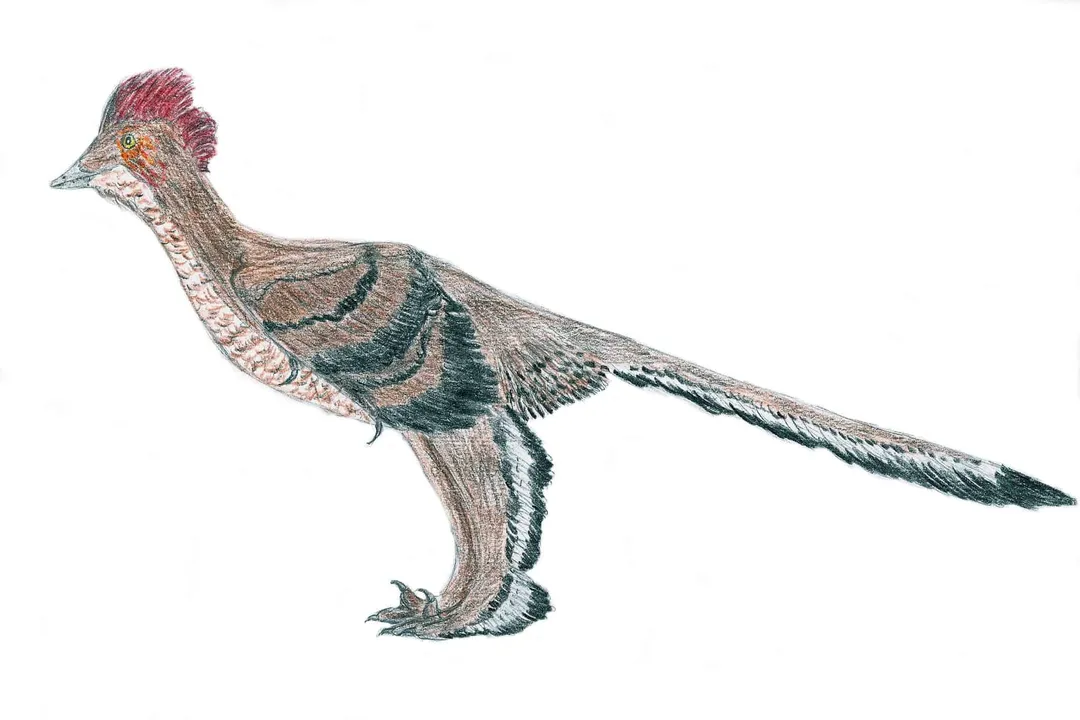
The arm structure of *Xiaotingia* presents a morphology that hints at adaptations related to aerial movement. Specifically, the length measurements of the upper leg bone (femur) and the upper arm bone (humerus) show a distinct pattern: the femur measured 84 mm, whereas the humerus was shorter, measuring 71 mm. This condition, where the femur exceeds the humerus in length, is counterintuitive if comparing strictly to modern birds specialized for flapping flight, where the humerus is often longer. This unique limb ratio, combined with the presence of long pennaceous feathers, suggests that *Xiaotingia* may have used its hind limbs as a secondary set of wings, potentially facilitating gliding or short bursts of flapping movement.