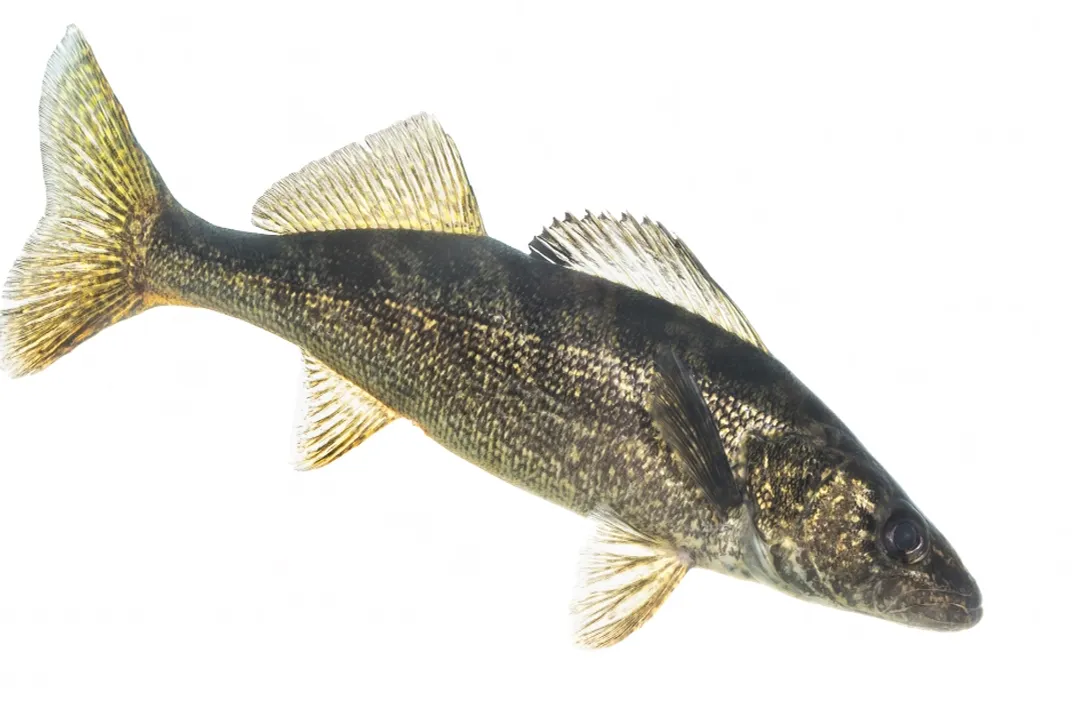
How are the two separate dorsal fins of Sander vitreus characterized morphologically?
Answer
The anterior fin is spiny and the posterior fin is soft-rayed
The walleye possesses two distinct dorsal fins. Morphologically, the anterior dorsal fin is characterized by being spiny, containing rigid spines, while the posterior dorsal fin is composed of soft rays. This arrangement—having a spiny anterior section followed by a soft-rayed posterior section—is a feature commonly observed among many species classified within the Order Perciformes, which groups the walleye with other spiny-rayed fish like the perch.
Related Questions
What does the specific epithet vitreus in Sander vitreus reference?Which family classification places S. vitreus directly with the sauger (S. canadensis)?What defining skeletal characteristic separates the Class Actinopterygii from lobe-finned fishes?What is the global conservation status assessment (G5) assigned to Sander vitreus by NatureServe?Which species hybridizes with S. vitreus to produce the fertile cross known as "saugeye"?What physical feature is a primary characteristic of the genus Sander besides the elongated body?Before the acceptance of the genus Sander, what scientific name was often used for the walleye?What temperature range defines the preferred habitat classification for walleye as coolwater fish?Membership in the Phylum Chordata signifies that S. vitreus possesses which developmental structures?How are the two separate dorsal fins of Sander vitreus characterized morphologically?