Based on its morphology, what lifestyle is strongly suggested for *Wiwaxia*?
Answer
An active grazer consuming microbial mats or detritus on the seabed.
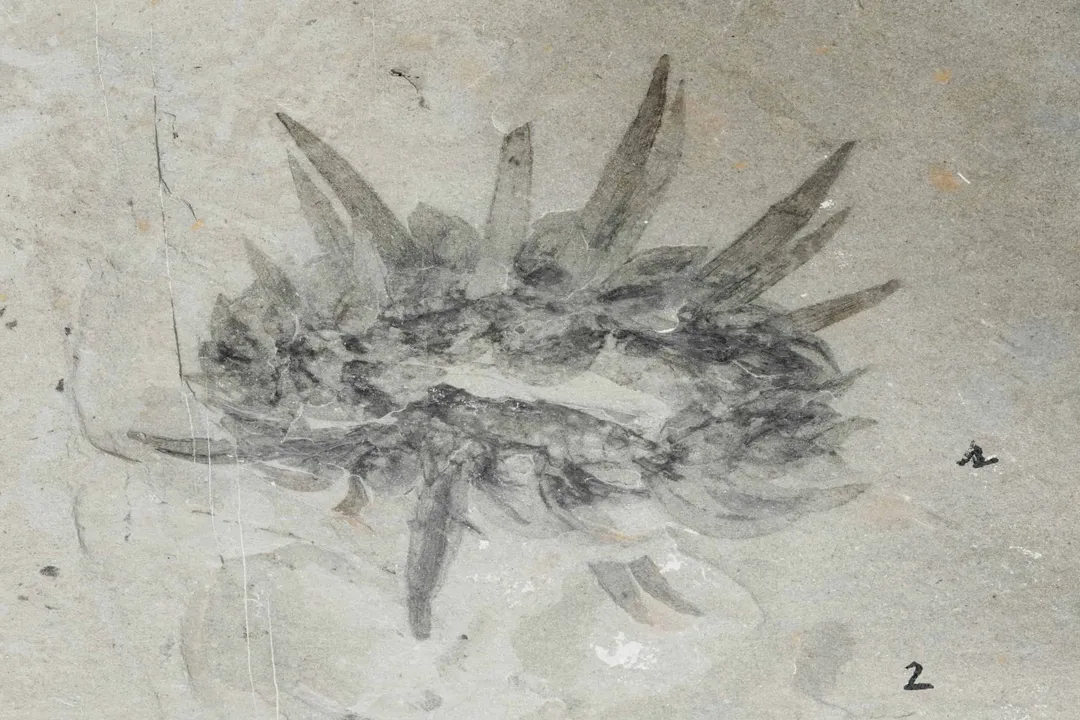
The combination of external features observed on *Wiwaxia*—specifically its slug-like body plan, the ventral location of its mouth (suggesting contact with the substrate), and the presence of specialized arm-like structures for manipulation near the mouth—points toward a specific ecological role. This morphology strongly implies that *Wiwaxia* was not a swift predator or a swimmer, but rather a slow-moving, bottom-dwelling organism. Its primary mode of obtaining sustenance was likely through active grazing, consuming the microbial mats and detritus that accumulated on the ancient seabed.
Related Questions
What is the recognized pronunciation for the organism *Wiwaxia*?What characterizes the fundamental difference between the dorsal and ventral surfaces of *Wiwaxia*?What is the determined composition of the small, plate-like sclerites covering the dorsal surface of *Wiwaxia*?How were the prominent, curved spines arranged on the dorsal covering of *Wiwaxia*?What function is attributed to the two distinctive, crescent-shaped structures near the anterior region of *Wiwaxia*?What is the typical measured size range for most known specimens of *Wiwaxia* recovered?From which renowned fossil deposit and period do fossils of *Wiwaxia* originate?Based on its morphology, what lifestyle is strongly suggested for *Wiwaxia*?How did *Wiwaxia*'s protective plates differ fundamentally from those found on early arthropods like *Marrella*?What classification term is used to describe *Wiwaxia* due to the difficulty in pinpointing its evolutionary relationships?How were the small, plate-like sclerites arranged across the dorsal surface of *Wiwaxia*?