Wiwaxia Physical Characteristics
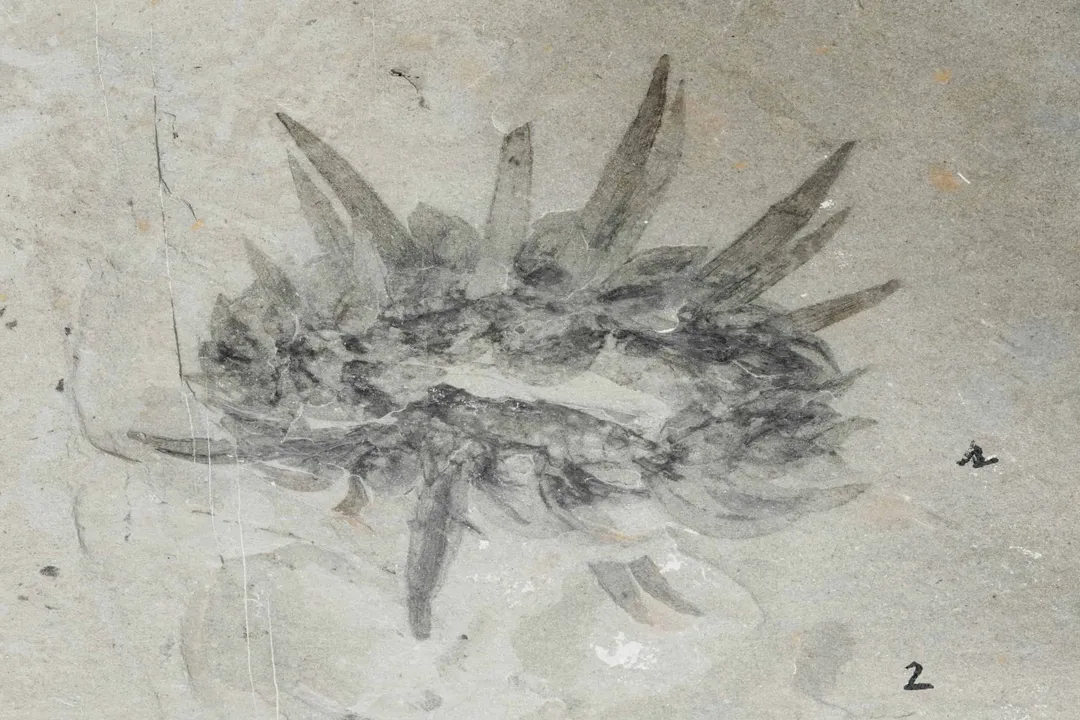
The organism known as Wiwaxia, pronounced "Why-wack-see-uh," presents one of the most peculiar forms of life recovered from the renowned Burgess Shale deposits of the Middle Cambrian period. [7][5] Unlike the hard-shelled arthropods that often dominate fossil records from that era, Wiwaxia was fundamentally a soft-bodied invertebrate. [5][7] Its overall appearance is frequently likened to that of a slug or a small, armored oval. [8][2]
# General Form
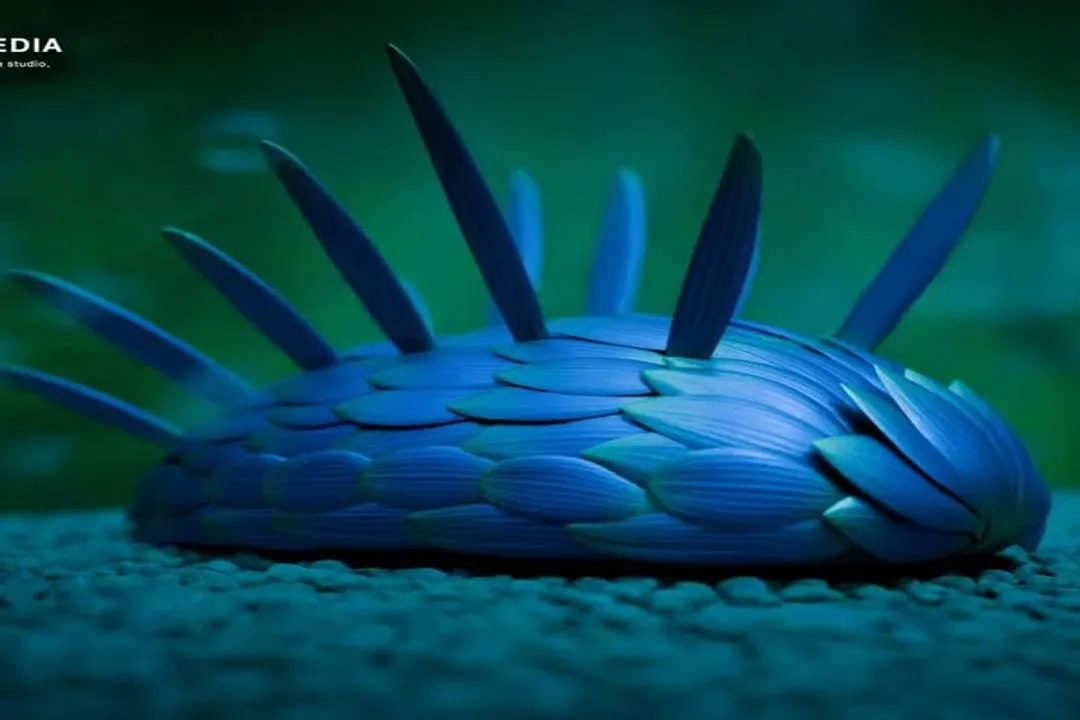
Physically, Wiwaxia possessed an elongated, somewhat rounded or oval body shape. [4][2] Its size remained relatively modest, with most known specimens measuring between one and five centimeters in total length. [4] Some interpretations or reconstructions, however, have suggested a potential maximum length nearing 15 centimeters. [2] The animal's body plan featured a distinct upper (dorsal) surface covered in protective elements, while the underside (ventral surface) seems to have been entirely soft and lacked any significant armor plating. [1][7] This dichotomy in external structure—armored top, soft bottom—is a defining characteristic that separates it from many of its contemporaries.
It is worth considering this dual nature in the context of the Early Cambrian ocean floor. While creatures like early trilobites bore fully mineralized exoskeletons offering all-around protection, Wiwaxia's strategy appears tailored toward a specific lifestyle. The soft ventral side suggests low mobility or perhaps a requirement for flexibility in feeding on the substrate, making the strong dorsal shield essential for defense against predation from above. [1][9] This contrasts sharply with fully encased forms, suggesting an evolutionary trade-off between motility/feeding mechanics and comprehensive external rigidity. [1]
# Dorsal Covering
The most conspicuous feature of Wiwaxia is the extensive covering on its back. This dorsal surface was densely blanketed by numerous small, plate-like structures known as sclerites. [1][2][4] These sclerites were arranged in an overlapping or imbricated fashion, much like roof shingles, providing an efficient shield across the animal's upper body. [1][4]
A critical detail regarding these scales is their composition. Scientific analysis, including detailed study of the Burgess Shale fossils, has determined that these sclerites were not mineralized or calcified. [1][9] This is a significant distinction when looking at Cambrian fauna, as many protective elements from that time were composed of hard minerals. [1] The sclerites of Wiwaxia were formed from organic material, though they were certainly tough enough to preserve as fossils. [9] The Nature study looking into the fossils suggests that the sclerites themselves may have been composed of chitin or a similar organic polymer. [9] The lack of mineralization means that, unlike true arthropods with their jointed, calcified shells, Wiwaxia relied on the structure and density of these interlocking organic plates for protection. [1]
# Spine Arrangement
Adding further defense and visual complexity to the dorsal covering were the spines. Wiwaxia sported prominent, curved, pointed projections extending upward from its sclerite layer. [1][5][7] These were not merely extensions of the individual sclerites but distinct structures arising from them or the body tissue beneath. [1]
The arrangement of these spines is generally depicted as being organized into two parallel rows running along the length of the animal's body. [1][2] These spines could project quite noticeably away from the body axis, making the organism appear even more formidable than its flat-plated base might suggest. [5] The Nature research points out that the morphology and arrangement of these spines and associated scales provide key points for distinguishing Wiwaxia from other problematic fossils. [9] While the spines offered excellent physical defense, their curved nature might have also served a secondary purpose, perhaps aiding in shedding sediment or preventing smaller organisms from settling directly on the animal's back.
# Head Appendages
The anterior, or head, region of Wiwaxia is not clearly defined in the way a modern animal's head is, lacking distinct eyes or antennae in the fossil record. [1] However, this area does feature structures crucial for its survival. Emerging near the front of the animal, situated above where the mouth opened on the ventral side, were two distinctive, crescent-shaped plates or arm-like structures. [1][5]
These frontal appendages are thought to be directly related to feeding. [5] Given that the mouth was located ventrally, suggesting ground contact, these anterior structures likely assisted in manipulating food or perhaps scraping material off the seafloor. [1] The overall posture implied by these features—a slug-like body with a ventral mouth and specialized anterior manipulators—strongly suggests that Wiwaxia was an active grazer, consuming microbial mats or detritus on the seabed, rather than a fast-moving predator or swimmer. [5]
To summarize the main external features, a generalized table can help illustrate the distinct elements of this ancient invertebrate:
| Feature | Location | Description | Implied Function |
|---|---|---|---|
| Sclerites | Dorsal Surface | Small, imbricated, organic plates | Primary protective armor [1][9] |
| Spines | Dorsal Surface | Curved, pointed projections in two rows | Enhanced defense against predators [1][2] |
| Crescent Plates | Anterior/Ventral | Two crescent-shaped, arm-like structures | Food manipulation/gathering [1][5] |
| Body Surface | Ventral Surface | Soft tissue | Locomotion and feeding access [1][7] |

# Comparative Anatomy
Wiwaxia remains classified as a "problematica"—an organism whose evolutionary relationships are difficult to pinpoint—though it is often grouped near mollusks or annelids due to its soft body and scale-like coverings. [1][4] The combination of soft tissue and non-mineralized organic armor makes it an anomaly when compared to other well-understood Cambrian fauna. For instance, while some early arthropods like Marrella also featured arrays of external plates (sclerites), those plates were part of a more complex, segmented arthropod system. [1] Wiwaxia's plates appear simpler and more randomly distributed across a single, continuous soft body form. [1] This difference highlights that convergent evolution for protection was active in the Cambrian, but Wiwaxia took a path distinct from the emerging dominant arthropod body plans. [9] The animal’s existence confirms the incredible biological experimentation taking place during the Ediacaran-Cambrian transition, where multiple attempts at hard-part construction and defensive morphology were trialed concurrently. [5]
In essence, the physical characteristics of Wiwaxia—the soft body, the overlapping but unmineralized scales, the pair of defensive spine rows, and the specialized feeding arms near the ventral mouth—paint a picture of a slow-moving, bottom-dwelling organism that invested heavily in dorsal protection against the myriad of new predators emerging in the Cambrian seas. [4][8]
Related Questions
#Citations
Wiwaxia - Wikipedia
Wiwaxia | Dinopedia - Fandom
Wiwaxia corrugata - A-Z Animals
Wiwaxia - Prehistoric Wildlife
Meet the Spiny Wiwaxia: A Soft-Bodied Wonder of the Cambrian
Wiwaxia
Wiwaxia (pronounced: why-WACK-see-uh What it was ... - Facebook
Wiwaxia corrugata is a slug-like organism up to 5.5 cm in length ...
Articulated Wiwaxia from the Cambrian Stage 3 Xiaoshiba Lagerstätte