Xiaosaurus Facts
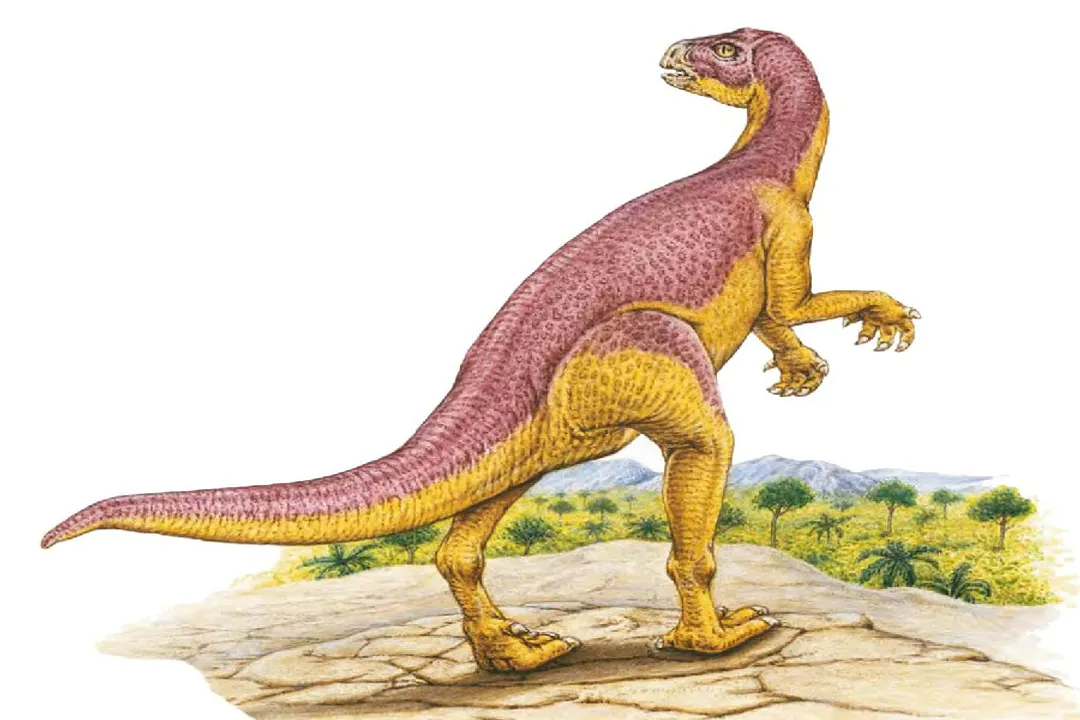
The creature known as Xiaosaurus, whose name translates aptly to the evocative “dawn lizard,” offers a fascinating, albeit fragmentary, glimpse into the diverse world of the Middle Jurassic period. [2][1][5] Discovered in the fossil-rich lands of what is now China, this small dinosaur inhabited the Sichuan Basin when the landmasses were beginning to shift and environments were teeming with life, both great and small. [2][3] Its classification remains a point of scientific discussion, yet the unique remains unearthed provide critical data points for understanding the early evolution of the bird-hipped dinosaurs. [2]
# Naming Context
The moniker Xiaosaurus dashanpensis was formally assigned to the creature in 1983 by paleontologists Dong Zhiming and Tang Zilu. [2] The generic part, Xiaosaurus, derives from the Chinese word xiáo, meaning “dawn,” which was chosen to reflect the antiquity of the fossil find relative to its time of discovery. [2][3] While the name speaks to its age, one must keep the timeline in perspective: the actual dawn of the Dinosaur Age occurred during the Late Triassic, meaning that by the Middle Jurassic, dinosaurs were already well-established across the globe. [3] The specific epithet, dashanpensis, anchors the species to the discovery location near Dashanpu in Sichuan. [2][1]
This small animal represents one of the earliest Chinese dinosaurs whose name begins with the letter “X,” a simple designation that belies the complexity of its anatomy. [3] It is worth noting that while the majority of sources confirm the “dawn lizard” translation based on xiáo, at least one resource suggests the name actually translates to “small lizard,” highlighting how nuances in translation or interpretation can appear even in basic paleontological nomenclature. [4]
# Temporal Setting
Xiaosaurus roamed the Earth during the Middle Jurassic epoch, specifically within the time frame spanning roughly 170.3 to 163.5 million years ago. [2][1] This places it squarely in a dynamic period in Earth’s history, long before the giants of the Late Jurassic and Cretaceous dominated the landscape, but significantly after the initial diversification of dinosaurs. [3][4] The rock layers yielding its fossils are associated with the lower Xiashaximiao Formation within the Sichuan Basin. [2] The precise dating of this formation has seen some scholarly debate, with proposed ages covering the Bajocian and the Bathonian–Callovian stages of the Middle Jurassic. [2][1]
To truly appreciate this time, one must picture the environment. The Middle Jurassic saw the continued breakup of Pangaea, leading to more diverse climates. [4] In the region of modern China, the terrestrial habitat where Xiaosaurus thrived was likely characterized by fluvial-lacustrine (river and lake) deposits, suggesting a landscape crossed by waterways and punctuated by bodies of water. [2][3] The climate was generally warm, supporting the lush vegetation that formed the basis of this small herbivore’s existence. [4]
# Physicality and Size
The skeletal remains recovered paint a picture of a genuinely diminutive dinosaur. [2][3] Xiaosaurus was a bipedal animal, walking exclusively on its two hind legs. [2][3][5] Its estimated length generally hovers around 1 meter (about 3.3 feet), [2][1] although some estimates suggest a slightly larger maximum of 1 to 2 meters, [3] and one source suggests up to 5 feet. [4] In terms of weight, the estimate is incredibly light, placed around 15 pounds (approximately 7 kilograms). [3] It would have stood roughly 3.3 feet (1 meter) tall. [2][3]
The limb structure is particularly informative. The front limbs, or forelimbs, were small and comparatively useless for supporting weight or primary locomotion. [2][3] Fossil evidence indicates these arms possessed five distinct fingers. [2][5] In stark contrast, the powerful hindlimbs, adapted for running and support, terminated in feet bearing four toes. [2][5] The femur, or thigh bone, of a hindlimb measured just 11 centimeters (4.3 inches) long. [2] This configuration suggests a creature built for quick dashes rather than sustained power, relying on agility to survive. [2][2] The tail was long and pointed, likely serving as a crucial counterweight to maintain balance while running in an upright posture. [2][4] A slender body, long legs, and a flexible neck completed its profile. [2][4] Perhaps most striking for its time, some interpretations suggest the presence of feather-like structures, hinting at an evolutionary trend toward integumentary coverings seen in later dinosaurs. [4]
# Diet and Feeding Adaptations
As an herbivore, Xiaosaurus subsisted entirely on plant matter. [2][3][2] Given its small stature, its diet would have necessarily focused on the lower strata of the Jurassic flora, such as low-lying plants, ferns, and foliage from smaller trees or shrubs available in the Sichuan Basin. [2][3]
Like other members of the ornithischian group, Xiaosaurus possessed adaptations suited for processing vegetation. [2] The presence of a beaked mouth is a common feature among ornithopods, perfect for cropping or snipping off vegetation. [2][3] While the original fossil material only includes a jaw fragment with a single tooth, [2] it is believed to have possessed leaf-shaped cheek teeth suitable for grinding tough plant material. [2][4]
Considering its small size and probable need to constantly forage, one can infer a significant portion of its waking hours were dedicated to eating. [4] If Xiaosaurus possessed the long neck described by some researchers, this feature would have provided a small advantage, allowing it to reach slightly higher foliage than its terrestrial competitors of similar size, thereby diversifying its available food sources within the understory layer. [4] Furthermore, the constant consumption and subsequent digestion of fibrous plant material would have necessitated a highly efficient gut system, typical of herbivores, though this cannot be confirmed from the fragmentary bones alone. The very act of eating, followed by defecation, would have subtly but continuously shaped the plant life in its immediate surroundings, acting as a small-scale ecosystem engineer by seed dispersal or selective browsing. [4]
# Classification Debates
Pinpointing the exact placement of Xiaosaurus in the grand dinosaur family tree has proven challenging due to the fragmentary nature of the remains. [2][1] It is firmly nested within the Ornithischia, the "bird-hipped" order of dinosaurs. [2][5]
The original describers, Dong and Tang, provisionally placed it within both the Fabrosauridae and the Hypsilophodontidae, suggesting it might represent an evolutionary transitional form between earlier dinosaurs like Lesothosaurus and the more derived Hypsilophodon. [2] However, the uncertainty surrounding the fossils led some paleontologists to label Xiaosaurus a nomen dubium, meaning a "doubtful name," due to insufficient diagnostic material. [2][1]
A significant step toward validating the genus came from a 2005 review by Paul Barrett and colleagues. [2] They concluded that Xiaosaurus was provisionally valid because it exhibited at least one autapomorphy: a unique derived trait not shared by other closely related dinosaurs. [2] This distinguishing feature was identified as a mediolaterally straight humerus (the upper arm bone, when viewed from the front). [2] While DinoDen places it within the Hypsilophodontidae, [2] the accepted view remains one of an ornithischian with uncertain, likely basal, affinities, perhaps positioned near the split between the Cerapoda and Marginocephalia, or as a very early ornithopod. [2] This ongoing taxonomic debate underscores the importance of every recovered fragment. For instance, the failed attempt to reclassify Agilisaurus multidens as a second Xiaosaurus species in 1992 highlights how new discoveries or re-evaluations can briefly blur species boundaries before consensus is reached. [2]
# Fossil Evidence Recovery
The foundation of our knowledge rests on two distinct fossil discoveries made in Sichuan. [2] In both 1979 and 1980, paleontologists excavated partial skeletons of this small herbivore near Dashanpu. [2][3]
The primary specimen, designated as the holotype (IVPP V6730A), is the main reference example for the species. [2][1] This partial skeleton included:
- A jaw fragment featuring a single tooth. [2]
- Two cervical (neck) vertebrae. [2]
- Four caudal (tail) vertebrae. [2]
- A humerus (upper arm bone). [2]
- A partial left femur. [2]
- A complete right hindlimb. [2]
The second specimen, cataloged as the paratype (IVPP V6730B), provided complementary data, consisting of:
- A right femur. [2]
- One dorsal vertebra and two sacral vertebrae (back and hip area). [2]
- A phalanx (finger or toe bone). [2]
- A rib. [2]
- Two teeth. [2]
These fossils are crucial because they contain the defining limb bones—the humerus that confirmed its uniqueness and the robust hindlimbs that support its presumed swiftness—alongside dental evidence for its herbivorous diet. [2] While many contemporary dinosaurs are known from more complete skeletons, the specific combination of elements in the Xiaosaurus types allows for anatomical comparisons, even if those comparisons must be drawn carefully due to missing major sections of the body. [2]
# Ecological Niche and Predators
Xiaosaurus occupied the role of a small, ground-dwelling herbivore within its Middle Jurassic ecosystem. [3][2] Its small size meant it was inherently vulnerable. While not a giant, it would have served as a readily available food source for the carnivorous dinosaurs sharing the Sichuan environment. [3] Although the famous Velociraptor lived in China, it was chronologically separated, belonging to the much later Late Cretaceous period. [3] Therefore, Xiaosaurus would have faced predation from contemporaneous, large carnivores that inhabited the region during the Mid-Jurassic, such as various theropods whose fossils are also common in the Shaximiao Formation. [3]
Survival would have depended heavily on its speed and agility, traits afforded by its bipedal stance and strong hindlimbs. [2][2] One survival strategy that is often hypothesized for small, vulnerable herbivores is social behavior. [2] While no direct evidence proves herding, the theory suggests that living in small groups would have provided more eyes to spot approaching danger, allowing for a collective warning system that could help an entire group evade a predator. [4][2] For a dinosaur weighing only about 15 pounds, immediate flight was likely the only effective defense against a determined hunter. [3]
# Comparisons and Evolutionary Significance
Understanding Xiaosaurus is often best achieved by comparing it to its contemporaries and relatives. [4] It shares the ornithischian classification with dinosaurs like Huayangosaurus and Lesothosaurus, though the proposed links vary. [2]
In terms of size, it is comparable to other small Jurassic forms, though direct comparisons are difficult without knowing the full proportions of all involved species. [3] For instance, the North American Late Jurassic Nanosaurus ("dwarf lizard") is noted as being of a similar small size. [3]
What sets Xiaosaurus apart, as discussed, is the unique straightness of its humerus. [2] This single feature is what paleontologists use to tentatively validate its genus status against the possibility of it being the juvenile or poorly preserved remains of a known relative. [2] Its position in the evolutionary chart—possibly basal to Cerapoda or Marginocephalia—suggests it represents a lineage that either branched off early or was an early experiment in the ornithischian body plan that didn't lead to the later armored or horned dinosaurs. [2] By studying this small animal, researchers gain insight into the ecological roles these smaller herbivores occupied, forming the foundational layer of the Jurassic food web. [4] Its existence provides a vital data point showing the variety of body plans that existed before the massive radiation of Cretaceous ornithischians. [2][4]
# Speculation on Social Structure and Daily Life
While the fossils offer skeletal proof of its form and function, reconstructing the daily life of Xiaosaurus requires drawing analogies from living creatures and known dinosaur behavior patterns. [4] The suggestion that Xiaosaurus lived in small herds or social groups is compelling when considering its vulnerability. [4] A small group, perhaps composed of a few adults and juveniles, could better monitor their surroundings for predators. [4] Communication, likely through simple vocalizations or body movements, would have been key to coordinating vigilance and foraging. [4]
If we consider the bipedal stance and slender build, Xiaosaurus was likely a relatively quick creature. Unlike slow-moving, heavily armored dinosaurs, its primary defense was escaping detection or outrunning a threat. This implies that social foraging might have involved moving as a unit to quickly relocate to new patches of preferred vegetation when resources became scarce, a common behavior in many modern small grazing mammals and birds. [2][4] The presence of long hindlimbs, noted by the 11 cm femur, strongly supports an adaptation for speed, making it a dinosaur that relied on its legs as much as an early deer relies on its own today. [2] The recovery of two separate, partial skeletons near each other could, in a broader context, hint at social proximity at the time of death or burial, though this is highly speculative without context on the taphonomy of the Dashanpu site. [2]
Related Questions
#Citations
Xiaosaurus
Xiaosaurus Animal Facts
Xiaosaurus - Jurassic Park Wiki - Fandom
Xiaosaurus - DinoDen
Xiaosaurus Facts For Kids | AstroSafe Search
Xiaosaurus Facts for Kids
Xiaosaurus Facts for Kids | KidzSearch.com