Wryneck Facts
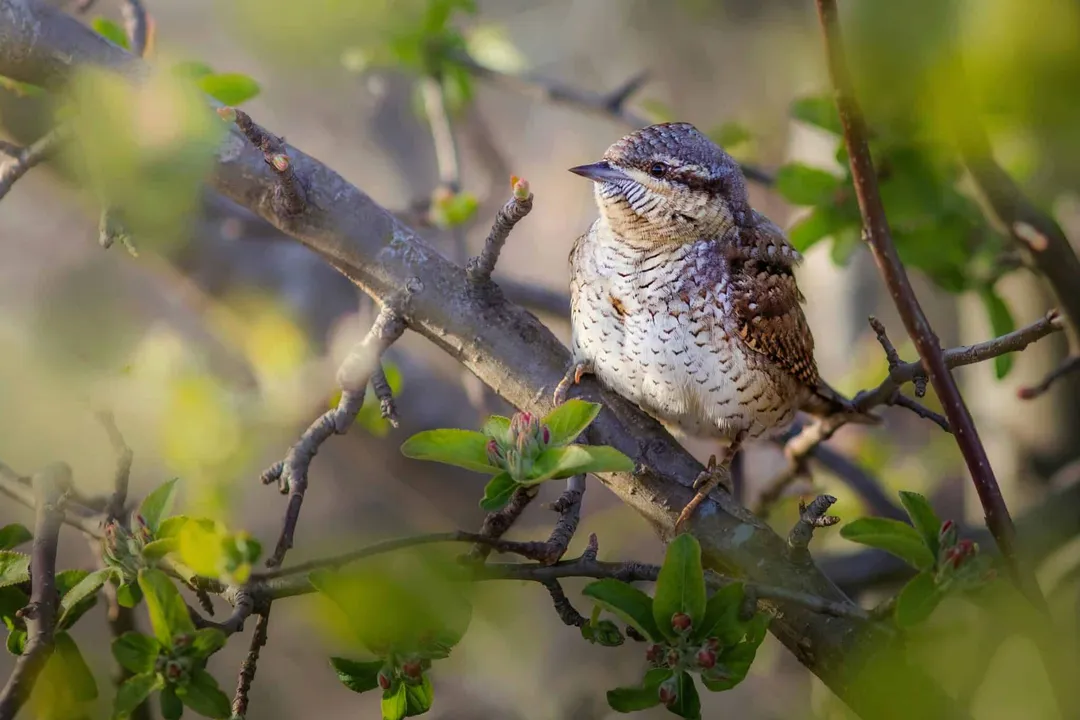
The creature known as the wryneck often causes a moment of pause for birdwatchers, as it rarely fits neatly into the expected boxes we place avian life into. It possesses the camouflage of a ground-dweller yet belongs squarely within the family of tree-climbing birds, the Picidae, making it a fascinating anomaly among woodpeckers. [3][5] While they share ancestry with the more familiar nuthatches and true woodpeckers, wrynecks have evolved distinct habits, setting them apart, particularly regarding their namesake physical display. [1] The name itself, derived from the Old English wrion, hints at the most memorable feature this bird possesses: an almost unsettling ability to contort its neck. [6]
# Plumage Camouflage
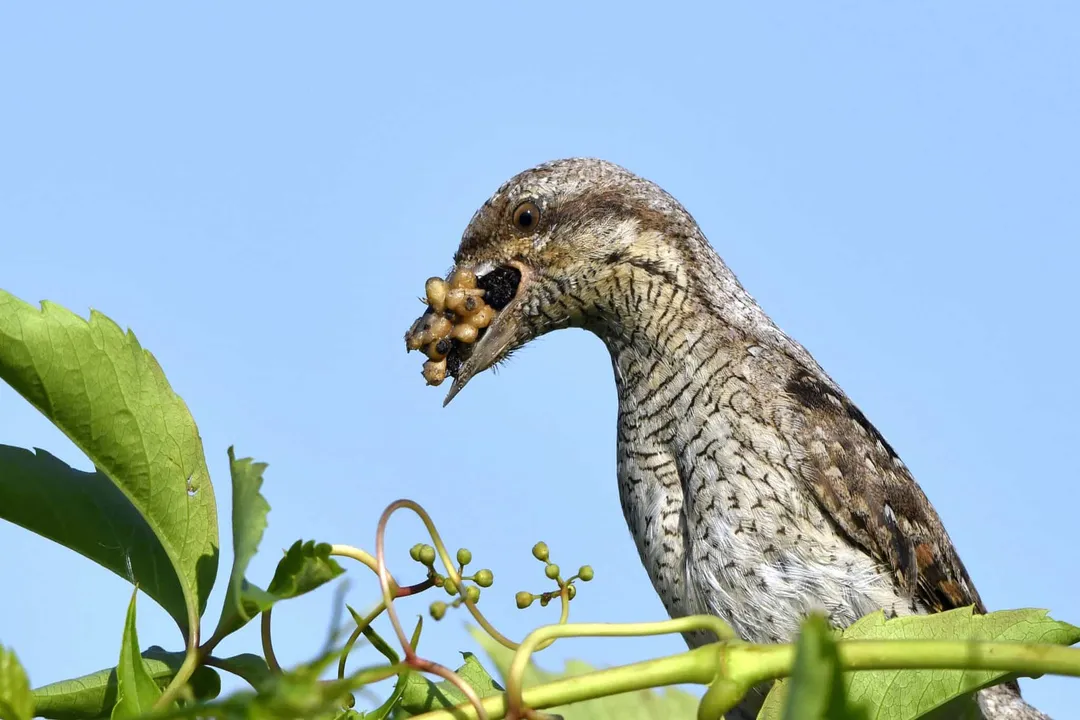
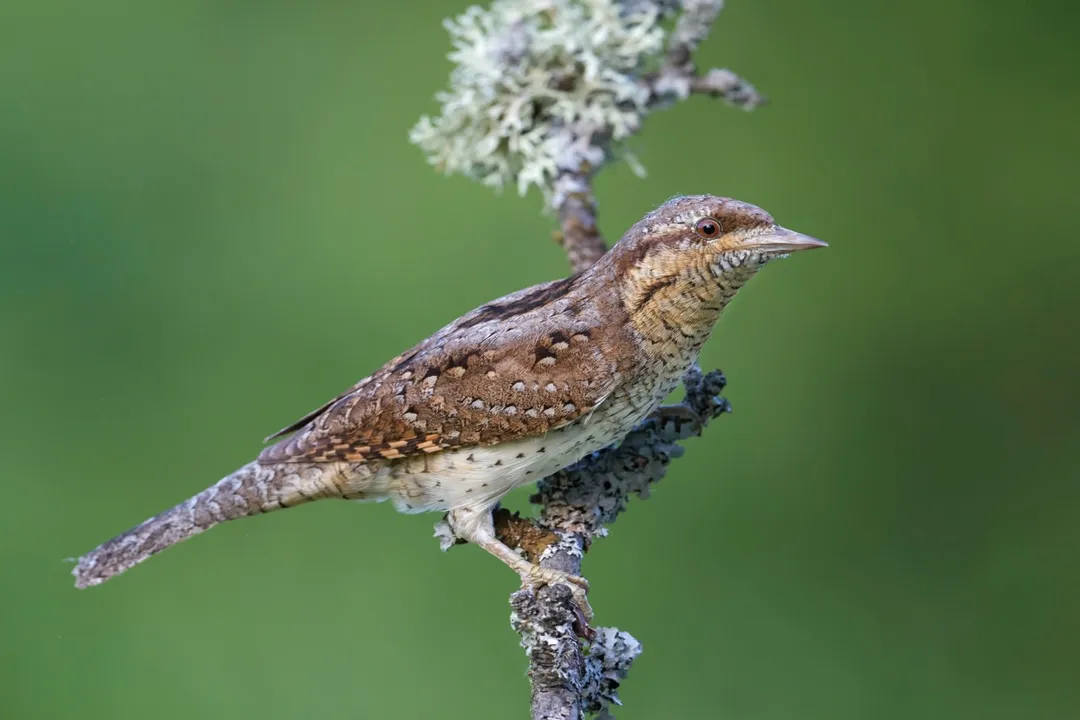
When observing a wryneck perched or foraging, the first thing that strikes many is how surprisingly plain it appears, which is precisely its evolutionary strength. [1] Unlike the vibrant reds, blacks, and whites common among many of its woodpecker relatives, the wryneck sports a subdued palette of browns, greys, and buff colors. [3] This coloring allows it to blend almost perfectly with tree bark, dead wood, or leaf litter on the forest floor. [1] Their feathers are heavily mottled, streaked, and barred, offering intricate patterning that breaks up their outline against complex backgrounds. [7]
This cryptic appearance is a primary defense mechanism, contrasting sharply with the warning coloration seen in some other species. [6] For instance, while a Northern Flicker might use bright yellow wing flashes in flight as a signal, the wryneck relies on not being seen when stationary. [1] If you are searching for a Eurasian Wryneck, paying attention to patterns on a trunk rather than bright flashes is key. [5][7] This mastery of disguise means that a wryneck might be sitting right in front of you, silently inspecting an ant trail, and go entirely unnoticed unless it moves. [1]
If one were to map their typical foraging areas against their coloration, it becomes clear the plumage is adapted for multiple surfaces. A bird spending most of its time gleaning insects from mossy, damp bark will benefit from the grey-brown mottling, whereas a bird probing the leaf litter for ants—a significant part of its diet—benefits from the browns and buff tones that mimic decaying leaves. [1] This dual-purpose camouflage suggests a behavioral flexibility in substrate preference that is perhaps underestimated when simply classifying them as "woodpeckers". [5]
# Unique Defense
The physical defense of the wryneck is legendary, often cited as one of the strangest behaviors in the avian world. [4] When severely threatened on its nest or while brooding, the bird transforms its appearance and demeanor into something far more menacing than a small passerine-like creature. [6] It begins by hissing loudly—a sound that eerily mimics a snake—and then it violently twists and writhes its head and neck in erratic motions. [4][6]
This dramatic performance is designed to frighten away predators, and it seems highly effective against curious mammals or larger birds. [4] The snake mimicry is so pronounced that some observers describe it as unsettling or even frightening to witness firsthand. [6] The combination of the hissing sound and the unnatural, jerky head movements creates a startling illusion. [4] It is fascinating to consider the evolutionary pressure required to develop such an extreme, specialized behavioral defense, contrasting sharply with the "freeze" or "fly" responses common to other small birds. [1]
# Diet and Foraging
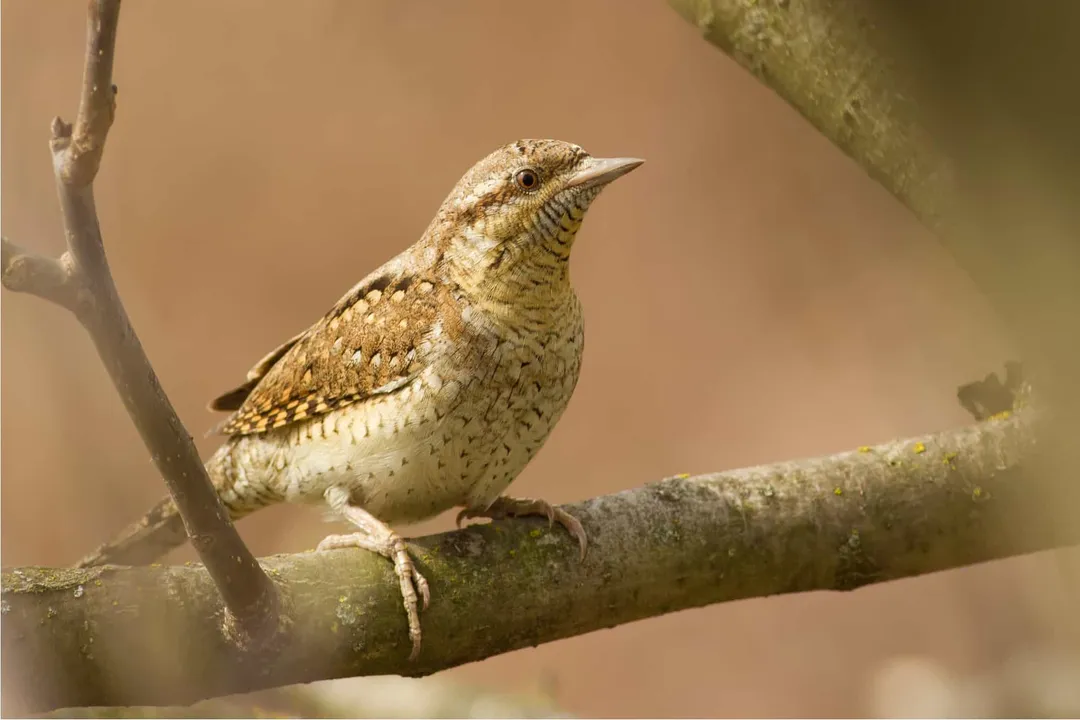
Wrynecks occupy a unique ecological niche within the woodpecker family because their diet leans heavily toward social insects, particularly ants and their larvae. [1][3] While they possess the stiff tail feathers and strong legs characteristic of woodpeckers, their bills are generally less robust than those of species that drill hard wood for beetles. [5] Instead, they employ specialized techniques to access subterranean or bark-dwelling insects. [3]
Their foraging strategy often involves using their tongues to probe into crevices, rotten wood, or even directly into ant nests. [1] The Eurasian Wryneck, for example, spends a considerable amount of time searching the ground for ants, often walking or hopping slowly among the grass and leaf litter, rather than clinging vertically to tree trunks like a downy woodpecker. [7]
To put their dietary preference into perspective, a typical summer diet can consist of over 90% ants, larvae, and pupae. [1] This reliance on ants means their distribution can sometimes be dictated more by the availability of large ant colonies than by the presence of mature trees for nesting. [3]
| Prey Type | Typical Percentage of Diet (Summer) | Primary Foraging Substrate |
|---|---|---|
| Ants (adults, larvae, pupae) | >90% [1] | Ground, rotten wood, bark crevices |
| Other Insects | Remainder [1] | General probing |
# Nesting Habits
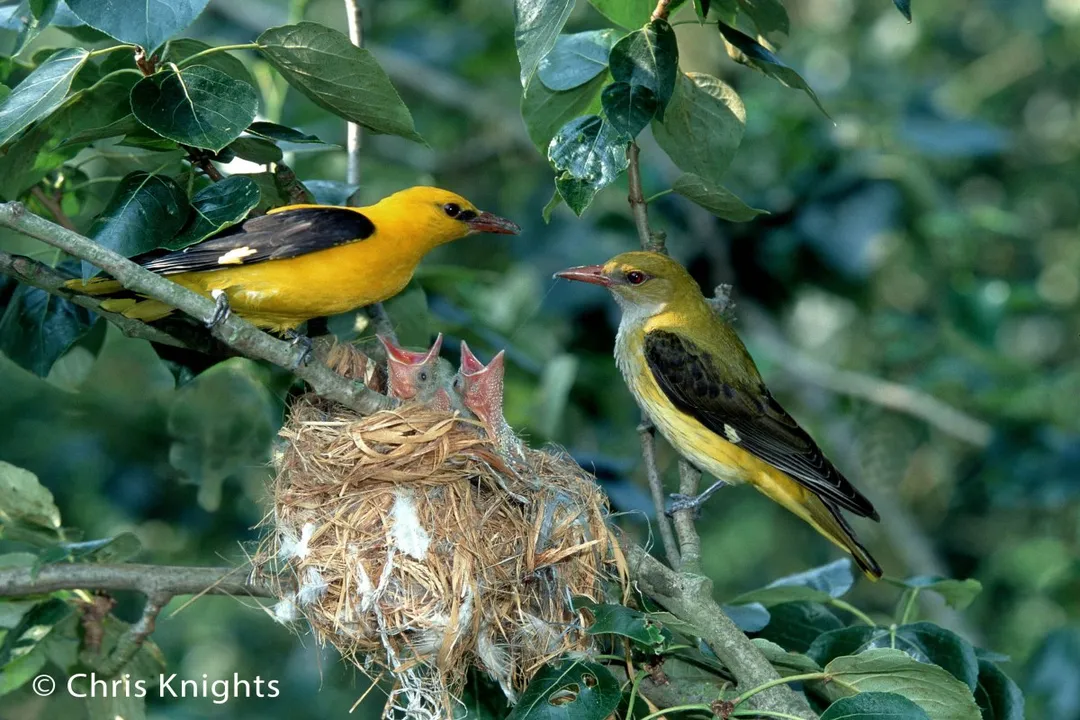
Like their Picidae relatives, wrynecks are cavity nesters, preferring to excavate their own holes, though they are also known to readily occupy pre-existing cavities, especially those abandoned by other woodpeckers. [3][5] This flexibility in site selection is advantageous, particularly in areas where suitable deadwood for excavation might be scarce. [5] The location is typically quite high up in a tree, often between 2 and 10 meters above the ground. [3]
Once the cavity is chosen or excavated, the female wryneck lays a clutch of eggs, which are typically white and glossy. [3] Unlike some cavity nesters, they do not line the bottom of the nest cavity with wood chips or debris; the bare wood serves as the base for the eggs. [5] Incubation duties are shared between the parents. [3]
Understanding their nesting material—or lack thereof—is important for conservation efforts, especially when monitoring nest boxes designed for woodpeckers. A nest box intended for a wryneck should not be filled with wood shavings, as they prefer a bare floor. [5]
# Migration and Range
The wryneck species often discussed, the Eurasian Wryneck (Jynx torquilla), is distinct among European woodpeckers because it is migratory. [5][7] While many European woodpeckers are largely sedentary, the Eurasian Wryneck travels significant distances between breeding and wintering grounds. [5]
During the breeding season, they can be found across large parts of Europe and Asia. [7] However, as autumn approaches, they undertake long flights south. European breeders typically winter in sub-Saharan Africa, while Asian populations move toward South Asia. [5] This migratory nature means that their presence in northern or central European locations is seasonal, a fact that can confuse observers who are accustomed to finding resident woodpeckers year-round. [7]
A practical consideration for those tracking them in Europe is that their arrival in spring is often relatively punctual, signaling the true start of the warmer nesting season in many northern latitudes. [5] Monitoring arrival dates can offer interesting local data points for citizen science projects focused on phenology. When you hear their distinct call—a sharp, ringing klee-klee-klee—it confirms that the migratory period is underway. [7]
# A Bird of Two Worlds
The wryneck occupies a transitional space both physically and behaviorally. They have the zygodactyl feet—two toes pointing forward and two backward—characteristic of woodpeckers, which aids in clinging to vertical surfaces. [3][5] Yet, they spend a substantial portion of their active time foraging horizontally on the ground, behaving more like a thrush or a nuthatch. [1]
This duality is worth noting for anyone trying to photograph or simply observe them over an extended period. If you are searching for a standard clinging woodpecker behavior, you might overlook the wryneck entirely while it is meticulously inspecting the base of a large oak for ant trails. [1] To successfully locate one, watch for slow, deliberate movements on the ground or slow, subtle creeping movements along a branch, rather than the characteristic hammering or rapid hopping of a true woodpecker. [5] The key is patience and accepting that its movement style does not always align with the family name it carries. [3]
# Vocalizations
While their visual defense is dramatic, their primary means of communication during the breeding season is acoustic. [7] The call of the Eurasian Wryneck is often described as a loud, clear, ringing, and slightly metallic series of notes. [7] This call, often transcribed as klee-klee-klee or kee-kee-kee, carries quite far through the woods. [5][7]
Unlike the drumming used by true woodpeckers to advertise territory or attract mates, wrynecks rarely, if ever, drum on wood. [5] They rely almost exclusively on these vocal calls to communicate across the canopy or forest edge during the nesting season. [7] This difference in territorial marking—voice versus percussive sound—is another fundamental split between the wryneck and its more famous cousins in the Picidae family.
# Global Distribution
While the Eurasian Wryneck is perhaps the most widely recognized species mentioned in many ornithological surveys, [5][7] the term wryneck covers a broader group of birds within the Jynx genus. [3] The family includes several species found across different continents, though the behaviors, like the snake mimicry and insectivorous diet, are generally conserved traits. [4] The Yellow-throated Wryneck, for instance, inhabits parts of Africa and presents similar cryptic markings to its Eurasian counterpart. [3] Observing the differences in migratory status between the Old World species and the resident African species could provide rich comparative data on how local environmental stability influences avian movement patterns.
In summary, the wryneck is a specialized member of the woodpecker family defined by its exceptional camouflage, its unique snake-mimicking defense, its preference for ants, and, in the case of the Eurasian species, its long migratory habits. [1][3][5][6][7] It serves as a powerful reminder that families in the natural world often contain members who have successfully forged entirely unique paths to survival. [1]
#Videos
WRYNECK Woodpecker What Should You Know? - YouTube
Related Questions
#Citations
Living with Birds 21 Facts on Wryneck Tweetapedia
Wryneck Bird Facts - A-Z Animals
Wryneck - Wikipedia
Wryneck - BTO
Eurasian Wryneck - Jynx torquilla - Birds of the World
Meet the Woodpecker That Impersonates a Snake
Eurasian Wryneck - Schweizerische Vogelwarte Sempach
WRYNECK Woodpecker What Should You Know? - YouTube
Eurasian Wryneck Facts For Kids | AstroSafe Search - DIY.ORG