How does the wryneck’s typical foraging method differ from the characteristic clinging of a true woodpecker?
It spends considerable time walking or hopping slowly among leaf litter, probing the ground.
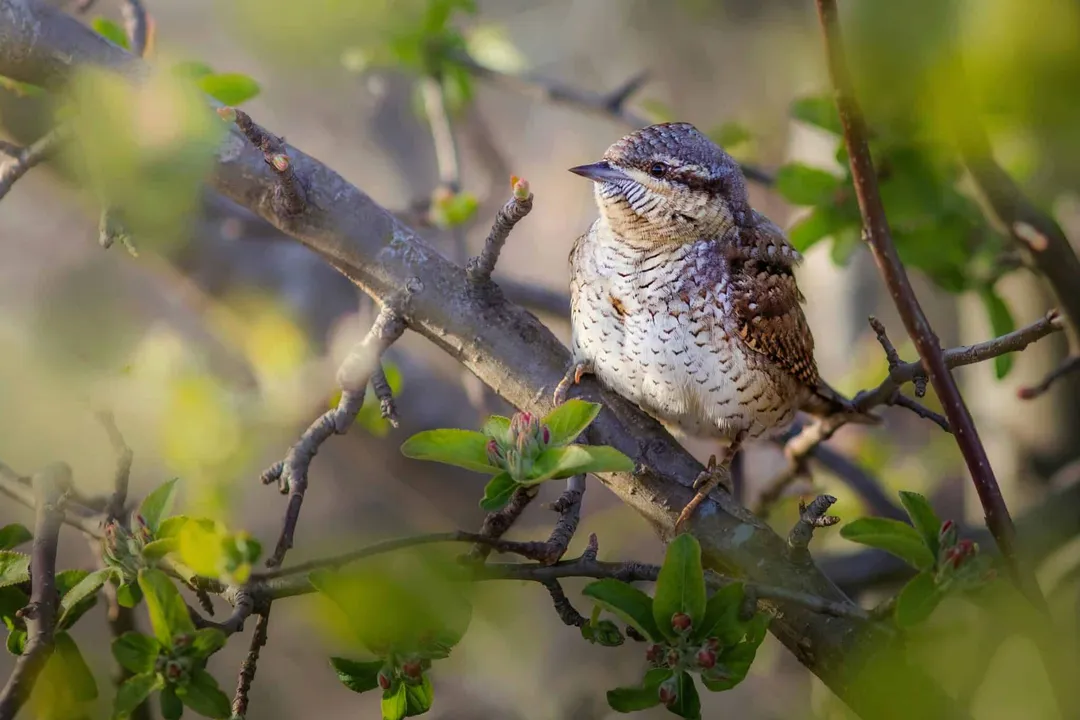
While possessing zygodactyl feet for clinging, the wryneck's active foraging behavior frequently diverges from the vertical clinging and hammering associated with true woodpeckers. Because its diet leans so heavily toward ants and larvae, it often dedicates substantial time to foraging horizontally on the ground. This involves walking or hopping slowly across the grass and leaf litter, using its tongue to probe into crevices, rotten wood, or directly into ant nests found on or under the soil surface. This slow, deliberate inspection of ground substrate mimics the behavior of birds like thrushes more closely than that of a bird actively drilling into dense wood.
#Videos
WRYNECK Woodpecker What Should You Know? - YouTube