White Ferret / Albino Ferrets Evolution
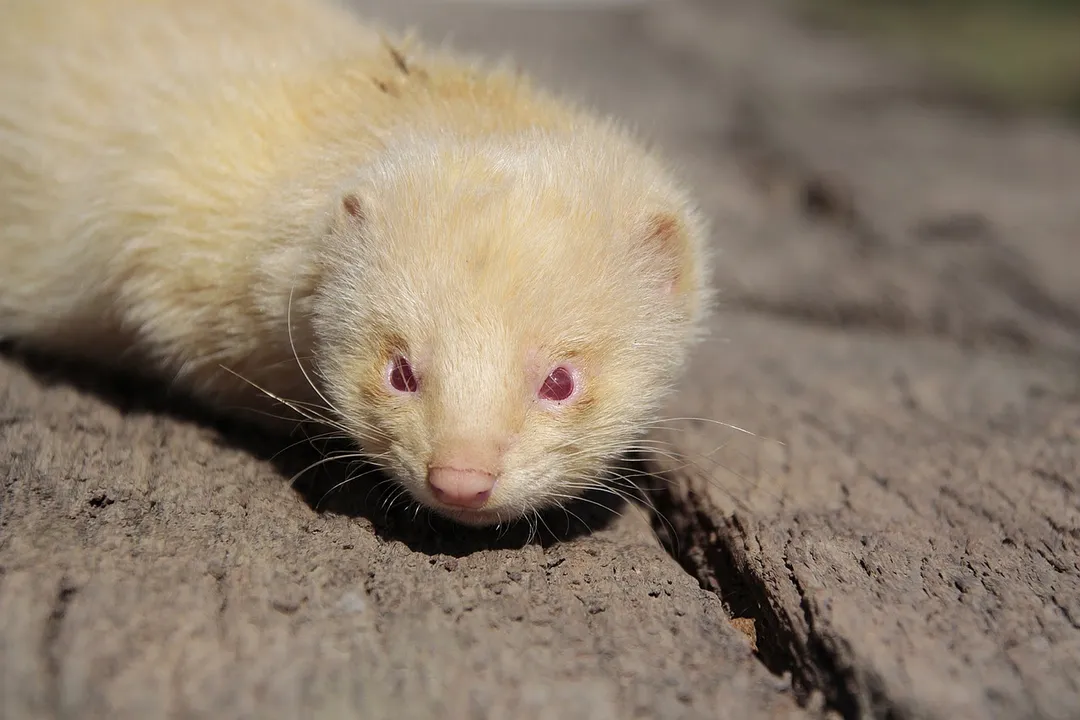
The ferret, Mustela furo, represents a fascinating intersection of wild ancestry and intensive human stewardship. While we often think of evolution as a slow march dictated by natural selection in the wild, the story of the white or albino ferret is overwhelmingly one of artificial selection—a rapid, human-driven genetic drift based on utility and, more recently, aesthetics. These striking creatures are not a separate species; they are domesticated forms of the wild European polecat, Mustela putorius, a lineage that likely diverged from its wild ancestors approximately 2,500 years ago.
# Domestication and Early Utility
The initial relationship between humans and ferrets was pragmatic. They were domesticated primarily for hunting, a practice known as "ferreting" or "rabbiting," where their long, slender bodies were perfect for flushing rodents and rabbits from their burrows. The Romans may have employed them, and historical records mention their use in large-scale hunts. It is in this context that the white coloration first gained a selective advantage, though not for the animal’s own survival.
Historical accounts from the Middle Ages clearly show a preference for white ferrets by human hunters. In thick undergrowth, a white coat made the ferret significantly easier for the human partner to spot, ensuring the worker animal was not accidentally harmed during the hunt. This highlights a fundamental difference in evolutionary drivers: in a natural setting, a white coat on a typically dark animal is a severe liability; in a utilitarian setting, it becomes an asset to the handler. This intentional breeding for visibility cemented a genetic line that carried the genes for reduced pigmentation.
# The Genetics of Whiteness
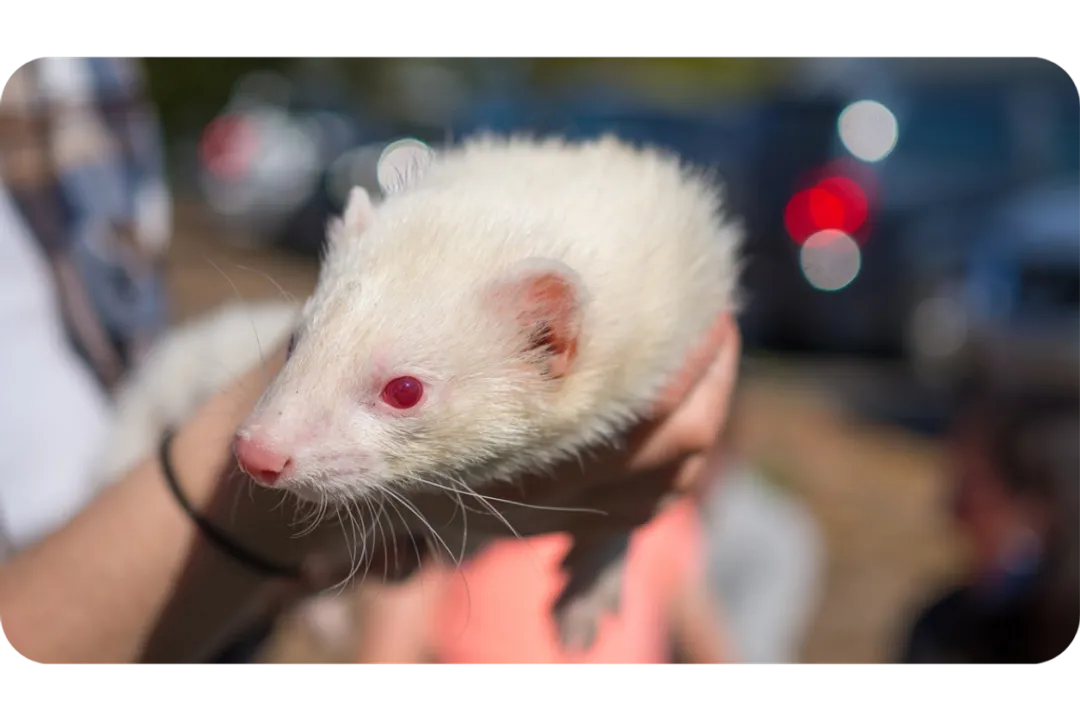
The term "white ferret" can be somewhat ambiguous, leading to necessary clarification in understanding the evolution of this trait. True albinism is a specific genetic condition involving a marked deficiency or complete absence of melanin, the pigment that colors fur, skin, and eyes. In ferrets, this usually stems from a recessive mutation, often cited as being in the tyrosinase gene, meaning a ferret must inherit the gene from both parents to express the trait.
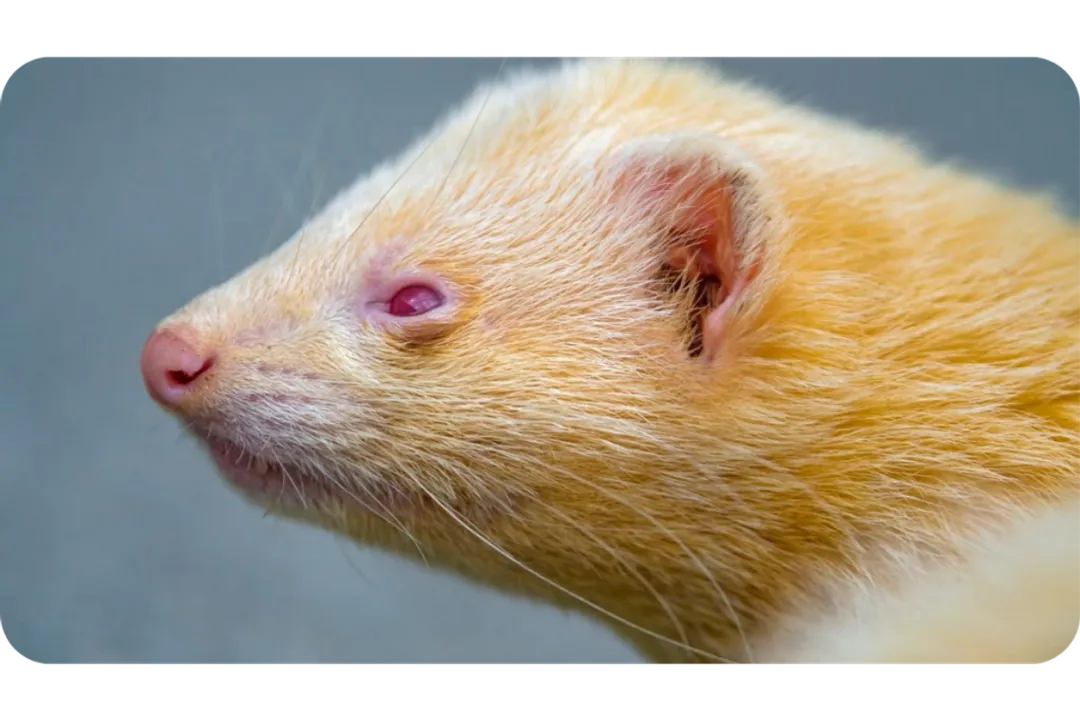
True albino ferrets are defined by this total lack of melanin, resulting in snow-white fur and characteristic red or pink eyes, where the color seen is actually light reflecting off the blood vessels at the back of the eye.
However, modern breeding has also produced other white variants that must be distinguished from true albinism. Ferret standards recognize different base colors, including sable, chocolate, silver, and the albino. The Dark-Eyed White (DEW), sometimes called Black-Eyed White (BEW), is entirely white but possesses dark eyes because the underlying genetic mechanism does not entirely block pigment in the eyes, resulting in a distinct look from a true pink-eyed albino. Furthermore, white markings like blazes or pandas are associated with a congenital defect similar to Waardenburg syndrome, often linked to partial or total deafness, a characteristic not necessarily shared by the fully albino individual.
It is interesting to observe how these distinct genetic pathways have intersected with human desire. While the white coat was historically useful for spotting the ferret during work, the modern pet trade values the purity of the albino trait for its striking contrast, sometimes overshadowing the risks associated with that specific genetic expression.
# Natural Selection vs. Artificial Selection
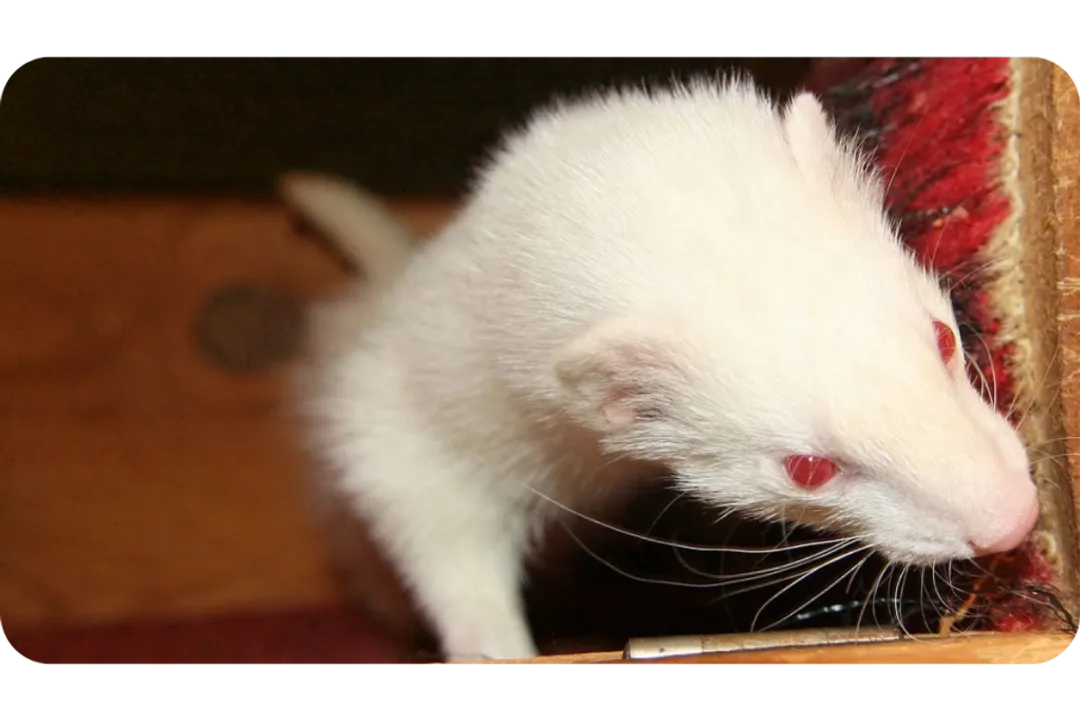
When we consider the "evolution" of the albino trait outside the immediate sphere of human control—that is, its potential in a hypothetical wild population—the outlook changes drastically. In the wild, the traits associated with albinism are highly disadvantageous.
For a small predator like a polecat or a wild ferret, camouflage is essential for both ambushing prey and evading larger predators. A pure white coat provides virtually no camouflage in the usual dark forest floor or underground burrow systems of Eurasia or North America.
Furthermore, the associated visual impairment, sometimes manifesting as deficits in tracking moving objects (an impaired optokinetic reaction), severely hampers hunting success and the ability to detect threats quickly. While some sources suggest that full albinism might occur naturally, estimates place its frequency quite low, perhaps one in 10,000 to one in a million normally pigmented ferrets. These animals would face significant survival hurdles; it is logical to infer that the survival rate for a fully albino polecat in a competitive, predator-rich environment would be drastically lower than for its pigmented relatives, meaning natural selection rapidly removes this genotype from the gene pool.
This tension between selection pressures is a key element in understanding the ferret’s current genetic makeup. Domestication essentially removed the primary selective filter—predation and hunting failure—and replaced it with a human one, often based on appearance or companionship suitability.
# The Modern Genetic Landscape
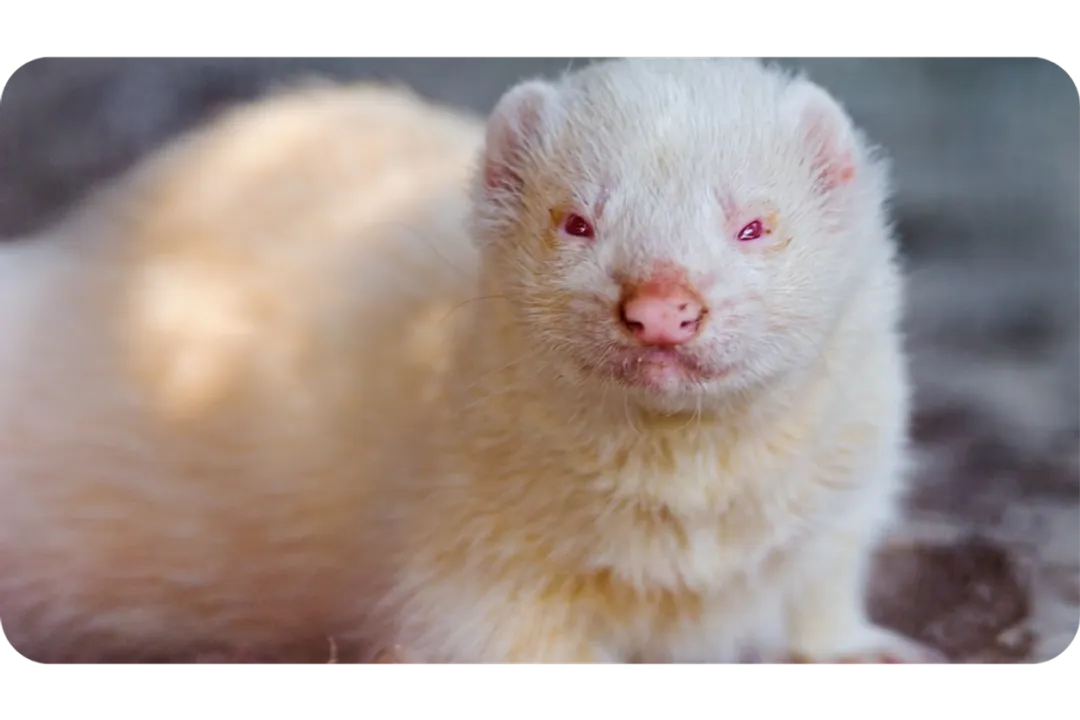
The modern ferret population is a kaleidoscope of colors created through decades of selective pairing by breeders. While the original hunting stock may have been largely sable or close to the wild polecat color, the sheer variety today—including patterns like blaze, silver, and chocolate—demonstrates breeders' focus on novel coat combinations. The albino, with its vivid red eyes, remains a popular and recognized variety, though the DEW is also highly sought after.
The prevalence of albinism in the domestic setting is a direct consequence of human choice rather than environmental pressures. If a breeder desires an albino, they only need two known carrier parents to produce kits expressing the trait, and since they are protected from predators and provided with specialized care, the associated health risks are managed rather than fatal.
It is noteworthy how different the health profile of a domesticated albino ferret is compared to a hypothetical wild one. Domestics are susceptible to common ferret ailments like adrenal disease and insulinoma, which are not directly caused by albinism but are managed through veterinary intervention. For the albino specifically, the lack of melanin increases skin sensitivity to UV radiation and light, necessitating careful indoor management and protection from strong sunlight, especially considering their inherent visual differences. For instance, an albino pet owner must take proactive steps to prevent sunburns that a wild polecat would never have to worry about surviving.
# Coloration and Deafness
One compelling observation derived from studies of coat color genetics is the association between white patterning and auditory issues. While true albinism itself is not cited as the primary cause of deafness, ferrets exhibiting specific white patterns—such as blazes or panda markings—are estimated to have a high incidence of congenital deafness, potentially up to 75 percent. This connection shares similarities with Waardenburg syndrome in humans and is linked to cranial deformation that occurs during development when pigment production is disrupted in specific areas. This illustrates that the same genetic mechanisms that produce dramatic visual variation can have hidden, non-pigment-related effects on other complex systems, like the inner ear structures. A pet owner looking at a white ferret must recognize that the pattern of white, not just the lack of all color, can signal a potential health concern unrelated to the eyes or skin sensitivity typical of true albinism.
The preference for specific colors, whether for historical hunting advantage or modern aesthetic appeal, drives the "evolution" of the domestic ferret population. A striking analysis of this selective pressure reveals a paradox: the very trait that would doom a wild ferret—conspicuous visibility—was once intentionally propagated by humans for operational efficiency. Today, that same conspicuousness is preserved because it is deemed beautiful, but the survival context has flipped entirely to one of sheltered existence. This rapid adaptation to human preference, bypassing thousands of years of environmental checks and balances, is the most significant aspect of the white ferret's modern lineage.
# Maintaining Pigment-Free Companions
Caring for these uniquely pigmented animals requires an understanding that, beneath the white fur and pink eyes, they are physiologically identical to their darker counterparts in terms of basic needs. They are obligate carnivores requiring a high-protein, high-fat diet, often served as high-grade kitten food or raw meat portions. Their need for frequent eating is dictated by their short digestive tracts.
However, the albino variant requires extra consideration regarding light and skin. While they spend the majority of their time asleep, their active hours around dawn and dusk need to be monitored for overly bright conditions. For the owner, managing their environment means ensuring their play areas are safe, their diet supports skin health, and their veterinarian is knowledgeable about ferret-specific issues like adrenal disease. The owner's dedication effectively replaces the selective pressure of nature, allowing these genetically distinct individuals to thrive in conditions where their wild counterparts could not. Ultimately, the evolution of the white ferret is not a tale of survival in the wild, but a demonstration of human mastery over genetics to maintain and refine a visually appealing, yet biologically vulnerable, trait within the domestic realm.
Related Questions
#Citations
Albino Ferrets: Get All The Facts About Them Here!
White Albino Ferrets | Facts & Characteristics - Bio Explorer
Ferret - Wikipedia