White German Shepherd Scientific Classification
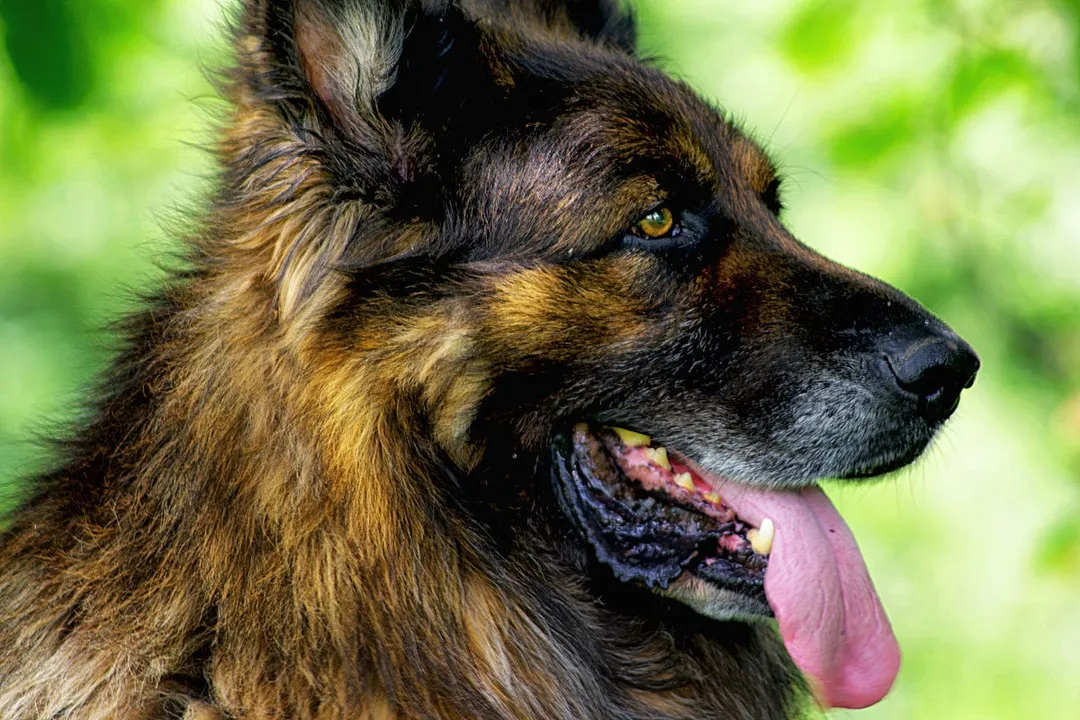
The classification of the White German Shepherd sits at an interesting intersection of strict scientific taxonomy and the fluid, often historical, rules set by canine kennel clubs. While this striking dog is clearly a domestic canine, the designation of "White German Shepherd" versus a recognized breed like the Berger Blanc Suisse prompts detailed examination of its placement within the canine family tree and its standing among breed registries. [2][4]
# Canine Taxonomy

From a formal scientific perspective, the White German Shepherd shares the exact same high-level classification as every other domestic dog breed, including the standard black and tan German Shepherd Dog. [5][7] This placement follows the Linnaean system, establishing its place within the Animal Kingdom.
The established scientific hierarchy for the domestic dog (Canis familiaris or Canis lupus familiaris) looks like this: [5][7]
- Kingdom: Animalia
- Phylum: Chordata
- Class: Mammalia
- Order: Carnivora
- Family: Canidae
- Genus: Canis
- Species: C. familiaris or C. lupus familiaris [5]
This means that scientifically, the difference between a white-coated dog and one with a traditional sable coat is no greater than the difference between a Chihuahua and a Great Dane; they are variations within the same species, Canis familiaris. [7] The breed itself was originally developed in Germany, credited in large part to Captain Max von Stephanitz. [5]
# Coat Genetics

The defining characteristic of this dog—the brilliant white coat—is determined by genetics, yet it does not alter its underlying species classification. [2] The white coloration is not the result of crossbreeding with a distinct species but rather arises from a specific genetic mechanism within the German Shepherd gene pool. [2] This particular coat color is caused by the presence of a recessive gene. [2] For a German Shepherd to be born white, both parents must carry this recessive gene, and both must pass it on to the offspring. [2]
This contrasts sharply with other white dogs whose color might be due to genes that mask other colors entirely, or genes linked to albinism, though the White Shepherd is not considered albino. [2] The white pigment is simply the expression of this specific recessive allele, making the dog genetically Canis familiaris just like its colored counterparts. [2]

# Color Status
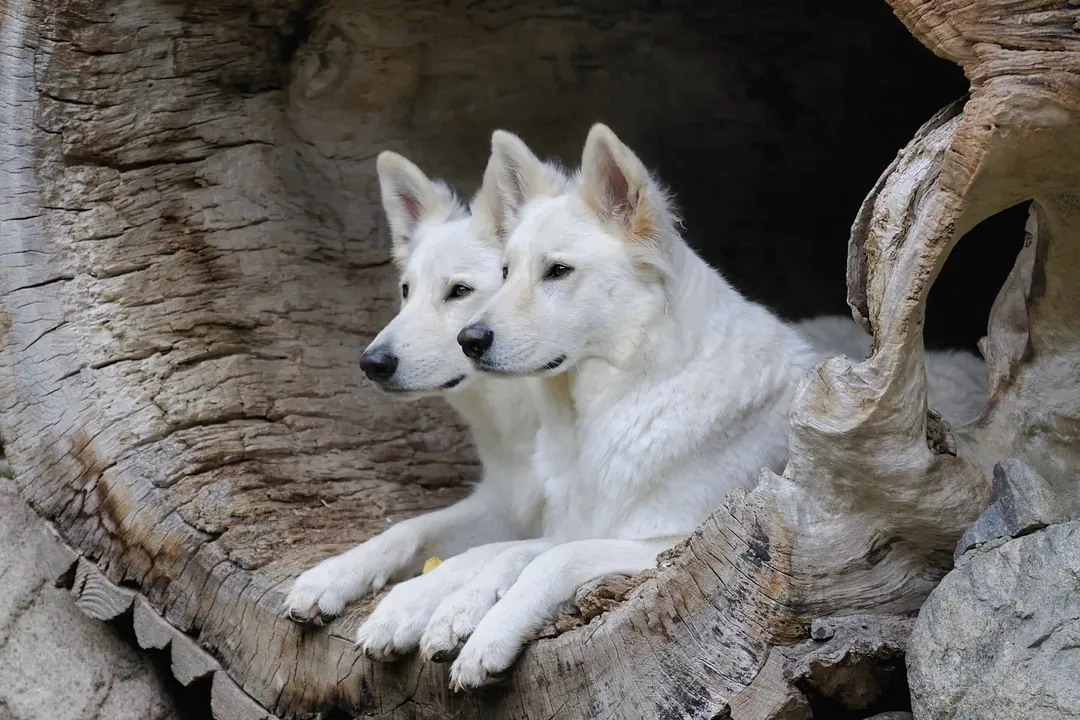
The confusion surrounding the White German Shepherd's scientific status versus its scientific classification arises entirely from kennel club politics and breed standards, not from biology. [2] Historically, white was often considered a disqualifying fault within the German Shepherd Dog (GSD) breed standard by many major kennel clubs. [2] Because white dogs were disqualified from show rings in certain jurisdictions, breeders who preferred the white coat began developing their dogs separately, leading to the establishment of distinct breed registries for the White Shepherd. [2]
This split resulted in two main designations that readers often encounter:
- White German Shepherd: A dog phenotypically matching the GSD structure but possessing the recessive white gene, often registered under the GSD parent club rules where white may be disqualifying or simply relegated to non-conformation classes. [2]
- Berger Blanc Suisse (White Swiss Shepherd Dog): This is a distinct breed recognized by the Fédération Cynologique Internationale (FCI). [4][9] While closely related and sharing ancestry with the GSD, the Berger Blanc Suisse has developed its own recognized standard separate from the GSD standard. [4][9] Some sources view the White Shepherd as the American/Canadian continuation of the original white lines from the GSD, while the Berger Blanc Suisse has achieved full FCI breed recognition. [2][9] The United Kennel Club (UKC), for example, recognizes the White Shepherd as a distinct breed. [2]
When comparing the GSD and the Berger Blanc Suisse, while their origins are intertwined, the key difference today lies in the recognition and the official breed standard they adhere to, rather than a fundamental biological divergence. [4][9] The White Swiss Shepherd Dog, for instance, is categorized under the Pastoral group by the Royal Kennel Club. [9]
# Recognition Nuances
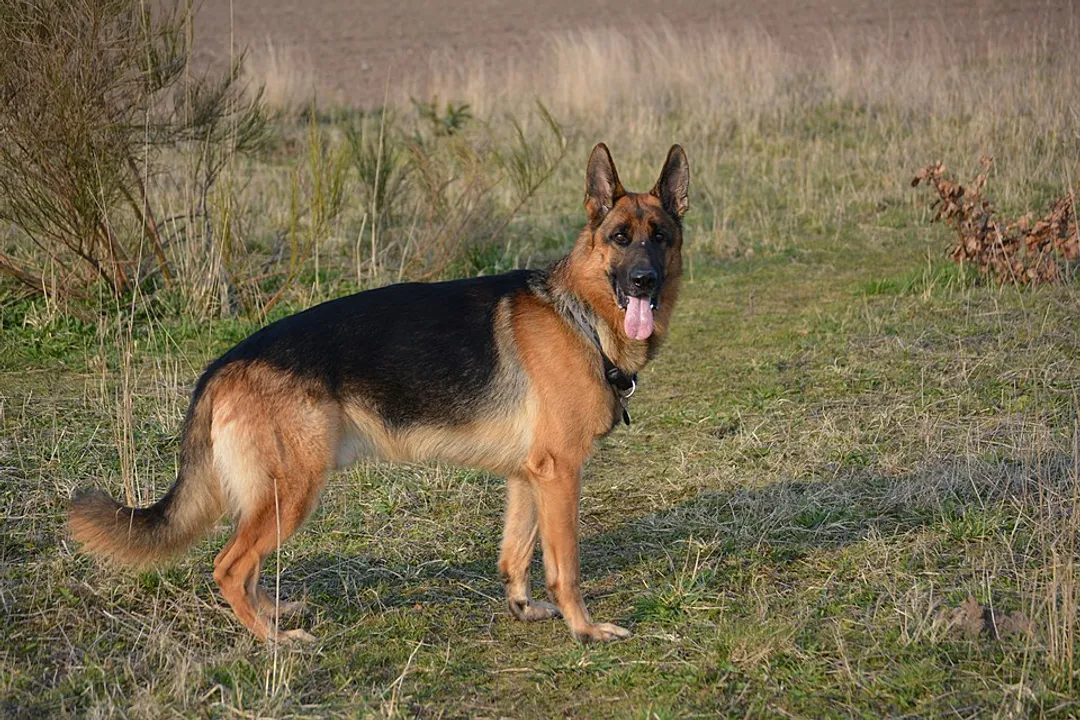
It is fascinating to observe how kennel club decisions solidify what is essentially a color variation into a separate breed entity over time. For instance, while the FCI recognizes the Berger Blanc Suisse as a separate breed, a white-coated dog exhibited in the US or UK might still be registered or referred to simply as a White German Shepherd, depending on the specific club's registry rules. [2][9]
Considering the historical context, one might note that the initial disqualification of the white coat was often based on the belief that the white color was linked to undesirable traits, even though modern understanding confirms it is merely a recessive gene that does not inherently affect temperament or health more than any other color variation. [2] This illustrates how subjective human preference, codified through standards, can create distinct lines from a common ancestral stock. If you are researching the lineage of a white dog today, paying close attention to whether its registration papers list it as a GSD or a White Swiss Shepherd is more important for understanding its current judging eligibility than its biological classification, which remains Canis familiaris. [2][9]
To further clarify for a prospective owner looking at pedigrees, one practical consideration arises from this dual status. If a dog traces its lineage predominantly through lines registered as German Shepherds where white was historically disqualified, the dog might have a pedigree that shows generations of GSD lineage, but the animal itself may not be eligible for conformation shows under the main GSD umbrella organization. [5] Conversely, a Berger Blanc Suisse will have a pedigree that reflects its development under that specific breed standard, even if its ancestors were originally grouped with GSDs. [9] This distinction impacts lineage visibility more than species identification.

# Breed Characteristics
Regardless of the registry designation—White German Shepherd or Berger Blanc Suisse—the dogs generally share the strong physical characteristics associated with the GSD breed, such as intelligence, loyalty, and a working drive. [5][4] They are typically medium-to-large sized dogs known for being strong and agile. [5] The temperament is often described as confident and alert. [5] If one encounters a white dog bred purely within the White Swiss Shepherd lines, for example, they may exhibit subtle differences in confirmation or temperament refinement compared to a white dog bred exclusively under GSD lines where the white color was maintained as a recessive trait alongside the traditional GSD appearance. [4]
The physical appearance is striking; the coat is always white, often thick and medium in length, though coat length can vary. [4] While some kennel clubs view the white dog as a fault, others view the Berger Blanc Suisse as a distinct, beautiful breed worthy of competition, which speaks to the evolving acceptance of coat variation within the broader German Shepherd heritage. [2][9]
Related Questions
#Citations
White German Shepherd Dog Breed Complete Guide - A-Z Animals
White Shepherd - Wikipedia
German Shepherd | Wild Kratts Wiki - Fandom
German Shepherd Dog - American Kennel Club
German Shepherd Guide | Facts, Pictures | A-Z Animals
It's True What They Say About The White German Shepherd | Swiss ...
German Shepherd - White - Healthy Breeds
White Swiss Shepherd Dog | Breeds A to Z - The Kennel Club