Whimbrel Scientific Classification
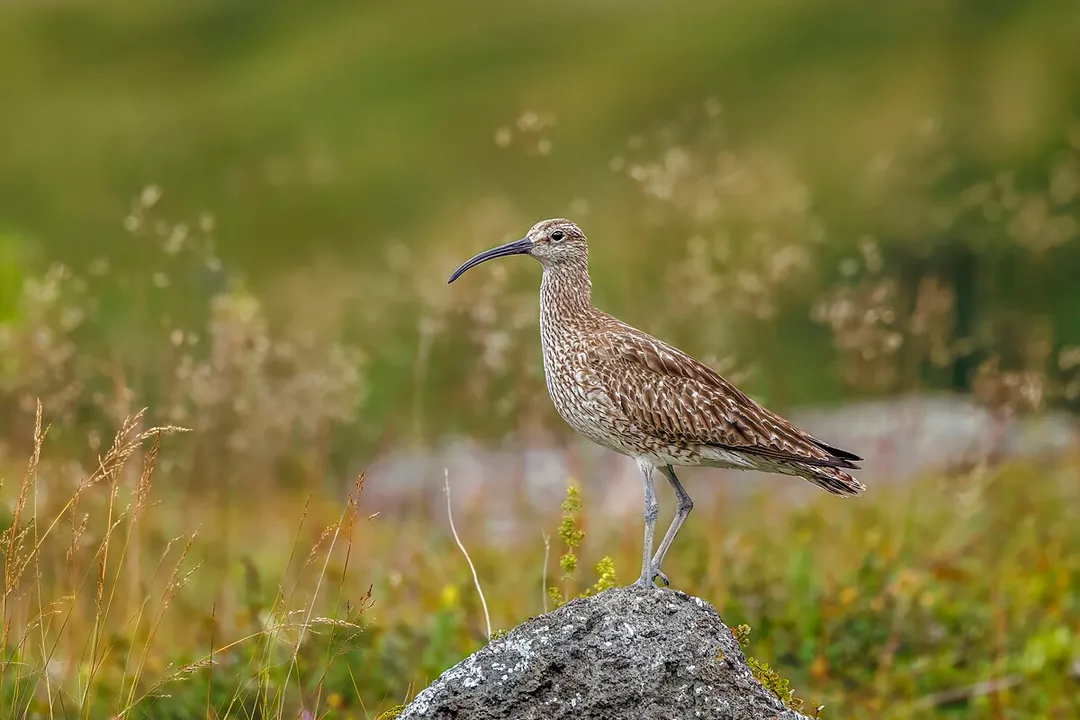
The Whimbrel, with its striking long, down-curved bill, is a familiar sight to coastal birders across the globe, yet its precise scientific placement has been subject to recent, significant refinement. To truly appreciate this widespread shorebird, we must delve into the Linnaean hierarchy that defines its place in the animal kingdom, a process that reveals fascinating splits and historical naming conventions that continue to shape ornithological understanding.
# Kingdom Placement

The foundational structure of any organism’s classification begins at the top. The Whimbrel falls squarely within Kingdom Animalia, classifying it as a multicellular, heterotrophic organism. Moving down the tree, it belongs to Phylum Chordata, meaning it possesses, at some stage of development, a notochord, which in birds is represented by the vertebral column. Within the animal kingdom, its place in Class Aves is clear, identifying it as a bird, characterized by feathers, beaks, and the laying of hard-shelled eggs.
# Order Family
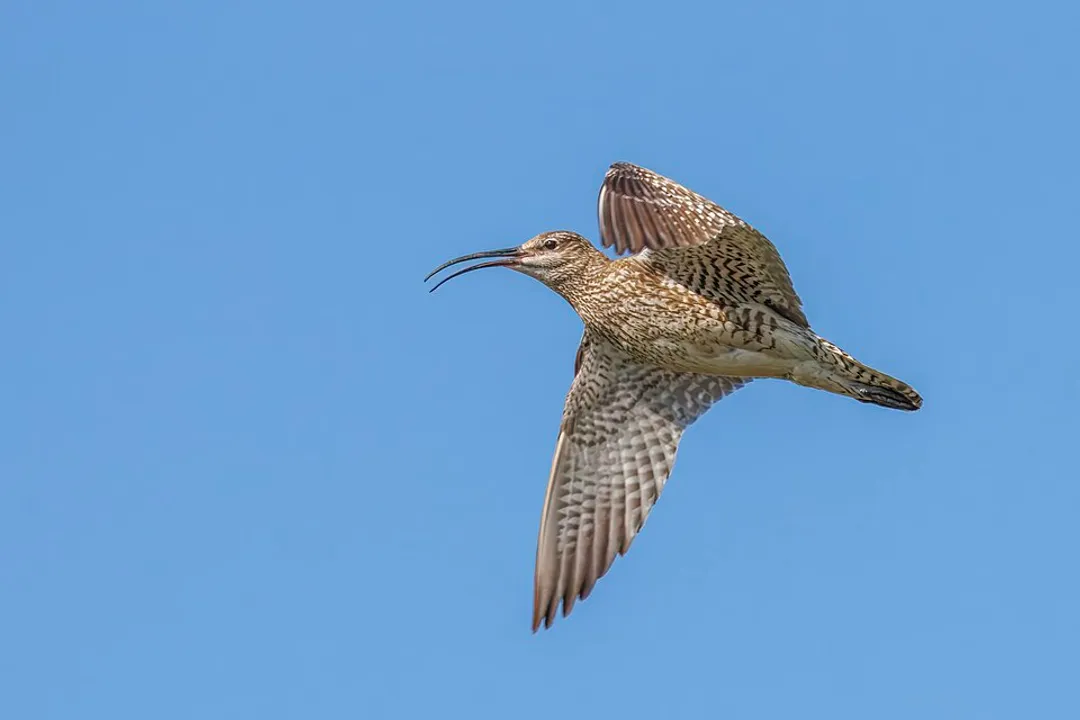
The subsequent levels group the Whimbrel more closely with its ecological relatives. The Order to which all sandpipers and allies belong is Charadriiformes. This order is remarkably diverse, encompassing not only shorebirds but also gulls and auks, yet it binds them together through shared skeletal and feather characteristics. Within this large order, the Whimbrel settles into Family Scolopacidae, the sandpipers and allies. This family is notable for containing birds with specialized bills adapted for probing mud and sand, a perfect description for the Whimbrel and its curlew cousins.

# Genus Identity
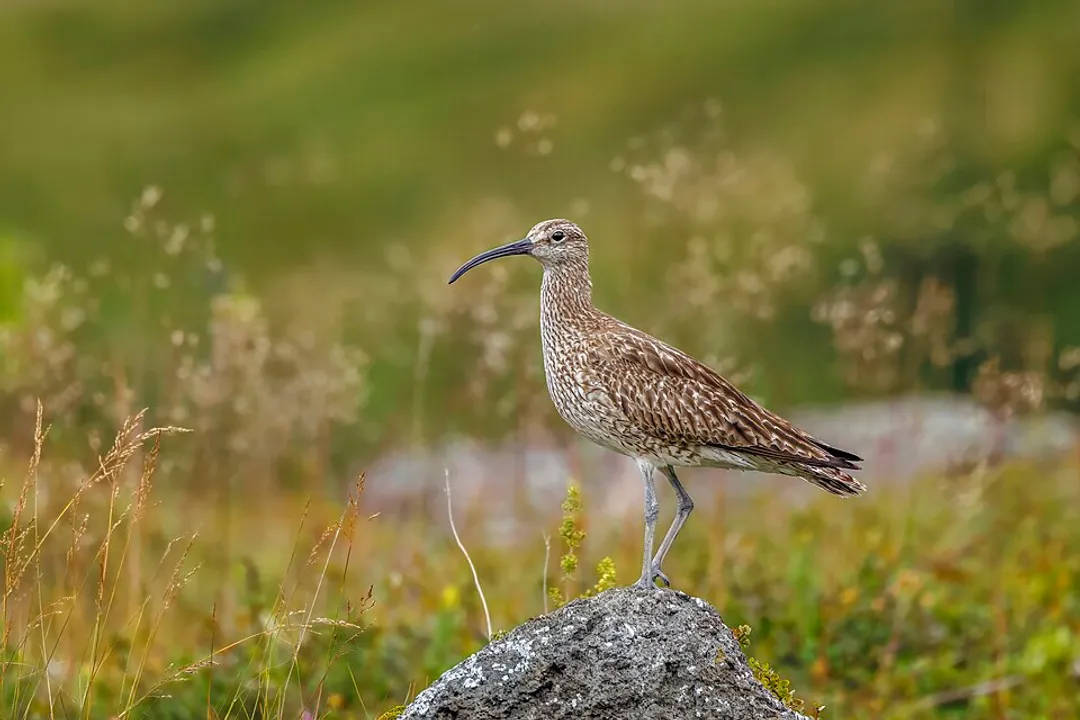
The genus designation offers the first strong clue to the bird’s physical identity. The Whimbrel belongs to the genus Numenius. The name Numenius is derived from Ancient Greek, noumenios, and is closely tied to the bird’s most distinguishing feature: the bill. The term is often interpreted as relating to neos ("new") and mene ("moon"), a clear reference to the crescent-shaped curve of the bill, much like a waxing or waning moon. Placing the Whimbrel in Numenius immediately associates it with the other curlews, such as the much larger Long-billed Curlew.
The specific epithet, phaeopus, originates from Medieval Latin, itself stemming from the Ancient Greek words phaios ("dusky") and pous ("foot"). Thus, Numenius phaeopus loosely translates to "dusky-footed curlew".
# Species Division
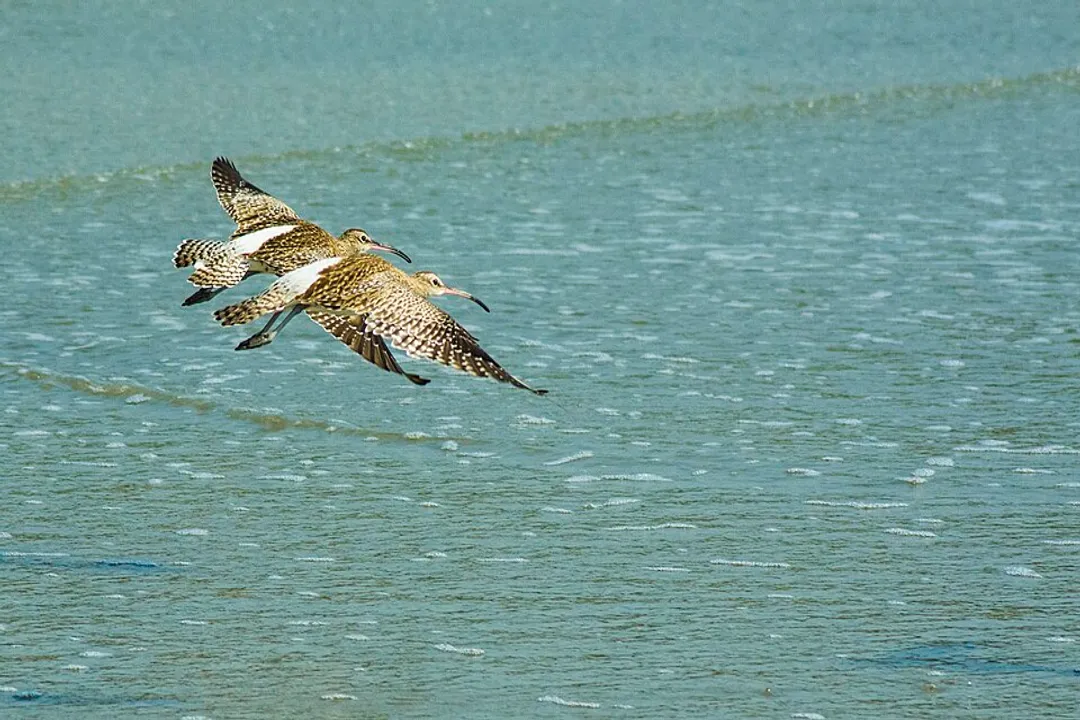
For many decades, ornithologists generally recognized a single, widespread species, Numenius phaeopus, often referred to generally as the Whimbrel, which bred across the Palearctic and the Americas and migrated around the world. However, as genetic and morphological research progressed, the New World population was recognized as distinct enough from the Old World population to warrant separation into its own species. This taxonomic divergence is critical for anyone studying these birds, as conservation efforts and identification guides now must distinguish between two separate binomial names: Numenius phaeopus (Eurasian Whimbrel) and Numenius hudsonicus (Hudsonian Whimbrel). While this split is gaining widespread acceptance—with the US Fish and Wildlife Service listing the Hudsonian Whimbrel as N. hudsonicus—some authorities still treat them as conspecific, or perhaps as subspecies complexes within N. phaeopus sensu lato.
This ongoing debate highlights how scientific classification is not static; it is a living process responding to new data. When encountering older literature or less frequently updated regional checklists, one might still find the American bird referred to by the broader N. phaeopus designation or sometimes as the "white-rumped whimbrel" when discussing vagrants. A key practical consequence of this classification shift is that monitoring bird movements and population health must now be specific; a researcher tracking N. hudsonicus is tracking New World migrants, while one focusing on N. phaeopus is concerned with populations across Europe, Asia, Africa, and Australia.
To illustrate the immediate, observable differences that contributed to this classification review, one must look past the bill structure and focus on the rear: the Eurasian Whimbrel often displays a distinct, primarily white rump visible in flight, whereas the Hudsonian Whimbrel's rump is drab brown and blends with the rest of its body plumage.
| Feature | Numenius phaeopus (Eurasian Whimbrel) | Numenius hudsonicus (Hudsonian Whimbrel) |
|---|---|---|
| Primary Range | Palearctic (Europe, Asia, Africa, Australia wintering) | Americas (Arctic nesting to South America wintering) |
| Rump Color | Primarily white (a key feature for identification) | Drab brown, similar to back plumage |
| General Appearance | Often described as having bolder markings | More "faded" appearance compared to Old World counterpart |
# Subspecies Variation
Even within the Numenius phaeopus species, which now primarily encompasses the Old World populations, significant variation exists, leading to the recognition of several subspecies groups. These groups reflect different breeding areas and distinct migratory pathways, offering fascinating geographical layers to the classification.
The nominate subspecies, N. p. phaeopus, breeds from Norway into north-central Siberia and winters across Africa and Southern/Southeast Asia. N. p. islandicus breeds mainly in Iceland, Greenland, the Faroes, and Scotland, with Icelandic populations being particularly concerning due to recent declines. This subspecies winters as far west as West Africa. A distinct form, N. p. variegatus, breeds in northeastern Siberia and winters as far east as Australia. Furthermore, the rarer N. p. alboaxillaris, breeding in Kazakhstan/Siberia, and N. p. rogachevae, found in north-central Siberia, complete the current recognized set.
Understanding these subspecies is vital for fieldwork; for example, recognizing the islandicus subspecies in Iceland connects directly to understanding threats specific to the North Atlantic breeding grounds. If one were to observe a Whimbrel in the Pacific, identifying it as belonging to the variegatus group would immediately suggest a migratory route involving Asia and Australia, showing how scientific nomenclature precisely maps ecological separation.
# Family Context and General Traits
The placement within Scolopacidae underscores the shared ecological niche these birds occupy. They are ground foragers, relying on their specialized bills to extract marine invertebrates, such as small crabs, from mudflats and sand. This feeding method—probing soft substrates with a long, curved bill—is a common trait among members of the sandpiper family that specialize in tidal zones. While the bill is designed for extracting prey from burrows, which perfectly matches the shape of fiddler crab holes in the wintering grounds, they supplement this with insects and berries during the breeding season.
The common name "Whimbrel" itself is rooted in sound, being an onomatopoeia imitating the bird’s characteristic rippling whistle or piping call. This auditory recognition is often the first cue birders have that a curlew is nearby, preceding the visual confirmation of that signature curved bill.
In summary, the scientific classification of the Whimbrel is a dynamic arrangement. While the overarching system places it firmly within the Charadriiformes order and Scolopacidae family, the species level is where the real detail—and current scientific flux—lies. Today, serious identification and conservation efforts rely on acknowledging the distinct separation between the North American Numenius hudsonicus and the more widely distributed Numenius phaeopus, each with its own distinct morphology, particularly concerning that rear patch of feathers. This detailed classification allows us to connect a bird seen foraging on a North American beach with its specific Arctic breeding grounds, linking geography, taxonomy, and ecology with precision.
# Classification Summary
For any serious study or even dedicated backyard listing, keeping track of which authority recognizes which split is essential. While the IOC World Bird Names lists Numenius phaeopus as the Eurasian Whimbrel, other historical checklists might still group the American form under that species, or use slightly different subspecies groupings. Being aware of the current standard—two species—provides the clearest picture of global diversity for this group of shorebirds.
The effort to classify these birds accurately is not merely academic; it directly affects conservation policy and management, as demonstrated by tracking individual birds that undertake vast migratory feats between continents or between the Arctic and the tip of South America.
Related Questions
#Citations
Whimbrel (Numenius phaeopus) | U.S. Fish & Wildlife ...
Eurasian whimbrel
Numenius phaeopus (Whimbrel)
Hudsonian Whimbrel Overview, All About Birds, Cornell ...