What is the difference between a donkey and an onager?
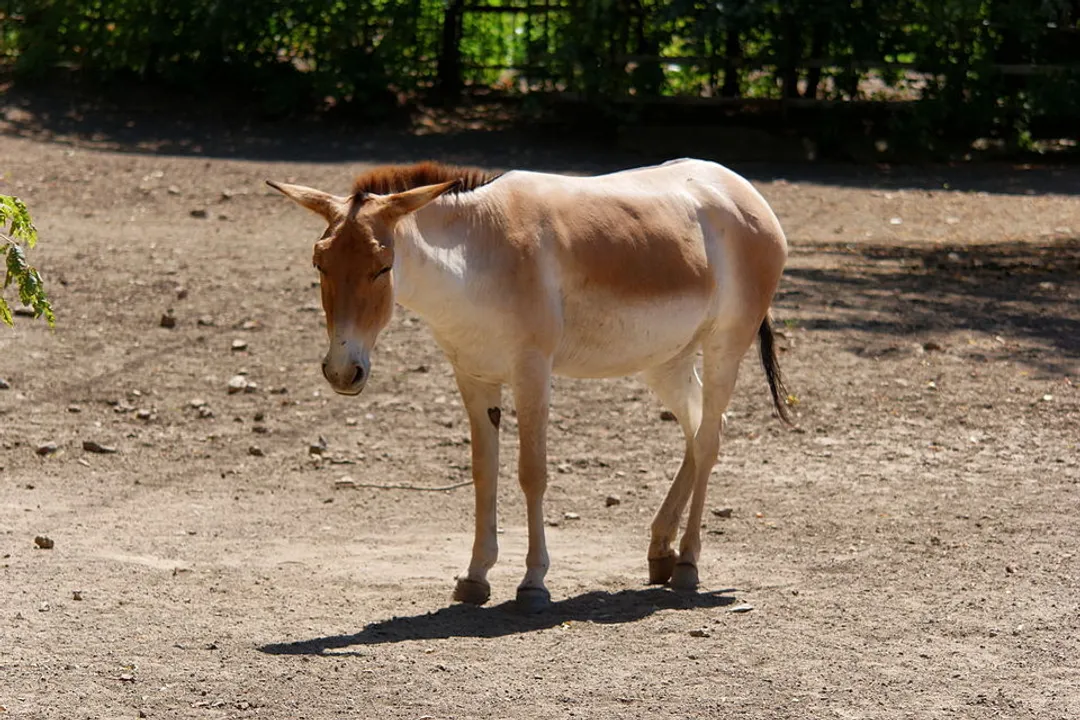
The donkey and the onager, while often grouped together in discussions about equids, represent distinct branches of the wild ass lineage, each adapted to very different corners of the globe. Understanding the difference requires looking past the surface similarities—both are smaller than horses and share that characteristic large-eared profile—and delving into their distinct evolutionary paths, geographical origins, and current status in the wild versus domestication. They are both members of the Equus genus, placing them near relatives to horses and zebras, but their divergence is significant enough to warrant close examination. [2][9]
# Equid Kinship
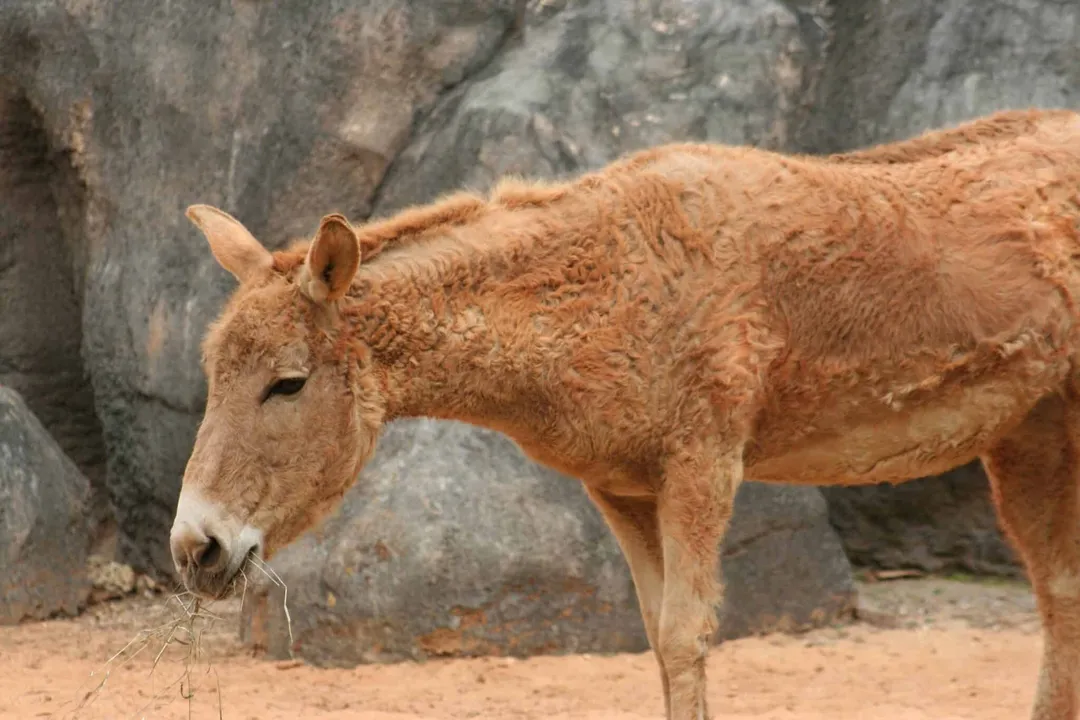
To frame the comparison, it is helpful to remember that the common donkey we know today (Equus asinus) is the domesticated descendant of the African wild ass, which originally roamed the arid regions of Africa and the Middle East. [8] The onager, conversely, belongs to the group known collectively as Asiatic wild asses. [2][7] This fundamental split—African ancestry for the donkey versus Asian ancestry for the onager—is the primary driver for many of their subsequent differences in appearance and temperament. [9] Both share a heritage that prizes resilience in harsh environments, but the specific challenges faced by their ancestors shaped them differently. [8]
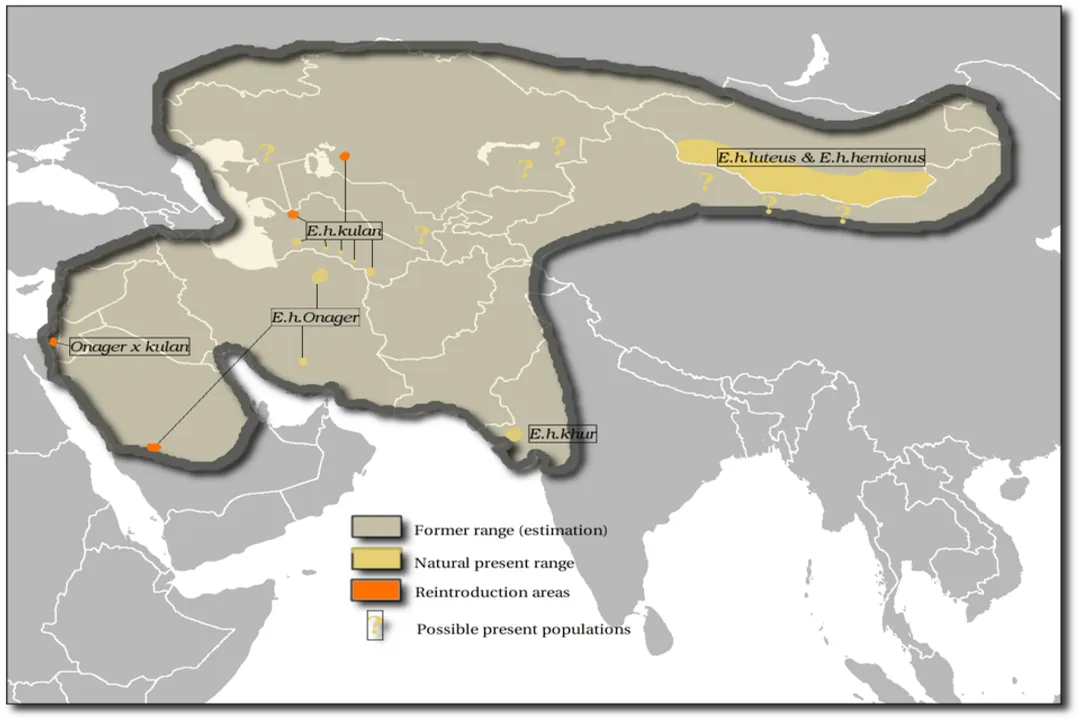
The onager itself is not a single species but encompasses several subspecies recognized within Equus hemionus. [2] Examples include the Turkmenian kulan and the Gobi Desert wild ass, also known as the Mongolian wild ass. [2] Historically, there was also the Arabian onager subspecies, which sadly now faces extinction in its native wild habitat. [9] This highlights an immediate divergence in conservation focus: the modern donkey population is overwhelmingly domesticated and widespread, whereas the onager’s relevance often centers on its precarious status as a wild animal. [7]
# Coat Differences
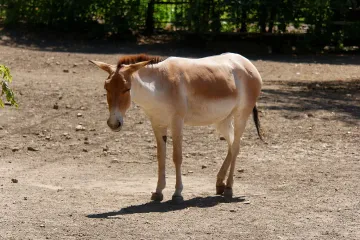
Visually, while both animals might share a generally light, dusty coloration appropriate for desert or semi-arid living, the specific markings are key identifiers. Onagers typically display a coat that ranges from sandy to yellowish-brown or even reddish-brown, depending on the subspecies and season. [1][7] A hallmark feature across most onager types is the striking contrast: they possess white underparts, such as the belly and muzzle, often accompanied by a clear, dark stripe running down the length of their back. [1][7][9] This dorsal stripe acts as a key field mark differentiating them from many donkey populations.
Domesticated donkeys exhibit a much broader spectrum of coat colors due to centuries of selective breeding, ranging from grey and brown to black and even spotted patterns. [8] However, the ancestral African wild ass, which is the basis for comparison with the onager, also commonly features a dark dorsal stripe, similar to the onager, along with shoulder stripes. [8] Where the onager often appears more uniform in its light, pale coat coloration over its body, the domestic donkey's color palette is less restricted by its ancestral desert habitat constraints. If you observe an equid with a pale sandy coat and a very distinct, solid dark stripe down its spine, you are likely looking at an onager or its immediate wild cousins, rather than a common domestic donkey whose base coloration is more variable. [1][7]
# Habitat and Range
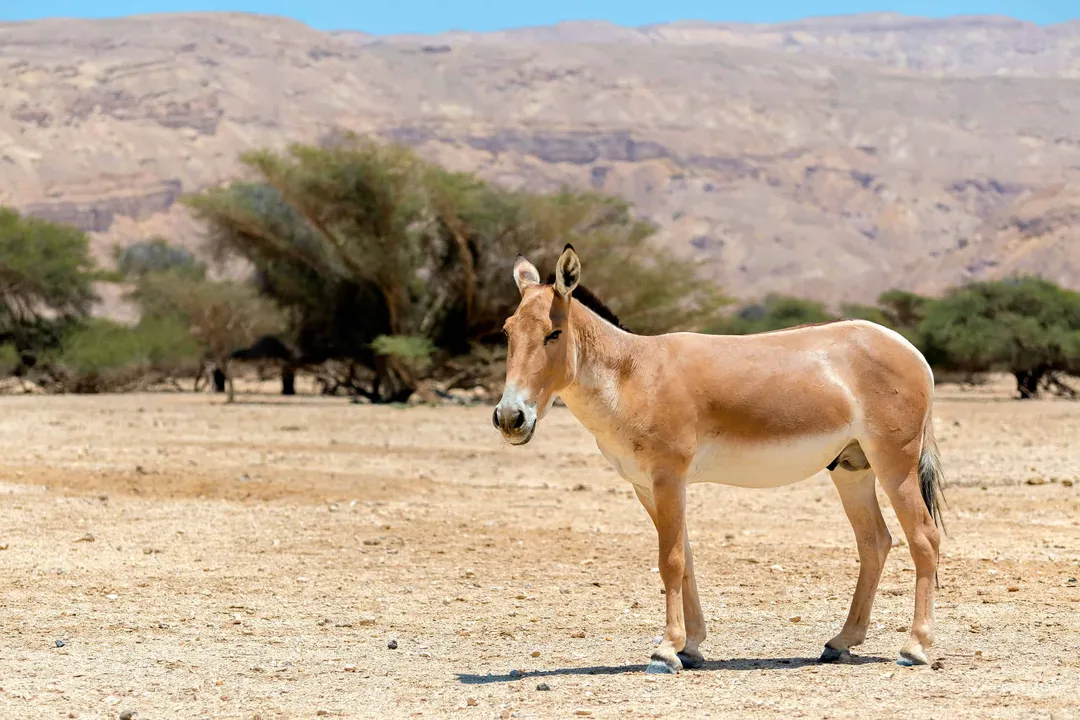
The native ranges of these two equids could not be more different, which significantly influenced their physical and behavioral traits. The donkey’s lineage traces back to the African wild ass, inhabiting deserts and rocky terrain in North Africa and the Middle East. [8] This environment favored an animal adept at conserving water and enduring extreme temperatures across rugged landscapes. [8]
In stark contrast, the onager is strictly an inhabitant of Asia. [2] Their preferred environments are the steppes and deserts stretching across Central Asia. [1] They are true desert specialists, adapted to the arid regions that extend from the Middle East into Central Asia. [7][9] This difference in native terrain—from the rocky, arid hills of the African ancestor to the vast, often flatter steppes favored by the Asiatic onager—has resulted in contrasting survival strategies, particularly concerning movement and social structure.
# Speed Comparison
Perhaps the most defining physical difference, outside of color, lies in their locomotion capabilities, which relates directly back to their respective habitats. The donkey, while known for its legendary hardiness and ability to carry loads over difficult terrain, is not built for sustained, high-speed flight. [8]
The onager, having evolved in the open steppes where predators like wolves are a constant threat across vast, relatively flat expanses, became a dedicated sprinter. [1] Onagers are known for being significantly faster than their donkey counterparts. [7] Reports indicate that an onager can reach speeds of up to 40 miles per hour. [2] To put this into perspective, consider the typical work demands placed on a donkey versus the flight necessity of a wild onager. The onager’s physiology leans toward endurance at high velocity across open ground, a trait less emphasized in the domesticated donkey, which has been bred for steady, dependable labor. [1] While exact speed comparisons between a wild onager and a healthy domestic donkey are difficult to quantify universally due to variation in training and fitness, the inherent biological design favors the onager for outright pace. [2]
If we were to place an African wild ass ancestor side-by-side with an Asiatic onager, we might observe that the onager tends to have a longer back, a slightly different ear shape, and a more refined, less stocky build, all geared towards maximizing speed across open plains rather than navigating rocky scrubland. [1]
# Management and Temperament
The divergence in human interaction forms another massive gulf between the two animals. The donkey has been fully integrated into human society for millennia, prized for its sure-footedness and willingness to carry burdens. [8] This long history of domestication means that donkeys have been selected for docility, obedience, and reliable temperaments suitable for working life. [8]
The onager, by contrast, remains primarily a wild animal. While some captive breeding programs exist, and there is recorded experience of people keeping them—often with challenging results—they have not undergone the same selective pressures for tractability as the donkey. [3] Anecdotal accounts from those familiar with onagers suggest they retain a distinctly wild, often spirited nature. [3][4] Keeping an onager requires understanding that you are managing a true wild equid, not a domesticated cousin. This is critical because an animal bred for millennia to follow commands will behave fundamentally differently than one whose survival instincts are purely self-directed. [6]
This difference in temperament has practical implications, especially in a conservation or farm setting. While a donkey offers consistent, if sometimes stubborn, partnership, the onager demands a higher level of respect for its inherent wildness and lack of socialization to human handling requirements. [3][6]
# Conservation Status
Here lies the clearest distinction between the modern donkey and the onager. The domestic donkey is one of the world's most common domesticated ungulates, numbering in the millions globally. [8] Their wild ancestor, the African wild ass, is critically endangered, but the domestic form is secure. [8]
The onager population faces significant challenges in its native range. While some subspecies are faring better in protected zones, the overall picture for the Asiatic wild ass group is one of precariousness, with some specific local populations, like the Arabian onager, having been extirpated from the wild entirely. [9] The onager's survival hinges on managing its status as a wild animal facing habitat loss and pressure in Central Asia. [7] Therefore, when discussing onagers, the conversation frequently circles back to conservation efforts, whereas discussions about donkeys focus more on their agricultural or companion animal roles. [7]
# Comparative Summary
To consolidate these differences, one can view the comparison across several key metrics. While both are part of the Equus family and descended from wild asses, their evolutionary pathways diverged based on geography and ecological pressure:
| Feature | Donkey (Domestic/African Ancestor) | Onager (Equus hemionus) |
|---|---|---|
| Primary Origin | Africa/Middle East [8] | Asia (Steppes and Deserts) [2][7] |
| Domestication Status | Fully Domesticated [8] | Primarily Wild [3] |
| Typical Coloration | Highly variable (grey, black, brown) [8] | Sandy, yellowish, or reddish-brown [1][7] |
| Key Marking | Dorsal stripe common in wild ancestors [8] | Distinct dorsal stripe and white undersides [9] |
| Speed Adaptation | Hardiness, load-bearing capability [8] | High speed for evasion (up to 40 mph) [2][7] |
| Conservation Focus | Managing domestic populations | Protecting wild populations/subspecies [9] |
Thinking about their utility, the donkey represents success in adaptation to humanity—a creature whose value is derived from its ability to work alongside us dependably. [8] The onager, conversely, represents wild endurance—a creature whose value is in its sheer survival against the odds in its native arid environment, often requiring us to adapt our approach to it. [2] Observing the physical differences, one might infer that the slightly stockier, more generalized build of the donkey's lineage is better suited for scrambling over uneven, rocky ground where water sources are sporadic, whereas the more streamlined form of the onager is clearly optimized for covering vast, open distances quickly when necessity demands it. [1] Understanding these underlying ecological pressures makes the physical and behavioral variations between these two fascinating equids far more logical.
Related Questions
#Citations
Onager - Equus hemionus - A-Z Animals
Onager - Wikipedia
Anyone have any experience with onagers : r/Donkeys - Reddit
Onagro, Asia's wild donkey species - Facebook
Baby Onager | National Geographic
The Onagers, The 'Simply Dump It' and more things I wish they ...
DONKEYS: HISTORY, USES, BEHAVIOR, MULES - Facts and Details
Donkey - Archaeology Now
Onager or African Wild Ass - Arabian Rock Art Heritage