What are the different types of lace monitors?
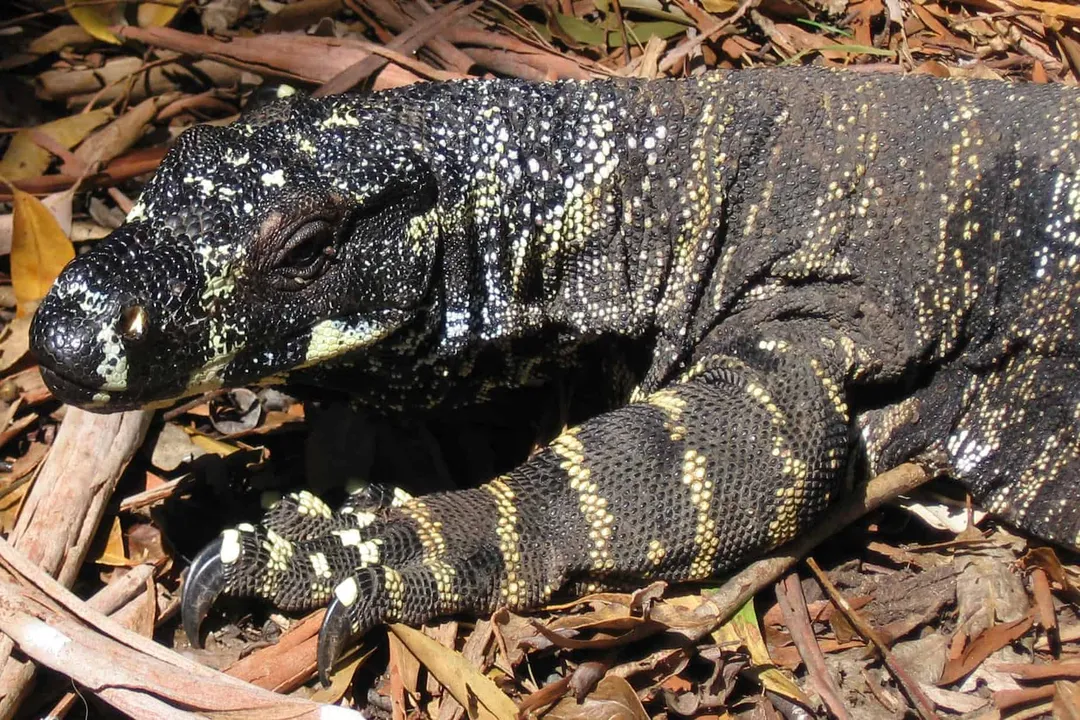
The Lace Monitor, scientifically known as Varanus varius, is one of Australia’s most imposing reptiles, often called the tree goanna or lacy. For those encountering this species, whether in the wild or in specialized collections, the term "types" can refer to distinct physical appearances, or perhaps even to the broader context of the large Australian monitor lizards it is often compared against. While it is a single species officially recognized as monotypic—meaning it has no officially recognized subspecies—the variations within V. varius are striking enough to warrant close examination. Understanding these differences involves looking closely at color morphs, underlying genetic structures, and how they compare to their close relatives in the Australian landscape.
# Color Forms
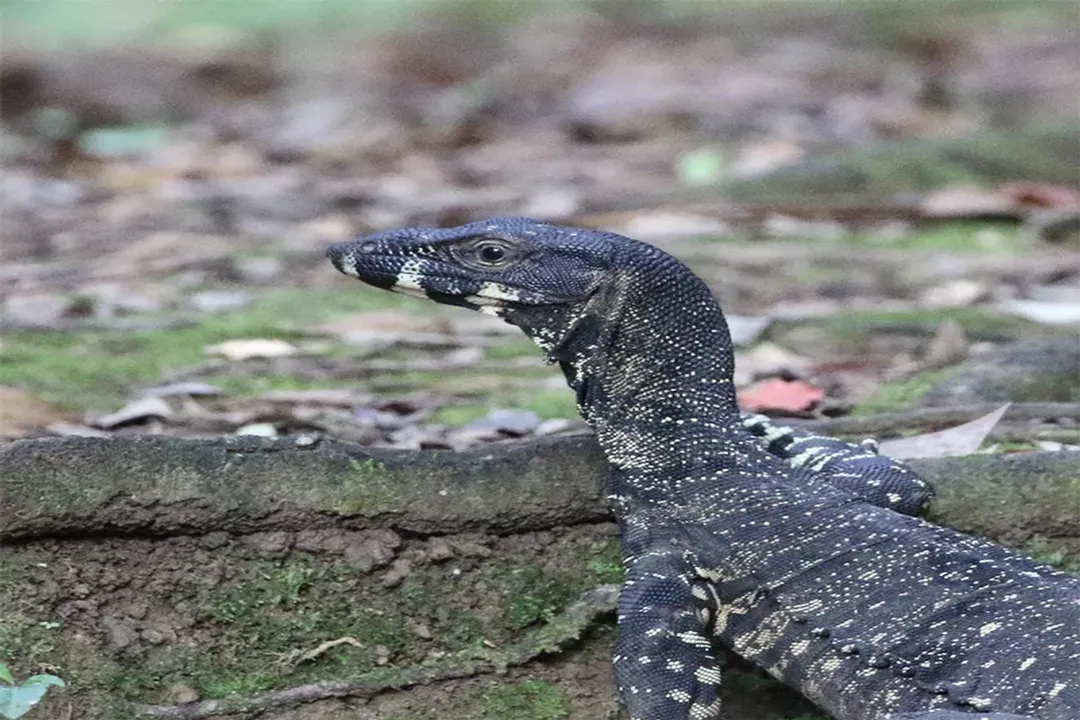
The most visually apparent distinction among Lace Monitors involves their patterning, leading to the recognition of two primary color forms that coexist across their eastern Australian range. These are the Normal phase and Bell’s phase.
The Normal phase is perhaps the most frequently documented pattern. These individuals exhibit a base coloration ranging from dark grey to a dull bluish-black. This dark background is adorned with numerous, scattered, cream-colored spots. Key identifying features of this phase include a distinctly black head and snout, often complemented by prominent black and yellow bands visible under the chin and extending onto the neck. Their tails display alternating black and cream rings that start narrow closer to the body and gradually widen toward the tail's tip. Juveniles in this phase often show more defined and prominent banding than adults.
In contrast, Bell’s form presents a dramatically different aesthetic. This coloration is characterized by a base color of yellow-brown or outright yellow, overlaid with fine black mottling and featuring broad, dark brown or black bands that run from the shoulders all the way down the tail. Like the normal phase, the top of the head is typically black. This unique patterning has historical significance, as specimens were once described as a separate species, Varanus bellii, before being correctly identified as a coexisting color phase of V. varius. Genetically, this phase appears to be inherited as either autosomal dominant or codominant.
Interestingly, there can be some subtle geographic correlation with pattern, though not strictly with the named forms. Individuals found further south may lean toward being more banded, while those in the northern parts of the range are often described as being more spotted.
| Feature | Normal Phase | Bell's Phase |
|---|---|---|
| Base Color | Dark grey to dull bluish-black | Yellow-brown to yellow |
| Markings | Numerous, scattered cream spots | Broad, dark brown/black bands |
| Head/Snout | Black head, black/yellow throat bands | Black top of the head |
| Distribution Note | Predominant form | Found in specific dry areas of QLD/NSW |
# Genetic Clades
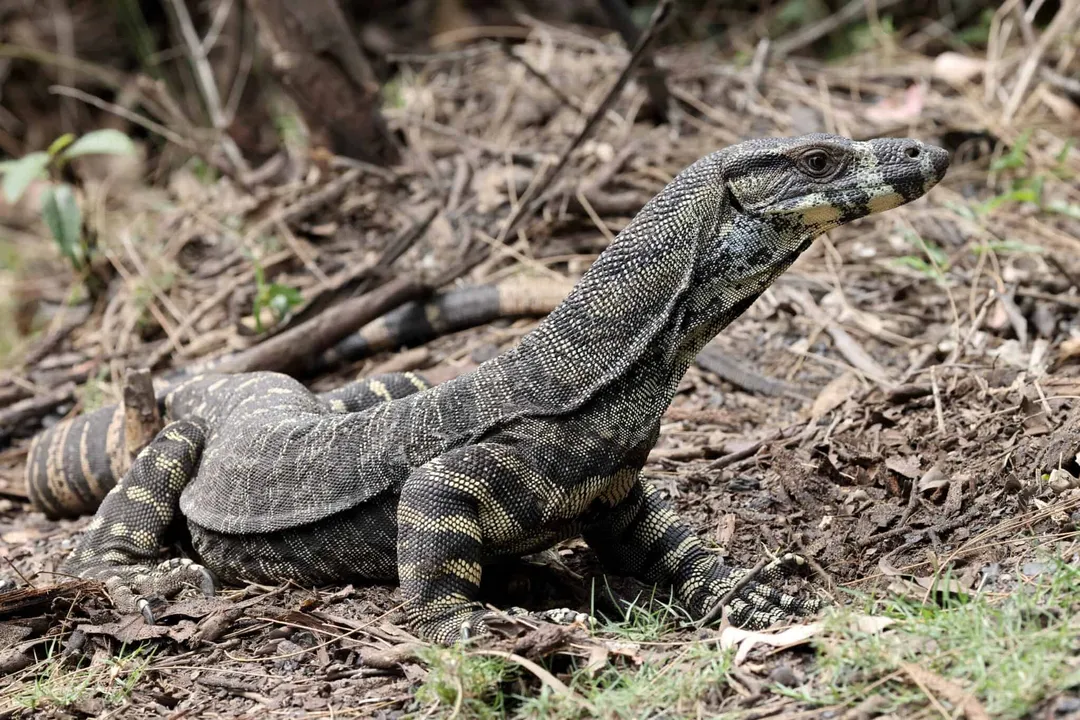
While color forms are the most accessible way to categorize visual "types," modern science reveals deeper divisions within the species based on genetics. Despite V. varius being monotypic at the species level, analysis of its mitochondrial DNA (mtDNA) shows that the population is structured into three major genetic clades across its range in eastern Australia.
These clades suggest ancient separation events that shaped the current distribution of the monitor. One clade is found in North Queensland and is separated from another by the Burdekin Gap. The second clade spans from southern Queensland, across inland New South Wales, and into southeastern South Australia. The third, distinct clade occupies the coastal eastern regions, stretching from northern New South Wales into eastern Victoria. The divergence between this coastal clade and the other two occurred around 850,000 years ago, while the initial split between the northern and central/southern clades happened even earlier, approximately 2.7 million years ago. These deep genetic separations indicate that, although they all share the same name and appearance traits (like the color forms), populations of Lace Monitors are separated by significant geological barriers like the McPherson Range and the Great Dividing Range.
# Related Giants
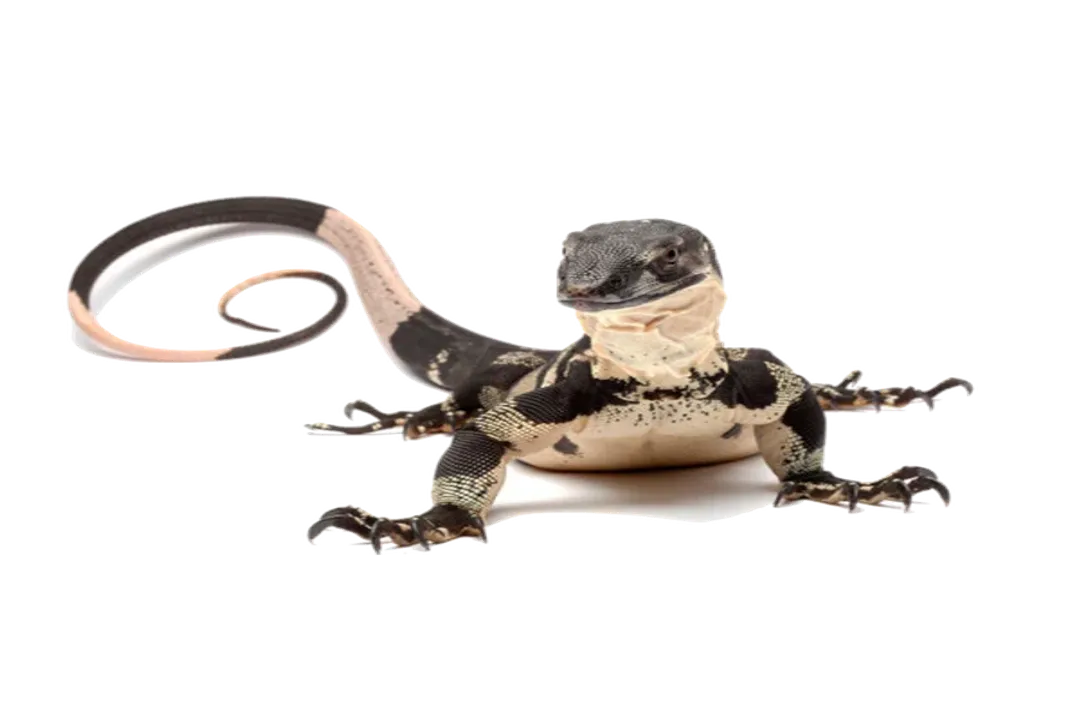
When discussing "types" of Lace Monitors, it is nearly impossible to avoid mentioning the other massive lizards they share their habitat and classification with, as these comparisons often define the Lace Monitor's place in the ecosystem. The Lace Monitor is famously the second-largest lizard in Australia, with the top spot held by the Perentie (Varanus giganteus).
This size comparison offers another way to categorize the large Australian monitors. The Lace Monitor can reach lengths up to 2 meters (or about 6.6 to 7 feet). While some historical reports cite even larger sizes, the commonly accepted maximum reliable mass is around 14 kg (31 lbs). The Perentie, by comparison, is known to grow larger. Furthermore, keepers and enthusiasts often contrast the Lace Monitor with the Argus Monitor (Varanus panoptes), another large species. A key difference discussed among keepers often relates to temperament: some observers suggest that the Argus, naturally adapted to desert environments, might be naturally faster, whereas the Lace Monitor, often inhabiting forests, is seen as more of a scavenger and perhaps slightly more tractable once mature.
Considering the sheer size and the ecological niche these large lizards occupy, understanding where V. varius fits among its Varanus cousins provides crucial context for appreciating its specific traits.
# Temperament Differences
For those interested in keeping or observing Lace Monitors, perceived differences in temperament or handling ease sometimes lead to discussions about "types" based on species, which directly involves contrasting V. varius with others like the Argus or Perentie. While generalizations are difficult for any reptile, anecdotal experience suggests that Lace Monitors tend to become calmer as adults, often chilling out once they surpass about 4 to 5 feet in length. Juvenile Lace Monitors are often described as being particularly fast and cantankerous.
It has been noted that species naturally adapted to more open, arid environments (like the Argus) might be naturally faster, whereas the forest-dwelling Lace Monitor may rely less on sheer speed and more on climbing ability, which influences their behavior. Regardless of the inherent temperament, keepers stress that successful taming and socialization require consistent, confident handling over a significant period, sometimes taking years for an individual to completely trust a keeper.
When establishing a habitat for a Lace Monitor, whether in a private collection or a zoological setting, understanding its reliance on vertical space is crucial. They are adept climbers, and this lifestyle dictates their primary need for refuge. An important consideration for anyone housing these lizards is that they spend a considerable amount of time in trees or seeking shelter in hollows. This means that prioritizing secure, robust branches or beams within an enclosure is necessary to encourage natural behavior and exercise, as they frequently seek elevated spots for basking or sleeping. For captive specimens, providing logs, beams, and a sheltered hide, alongside a shallow water source for immersion, supports their natural tendencies.
Another fascinating aspect that distinguishes the Lace Monitor within the monitor group relates to reproduction. While many reptiles offer no post-hatching care, female Lace Monitors have been observed returning to the termite mounds where they laid their eggs, often opening the nest structure with their claws to allow the hatchlings to emerge. This degree of maternal attention, even if brief, is a notable characteristic distinguishing them from some of their more solitary relatives.
Lace Monitors are also known to be mildly venomous, a trait now confirmed by researchers, which causes immediate localized effects like swelling and blood clotting disruption, rather than just bacterial infection from a bite. The fact that they are slightly venomous, while less potent than many snakes, aids them in quickly dispatching small prey. Their diet is opportunistic, consisting of insects, small mammals, birds, eggs, and a significant amount of carrion, making them effective scavengers as well as hunters. In fact, studies have shown that populations near human refuse sites can grow much larger and denser due to the caloric intake from food waste, demonstrating an extreme level of adaptability to human-altered environments.
While the focus here is on the visual "types," it is clear that the Lace Monitor is a single, highly adaptable species, with its most distinct differentiators being geographical color morphs and the underlying genetic structure that hints at past isolation within Eastern Australia's diverse landscape.
Related Questions
#Citations
Lace monitor - Wikipedia
Lace Monitor Animal Facts - Varanus varius
Lace Monitor - Ark Encounter
Personality difference between Argus monitor/Lace monitor/Perentie
Lace Monitor - ReptiChip LLC
Lace Monitor - Facts, Diet, Habitat & Pictures on Animalia.bio
Lace monitor - Australian Reptile Guide
Lace monitor - Varanus varius - The World of Animals - ProBoards