What's the difference between a Norfolk Terrier and a Norwich Terrier?
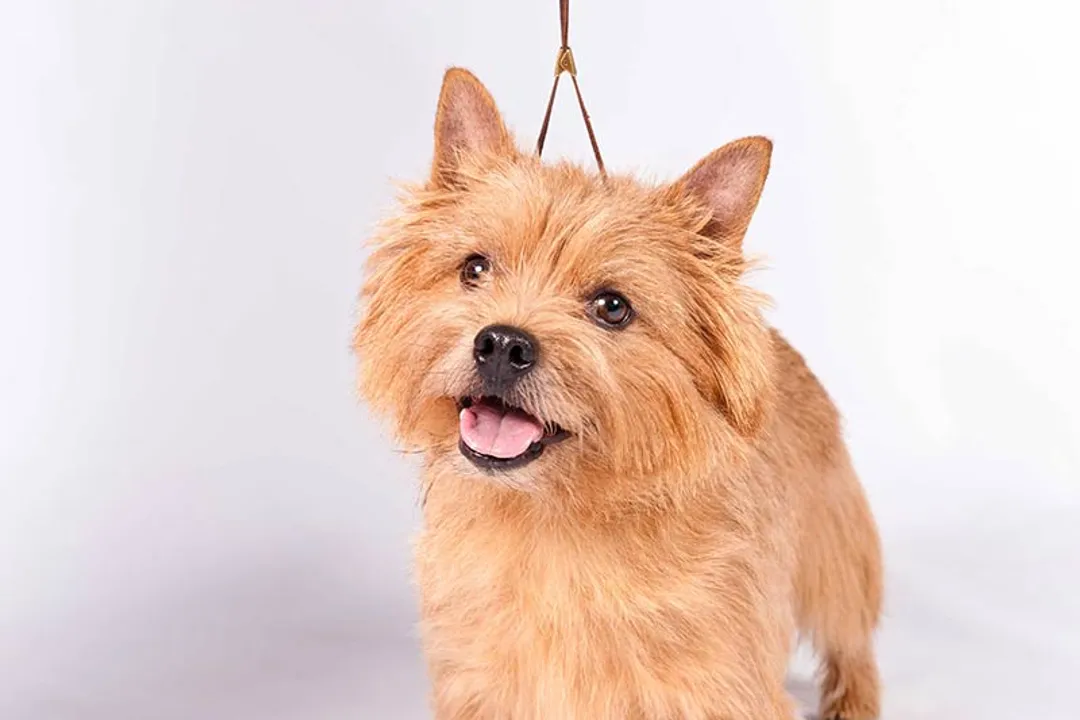
The immediate question for many who encounter these two charming, spirited little dogs is often how to tell them apart. Norfolk Terrier and Norwich Terrier are breeds that share such a close history and such similar stature that casual observers might assume they are merely color variations of the same dog. However, these small canines are recognized as two distinct breeds by major kennel clubs, a separation that arose from a surprisingly specific point of contention: their ears. [3][7] To truly appreciate these East Anglian natives, one must look past the initial identical impression and focus on a few key details that define their separate paths. [1][4]
# Shared Beginnings

Both the Norfolk and the Norwich Terriers hail from the eastern counties of England, primarily the county of Norfolk, with the town of Norwich being a key breeding hub. [1][3] Their original purpose was utilitarian: they were created to be rough-and-tumble farm dogs, excellent at controlling vermin, specifically rats. [1][7] Their compact, short-legged build was ideal for plunging into tight spaces or even being carried in a handler's saddlebags during a hunt. [1][2] This shared heritage means both breeds retain that core terrier spirit—fearless, energetic, and alert. [4][7]
This common ancestry meant that for a time, the dogs were not separated by breed standard. In the early 20th century, prick-eared and drop-eared dogs were frequently interbred, with breeders prioritizing working ability and good temperament over ear set. [1][4] The initial standard, when the Norwich Terrier was recognized by the American Kennel Club (AKC) in 1932, included both ear types as varieties of the same breed. [3][7]
# The Great Split

The distinction we see today is the direct result of a debate over which ear carriage was superior. It turns out that the prick-eared dogs were more successful in the early show rings. [1] In response, handlers of the dogs with naturally dropped ears sometimes resorted to cropping their dogs’ ears to mimic the winning prick-eared appearance, leading to widespread confusion in the show ring. [1] This friction eventually prompted a formal split. [1] In the 1960s or 1970s, depending on the registry, the dropped-eared variety was officially separated from the Norwich Terrier and designated its own breed: the Norfolk Terrier. [2][4] The prick-eared dogs retained the original name, the Norwich Terrier. [7]
It is interesting to note that this political decision, fueled by show ring success, resulted in two breeds where the most defining characteristic is now the very feature that caused the division. [1] While ear cropping for aesthetic reasons is now largely frowned upon or banned in many places, this historical context is crucial for understanding why two otherwise nearly identical breeds exist. [1] If you are considering one of these terriers, recognizing this ear difference is the primary key to identification. [4][7]
# Distinguishing Features
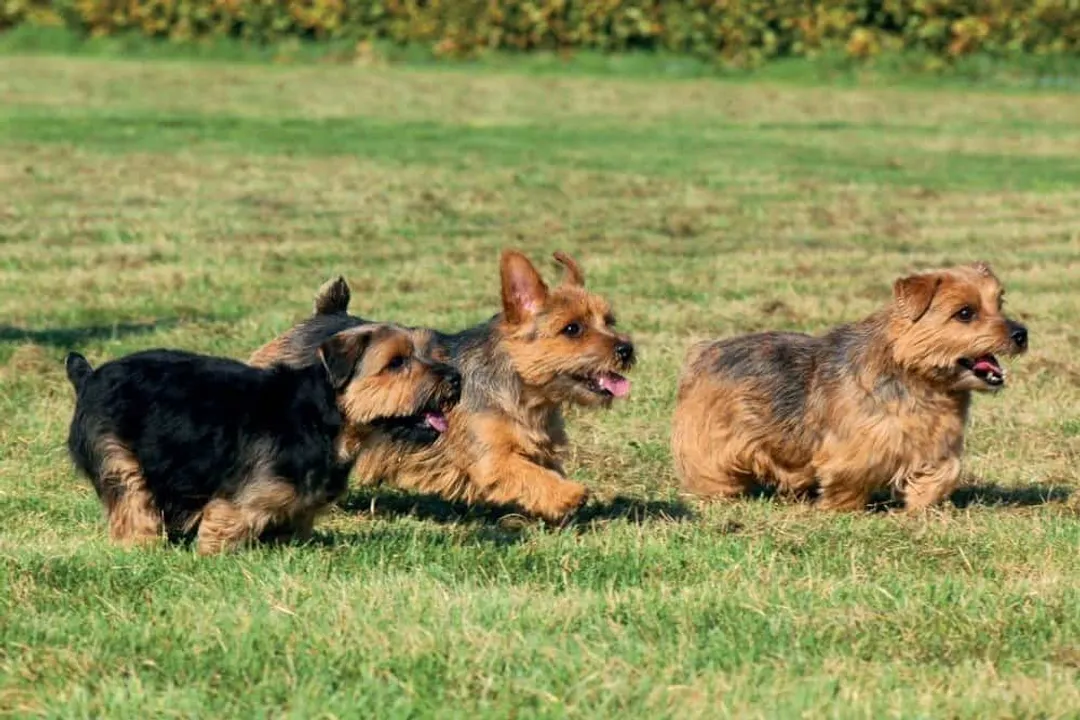
When placed side-by-side, the similarities in size, coat type, and color are striking, yet the differences are absolute once you know where to look.
# Ear Carriage
This is the definitive marker for breed separation. [4][7]
- Norwich Terrier: Possesses prick or erect ears. [4][7] These ears stand upright when the dog is alert, are medium-sized, set well apart, and end in pointed tips. [4] Think of the ear shape resembling a classic, pointed witch's hat. [1]
- Norfolk Terrier: Has drop or folded ears. [1][4][7] These ears are small, V-shaped, and fold forward close to the cheeks. The tips are often described as slightly rounded, and the texture should feel velvety. [1][4] They should not hang lower than the dog’s outer eye corner. [4]
A simple mnemonic helps keep them straight: The Norfolk Terrier has folded ears, and the Norwich Terrier has ears like a witch's hat. [1][3]
# Conformation and Coat Details
Beyond the ears, the breeds are built on the same general blueprint: small, sturdy, and rough-coated. [4]
Most sources agree they stand around 9 to 10 inches tall and weigh about 11 to 12 pounds. [4] The Norfolk Terrier is sometimes noted as slightly shorter, potentially maxing out at 9 to 10 inches versus the Norwich at 10 inches, though the weight range is nearly identical. [4] They share the classic wiry double coat—coarse guard hairs over a soft undercoat—which requires dedicated grooming, usually involving hand-stripping to maintain texture and color vibrancy. [4]
While coat colors overlap significantly—red, grizzle, black and tan, and wheaten are common to both—the breed standards allow for minor distinctions in acceptable shades. [4] For example, while both dislike white markings, the Norfolk Terrier standard permits dark points (darker shading on the muzzle or ears) which may not be as explicitly noted in the Norwich standard. [4] One observation notes that the Norwich Terrier may appear to have a more defined, darker outline around the eyes, sometimes described as looking like heavy black eyeliner, compared to its Norfolk cousin. [1]
# Temperament and Training Nuances
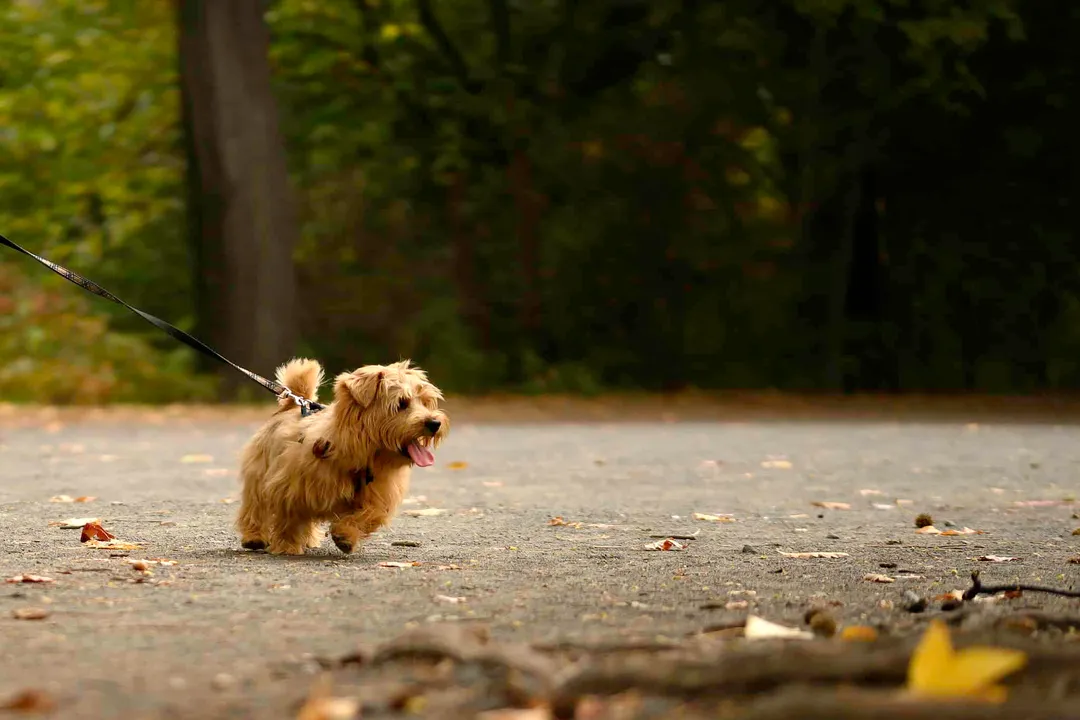
While both breeds are celebrated for their spirited, affectionate, and confident natures, the subtle ways they interact with their world and their owners suggest slightly different handling approaches are best suited for each. [4] Both are excellent with children and possess the tenacity of their working background. [4][7]
# The Eager Norwich
The Norwich Terrier is often characterized as being particularly eager to please. [7] This makes them highly intelligent and responsive to positive reinforcement, especially food rewards—they might truly wear a sign that says, "Will work for treats". [7] They are adaptable and can be open with strangers, though they remain protective. [4] However, this eagerness is balanced by a stubborn streak and a need for mental activity, meaning short, engaging training sessions are more effective than long, repetitive ones. [4][7] Their high energy means they thrive on physical exercise, and free play in a secure area is preferable to just a standard walk. [7]
# The Independent Norfolk
The Norfolk Terrier shares the boldness but is sometimes described as having a slightly more independent or even challenging streak in training. [4] They bond intensely with their owners but can occasionally exhibit jealousy, which necessitates early and consistent obedience work. [4] Furthermore, the Norfolk Terrier’s prey drive remains notably strong, meaning they will aggressively chase small, scurrying things like squirrels or perhaps even smaller household pets like gerbils if not carefully managed. [4]
Editor's Commentary on Early Socialization: Given the Norfolk’s tendency to bond intensely and sometimes exhibit jealousy, coupled with the Norwich’s general openness but stubbornness, an early, consistent focus on socialization is vital for both. For the Norfolk, immediate introduction to a variety of safe, calm dogs and people is key to preventing possessiveness from taking root. For the Norwich, starting with short, high-value reward training sessions builds focus and respect for boundaries before that inherent stubbornness can develop into defiance.

# Apartment Living and Exercise Needs
As small terriers, both breeds are portable and can adapt well to city living or country life, provided their exercise needs are met. [7] They are not couch potatoes; they are working dogs in small bodies. [7] While a Norwich Terrier might excel in dog sports like agility due to its eagerness, the Norfolk Terrier’s high prey drive means that off-leash time should be strictly limited to fully secured areas. [4] This is an important practical consideration for any urban owner.
Original Insight on Breed Identification for Prospective Owners: While the ear trick is the gold standard, if you are meeting an adult dog whose ears have been cropped (a historical practice), rely on temperament observation. If the dog seems inherently willing to work for praise and treats, leaning toward an agreeable nature, it might lean toward the Norwich profile. If the dog seems confident but requires more assertive, boundary-setting training to avoid testing limits, that could suggest the Norfolk temperament. Always confirm breed history with registration papers if possible, but these subtle behavioral cues can be telling.
To summarize these fascinating little terriers, here is a quick comparison table of their defining features:
| Characteristic | Norwich Terrier | Norfolk Terrier |
|---|---|---|
| Ears | Erect, pointed, "prick" ears (Witch's hat) [4][7] | Dropped, folded, V-shaped ears [1][4] |
| Weight | Approx. 12 pounds [4] | Approx. 11 to 12 pounds [4] |
| Height | Approx. 10 inches [4] | Approx. 9 to 10 inches [4] |
| Temperament Note | Eager to please, responds well to treats [7] | Can challenge owner's limits; bonds well but can be jealous [4] |
| Prey Drive Note | Strong [4] | Strong; requires secure fencing [4] |
| Appearance Note | May have markings resembling "heavy black eyeliner" [1] | Ears should feel smooth and velvety [4] |
Ultimately, whether you choose the upright-eared Norwich or the drop-eared Norfolk, you are welcoming a dog with an immense personality packed into a very small frame, a loyal companion with centuries of pest-control grit underpinning its affectionate nature. [7]
#Videos
Norfolk Terrier vs Norwich Terrier - Differences
Norfolk Terrier Vs Norwich Terrier - What are the differences
Related Questions
#Citations
Norfolk Terriers vs Norwich Terriers: Which is Wich?
Norwich Terrier vs. Norfolk Terrier: What Are the Differences?
Norfolk Terrier vs Norwich Terrier - Differences
Norfolk Terrier vs Norwich Terrier
5 Fun Characteristics of the Norwich Terrier
Dog Breeds 101- the Norwich Terrier