What are the facts about Uguisu?
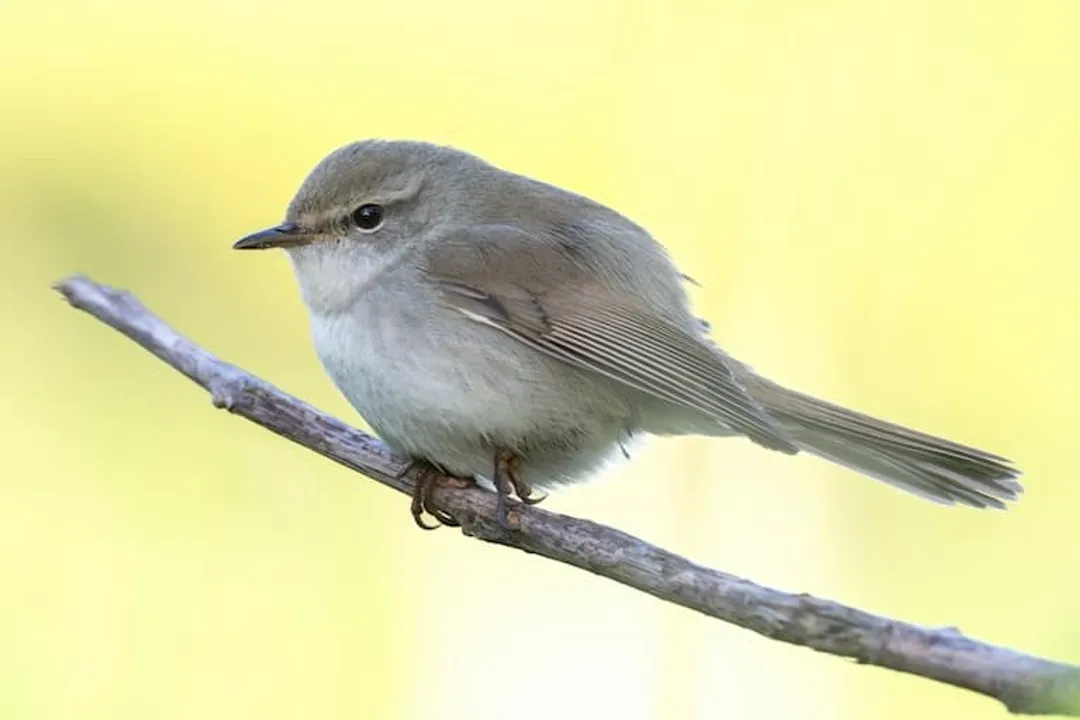
The Uguisu, frequently known in English as the Japanese Bush Warbler, holds a celebrated status in Japanese culture, often marking the arrival of the warmer seasons with its distinctive song. [5][7] This small passerine bird, scientifically classified at times as Horornis cantans or formerly Cettia canturians, [2] is more frequently heard than seen due to its shy nature and tendency to stay hidden within dense foliage. [1][3] While it shares the name "bush warbler" with several related species across Asia, the Japanese variety is deeply woven into the nation's artistic and literary history. [2]
# Appearance Details
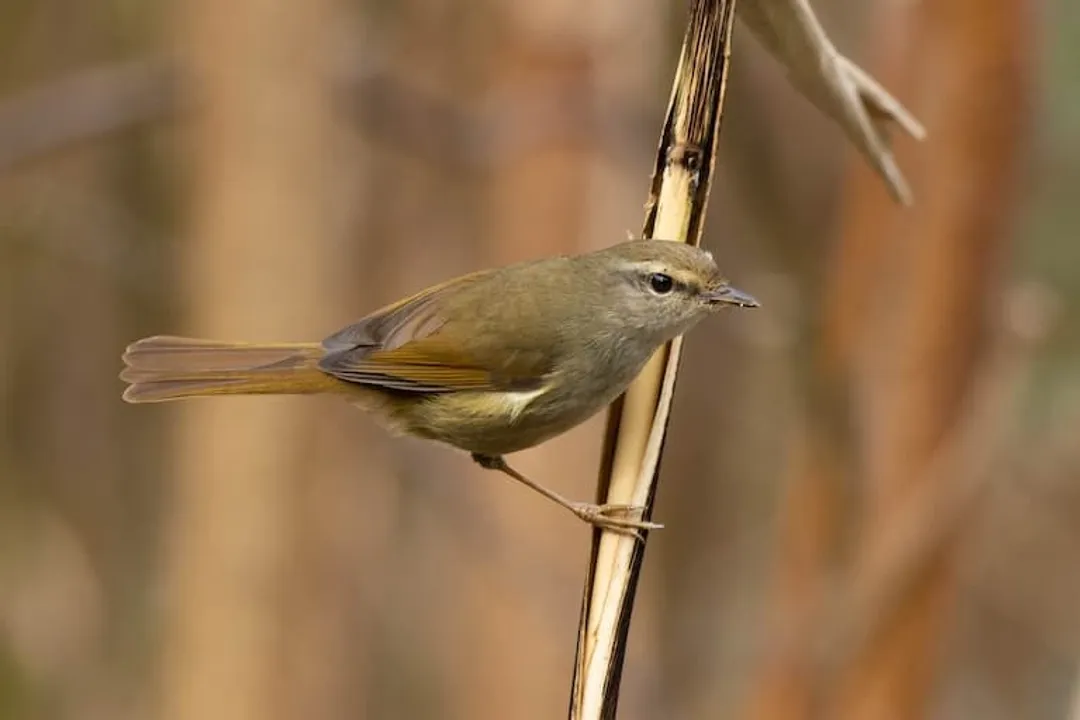
The physical characteristics of the Uguisu lean towards the unassuming. It is a small bird, measuring approximately 15 to 16 centimeters in length. [4][6] Its plumage is generally a rather plain, dull olive-brown across the back and wings. [1][4][7] This muted coloration serves as excellent camouflage within its preferred thickets and shrubbery. [3] The underside offers a slightly paler contrast, often described as whitish or pale grayish-brown. [4][6] One subtle field mark that can aid in identification, if one is fortunate enough to spot the bird clearly, is a faint, pale streak or line that extends behind the eye. [1][3] Despite these subtle markings, the bird is often confused with other common, dull-colored species like the Brown-eared Bulbul, though the latter is somewhat larger. [4] Comparing the sexes, male and female Uguisu look very similar, presenting little difference in external appearance, which is typical for many warbler species where visual displays are secondary to vocalization. [2]
# Range and Habitat
The geographical distribution of the Japanese Bush Warbler is primarily centered in East Asia. [2] It is found across Japan, though its migratory patterns influence its presence throughout the year. [2][6] In the northern regions of Japan, the Uguisu is known to be migratory, moving south to warmer areas when winter approaches. [2] However, birds in the southern parts of the archipelago, such as those on the island of Kyushu, may remain in the same locations year-round, exhibiting sedentary behavior. [2] Beyond Japan, its range extends into parts of mainland Asia, including eastern Siberia, China, Korea, and even reaching Taiwan. [2]
The preferred environment for this species is characterized by dense vegetation. [1] They thrive in areas that offer ample cover, such as thickets, shrublands, overgrown riverbanks, woodlands with dense undergrowth, and even cultivated areas like gardens and parks, provided there is sufficient screening. [4][6] This preference for dense cover is a direct behavioral adaptation that aids in protection from predators, which aligns perfectly with their cryptic coloration. [3] When feeding or seeking cover, they are generally found low to the ground or in the lower branches of bushes and trees, rarely venturing into high, open canopies. [1]
# Diet and Feeding
The Uguisu maintains an omnivorous diet, though its feeding habits skew heavily toward insects and other small invertebrates, particularly during the breeding season when protein demands are high. [2][6] Their primary sustenance comes from foraging within the leaf litter on the ground or investigating the undersides of leaves and twigs in the lower strata of vegetation. [1][4] Common prey items include small insects, spiders, and other arthropods. [2][6] As the seasons change and insect availability decreases, the Uguisu will supplement its diet with seeds and berries, making it an adaptable forager throughout the year. [4][7] Observing their feeding behavior reveals a bird actively picking or gleaning food items rather than swooping or dramatically sallying after flying insects, which further reinforces their association with dense, close-to-the-ground habitats. [1]
# Vocal Mastery
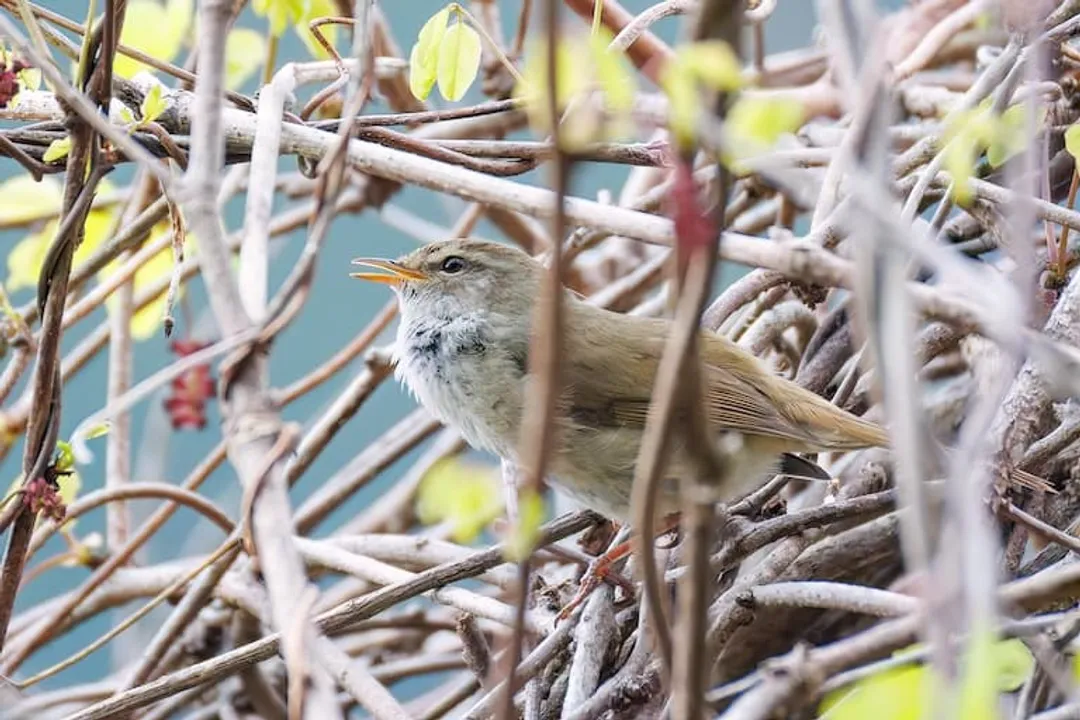
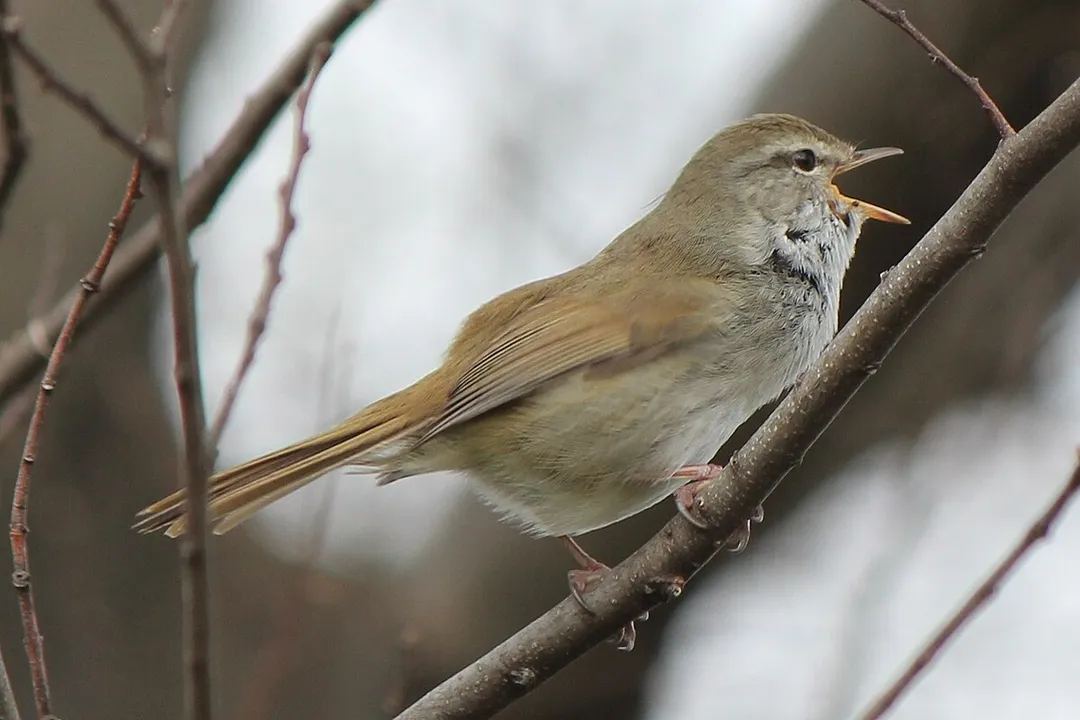
It is the bird’s song that secures its fame, far eclipsing its subtle looks. [7] The Uguisu is renowned for its loud, musical, and varied calls. [4] The most celebrated call, often associated with the beginning of spring, is frequently transcribed in Japanese phonetics as “hoh-hokekyo”. [2][5] This characteristic call is primarily used by males to establish territory and attract mates. [2]
The complexity of their vocalizations is quite remarkable. A male Uguisu might possess a repertoire of several different songs, often employing complex trills and variations. [2] One notable variation in the song is referred to as kobushi, which involves a distinctive, almost shaking or trembling quality in the notes. [2] The singing performance is most intense during the spring breeding season, typically starting before dawn and continuing into the early morning hours. [5][7] While the hoh-hokekyo call signifies the arrival of spring for many observers, it is worth noting that this timing might sometimes precede sustained warm weather, as the bird begins its territorial singing based on internal seasonal cues or day length rather than ambient temperature alone. [5] The intensity and quality of the song are direct indicators of the male's fitness, which is why females pay close attention to these auditory displays. [2]
# Cultural Significance
The relationship between the Uguisu and Japanese culture is deep and multifaceted, spanning literature, poetry, and religious thought. [5][8] In traditional Japanese aesthetics, the Uguisu is symbolically linked with spring, much like the plum blossom (ume). [5] This pairing—the bird and the flower—is a classic motif found in countless works of art and literature, often appearing together in haiku or other short-form poetry to evoke the season. [5]
From a religious perspective, the Uguisu is sometimes regarded with a sense of reverence within certain Buddhist traditions. [8] It has been called the “Buddhist bird” due to beliefs surrounding its song. [8] One interpretation suggests that the bird's song, with its specific cadence, is perceived as an expression of Buddhist teachings or spiritual awareness, leading some to treat the bird with respect and avoid causing it harm. [8] This respect elevates the Uguisu beyond merely a common wildlife sighting to an entity with symbolic or even spiritual weight. [8] This cultural appreciation contrasts sharply with how many other common but less melodious local birds are regarded. [7]
# Synthesis and Interpretation
When looking at the Uguisu, one sees a fascinating dichotomy: a physically plain bird whose auditory presence commands significant cultural attention. [1][7] While birds like the peacock rely on elaborate visual plumage for mating and admiration, the Uguisu places its entire performance quality on its vocal ability. This suggests that in environments where visual concealment is a survival necessity—like dense undergrowth—vocal prowess becomes the primary trait selected for and celebrated. [2][3] The fact that its hoh-hokekyo call is so iconic means that even a fleeting auditory experience contributes to the cultural perception of spring, making it a more universally acknowledged seasonal marker than visual sightings of the bird itself. [5]
For naturalists visiting Japan during the early months of the year, understanding this contrast is key to appreciating the environment. It is easy to walk past dense thickets assuming they are empty, but the air is often filled with the territorial challenges of unseen males. [4] If you are aiming to record or photograph this species, knowing that the song emanates from low cover, rather than high perches, informs where you should focus your attention, even if the visual reward remains elusive. [1] The cultural weight given to the song, sometimes even linked to specific Buddhist notions of purity or enlightenment, adds a layer of depth to simply identifying a bird call; it becomes an acknowledgment of a long-held tradition of seasonal observation. [8] Furthermore, considering that its status as a migratory bird means its presence is restricted seasonally in northern Japan, its spring arrival is keenly anticipated there as a definitive, audible signal of the end of the harshest winter months. [2]

# Variation and Identification
Although the general description points to a small, olive-brown bird, one must be mindful of subtle regional differences or potential misidentification with related species across its wide Asian range. [2][6] In ornithological circles, there is recognition of different subspecies, reflecting geographical isolation or adaptation. [2] For instance, the birds found in Japan are sometimes treated as the nominate subspecies, H. c. cantans, while those found in areas like the Philippines or Vietnam might be classified differently, showing slight variations in size or plumage tone. [2]
A practical consideration for birdwatchers attempting to confirm an identification focuses heavily on acoustics. If a small, brown bird is glimpsed briefly, the sound it produces is the most reliable identifier. [7] The complexity of the song, including the aforementioned kobushi tremble, distinguishes it from simpler, monotonous calls. [2] If the bird is seen foraging low in dense shrubs near water or thick cover, and its song is clear and resonant, the identification as Uguisu becomes highly probable, even if the visual confirmation is poor. [1][4]
# Nesting and Reproduction
The reproductive cycle of the Uguisu is timed to coincide with the peak availability of insects, which supports the high energy demands of raising young. [2][6] The nest construction is primarily the work of the female, although the male participates in defending the territory where the nest is built. [2] Nests are typically hidden deep within dense bushes or tangles of grass, positioned low to the ground, often less than a meter high. [2][6] This choice of location mirrors their general preference for cover and provides protection for the eggs and nestlings. [3]
The nest structure itself is usually a neat, cup-shaped construction, meticulously woven from grasses, moss, and sometimes lined with softer materials like hair or fine rootlets to create a warm interior. [2] The clutch size generally ranges from four to six eggs. [2][6] The incubation period is relatively short, allowing the parents to focus on feeding the rapidly growing chicks, which are fed almost exclusively on insects during their vulnerable early days. [2] The sheer volume of insects required to sustain a nest of chicks underscores why the timing of their arrival and breeding season is so closely tied to the explosive growth of insect life in the spring. [6]
# Conservation Status
Overall, the Japanese Bush Warbler is currently categorized as a species of Least Concern on a global scale. [2] This assessment reflects its wide distribution across several countries and a population that appears to be stable, or at least not facing immediate, severe threats. [2][6] However, its reliance on specific habitats means that localized threats can still impact regional populations. [4] Habitat degradation, particularly the removal of dense undergrowth in parks, river edges, and developing rural areas, poses a continuous challenge to the species, as this is the exact environment where they feed, hide, and nest. [4][6] Therefore, while not globally threatened, maintaining healthy, dense shrub layers in parks and gardens remains an important consideration for local conservation efforts to ensure the Uguisu continues to sing its famous spring announcement. [5]
Related Questions
#Citations
Uguisu Bird Facts - Horornis diphone - A-Z Animals
Japanese bush warbler - Wikipedia
Uguisu Facts & Photos | Wowzerful
Uguisu Facts - Fact Animal
Uguisu: The bird that tells of spring | San'in Monogatari
Japanese bush warbler - Facts, Diet, Habitat & Pictures on Animalia ...
Animal Spotlight: Uguisu - Animal Almanac - WordPress.com
Japanese bush warbler Facts for Kids
The Uguisu, the “Buddhist Bird” | Japan and Korea