What are some fun facts about green mambas?
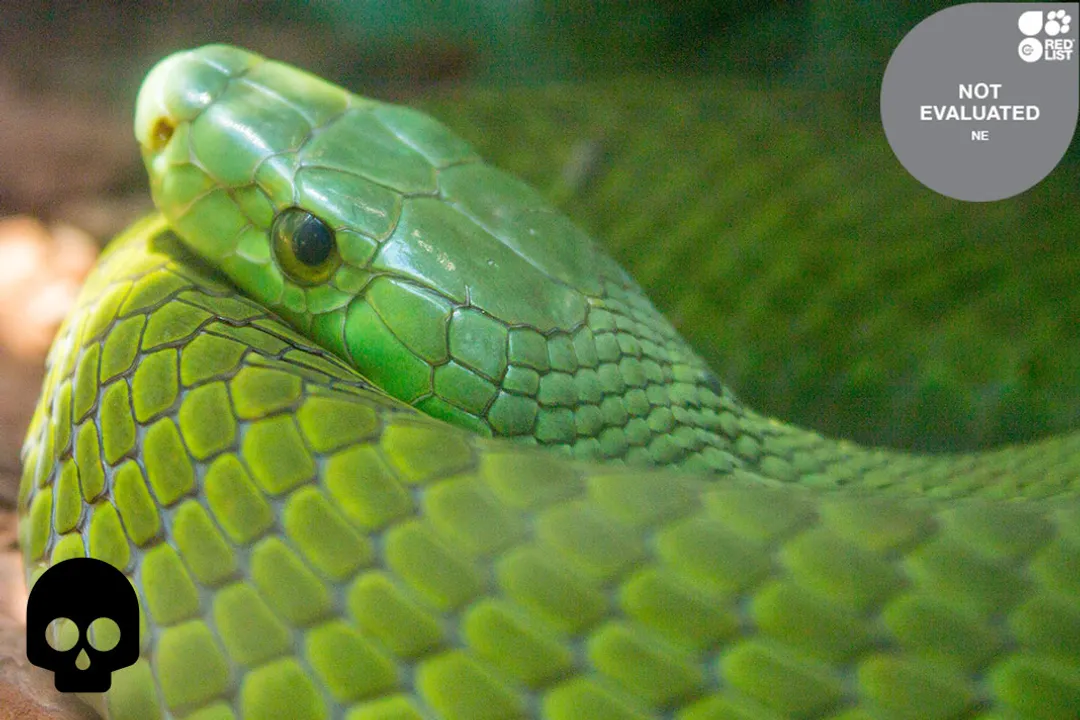
The world of venomous snakes holds few creatures as strikingly beautiful and inherently fascinating as the green mambas. Unlike their infamous relative, the Black Mamba, these snakes wear a vibrant, leafy coat that helps them melt into their treetop homes across sub-Saharan Africa. To think of them simply as "green" misses the nuance of their existence high above the forest floor.
# Mamba Types
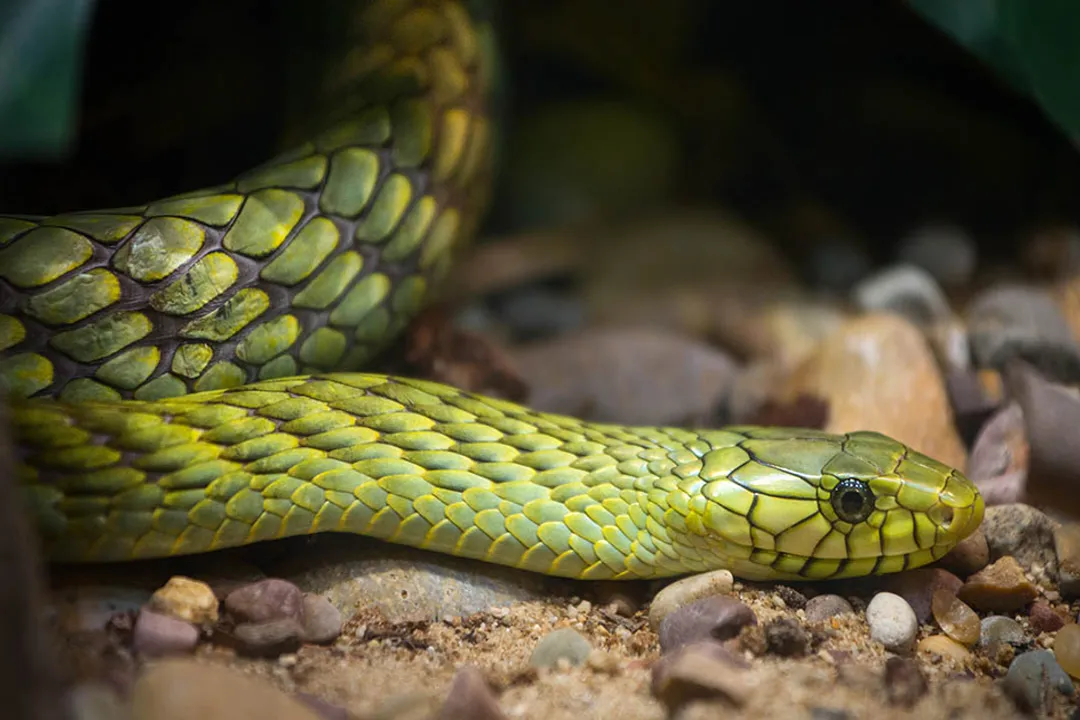
It is essential to know that "green mamba" refers not to a single species, but rather a group of snakes all belonging to the genus Dendroaspis. While there is much shared characteristics among them, distinguishing between the main types provides a richer understanding of their varied ranges and specific traits. The three primary species typically discussed are the Eastern Green Mamba (Dendroaspis angusticeps), the Western Green Mamba (Dendroaspis viridis), and Jameson's Mamba (Dendroaspis jamesoni).
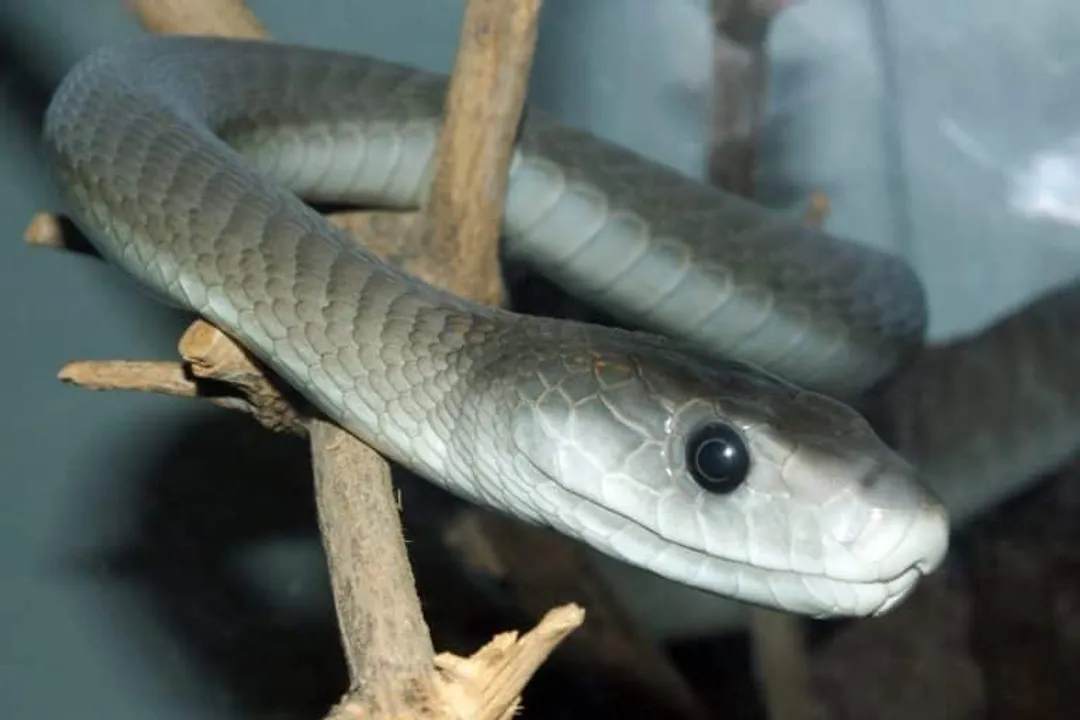
The Eastern Green Mamba makes its home along the coastal forests spanning from Southeast Africa, reaching north through regions like Kenya down to South Africa. In contrast, the Western Green Mamba occupies territories further west, ranging from Senegal down to Angola. Understanding this geographical split is key; a green mamba found deep in a Nigerian rainforest belongs to a different ecological niche than one navigating the coastal thickets of Mozambique. While the Black Mamba often causes name confusion, it is important to remember that despite the shared genus Dendroaspis, the Black Mamba (D. polylepis) is distinctly named for the color inside its mouth, not its exterior coloration, which is generally grey or olive. The green mambas, however, truly earn their name through their external pigment.
# Canopy Dwellers
Green mambas are fundamentally arboreal creatures, meaning they spend the vast majority of their lives aloft in the trees. This lifestyle demands an incredible degree of agility and speed, allowing them to navigate branches with the grace of a tightrope walker. They are described as excellent climbers, which is a prerequisite for their hunting success. Their slender bodies, which can reach lengths of up to two meters for the Eastern species, are perfectly suited for this aerial existence.
What is particularly surprising for snakes, which are often viewed as strictly terrestrial, is their proficiency in another environment. Both the Western Green Mamba and others in the genus are known to be excellent swimmers. This dual capability—mastery of the canopy and comfort in the water—suggests a flexibility in habitat use beyond just dense forest, perhaps allowing them to traverse flooded areas or cross small rivers separating viable tree patches. It highlights an adaptation strategy that prioritizes efficient movement across any substrate available in their environment. For a creature that relies on speed to capture prey and evade larger predators, this versatility is a significant evolutionary advantage.
# Shades Green
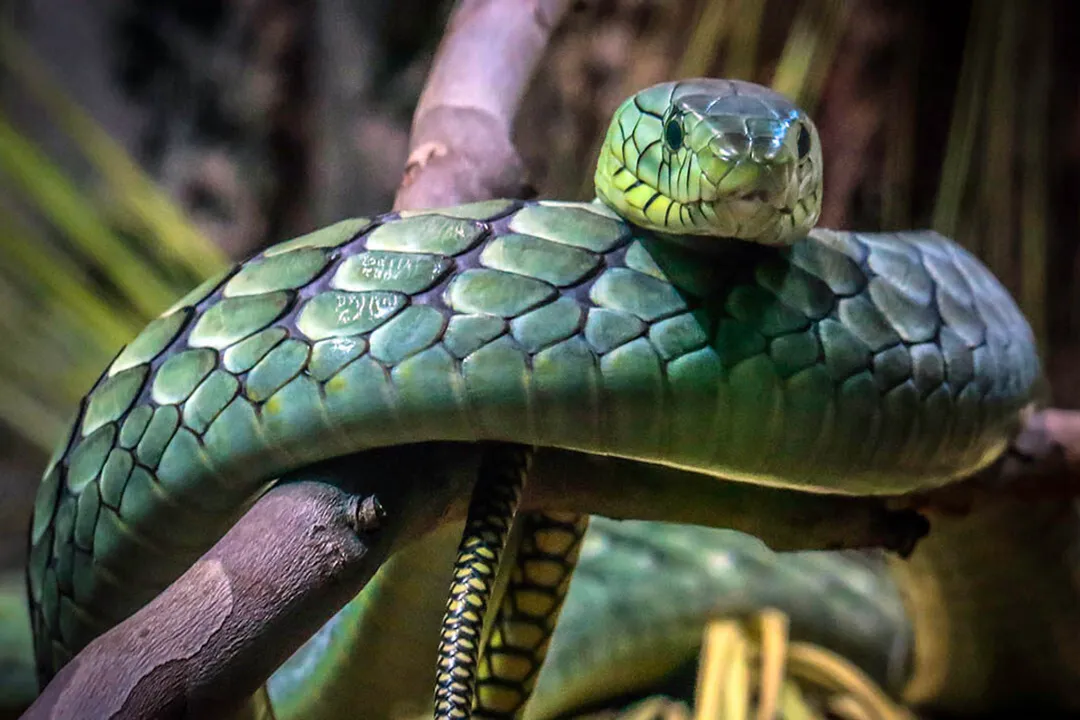
While the common name suggests a uniform hue, the actual coloration of these snakes offers a more complex palette. They are primarily characterized by their green scales. However, depending on the specific species, their environment, and even individual variation, these greens can show distinct undertones. The Eastern Green Mamba, for instance, might display scales with a noticeable yellow or even a pale blue shading mixed in with the dominant green. This subtle variation in shade likely plays into their camouflage effectiveness, allowing them to blend perfectly with different types of foliage, whether it’s new spring growth or older, darker leaves.
The difference between the Eastern and Western species, although subtle to the untrained eye, rests in these markings and ranges. They rely heavily on this camouflage; an animal moving quickly through dappled sunlight high in the trees needs every possible advantage to avoid detection by aerial predators or to surprise an unsuspecting meal.
# Day Hunter
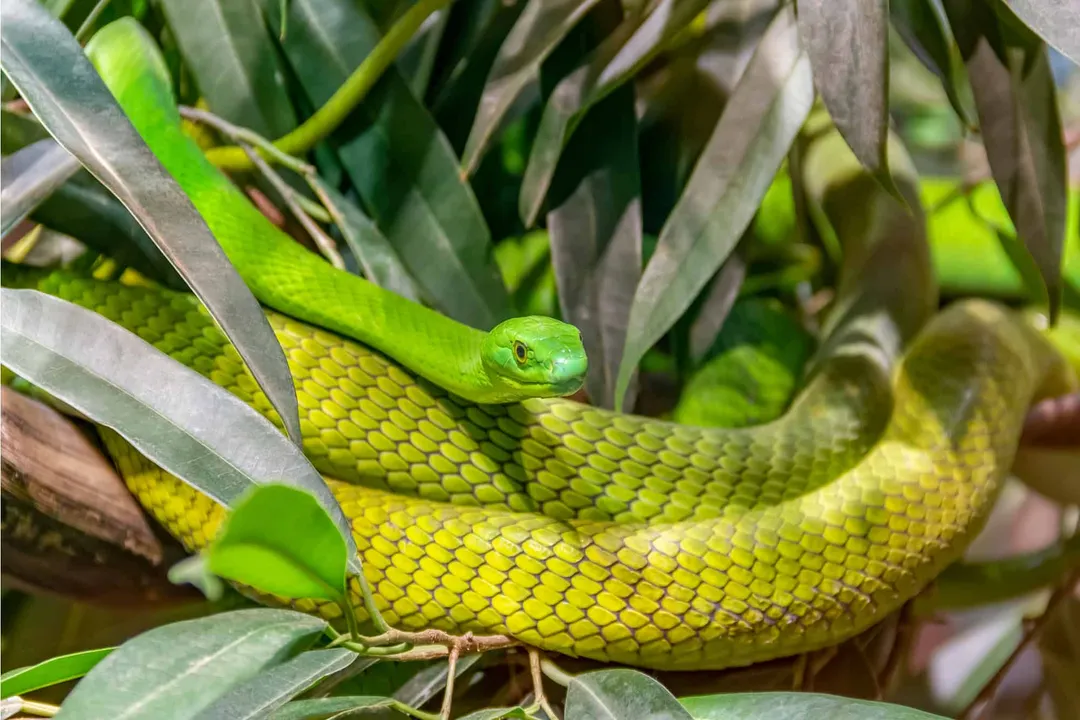
Green mambas are characterized by their highly active nature during the daytime, classifying them as diurnal species. This contrasts sharply with many nocturnal snakes that prefer the cooler, darker hours for hunting. Being active during the day means they are visually oriented hunters, relying on sight to locate their prey among the branches.
Their diet reflects their arboreal lifestyle. They primarily consume birds and small, tree-dwelling mammals, such as rodents. The Western Green Mamba also includes frogs in its menu. This diet requires explosive speed for capture. When a mamba strikes, it is a near-instantaneous event, often delivering a rapid series of bites to ensure the prey is subdued before it can escape or fight back.
# Toxin Danger
As members of the Dendroaspis genus, green mambas possess potent venom. Their venom is predominantly neurotoxic, meaning it directly attacks the nervous system. This type of venom disrupts the signals between nerves and muscles, which can quickly lead to paralysis and respiratory failure if a significant amount is injected into a human victim. The Eastern Green Mamba's venom also contains cardiotoxins, which affect the heart.
It is perhaps the combination of this highly toxic payload and their speed that makes them so formidable. A bite from a green mamba is a serious medical emergency requiring immediate antivenom treatment. While they are generally shy and prefer to flee rather than confront, a cornered or threatened snake will defend itself vigorously, and their arboreal habitat does not necessarily put them out of reach of humans who may be climbing or working near the canopy.
# Lifespan Insight
While not often discussed in casual summaries, the expected lifespan of these creatures in the wild or in protected environments provides a quiet measure of their resilience. Some sources suggest that green mambas can live for around 20 years. Considering the constant threats they face—predators, scarcity of food, and environmental hazards—reaching two decades in the wild is a testament to their effectiveness as predators and survivors within their specialized ecosystem. This relatively long potential lifespan suggests that individuals can become highly experienced hunters over time, refining their tracking and striking abilities year after year.
#Videos
Green Mamba, The Best Pet Snake?
Related Questions
#Citations
Green Mamba Animal Facts
Green Mamba - Los Angeles Zoo and Botanical ...
Eastern green mamba
West African Green Mamba
Eastern Green Mamba - Facts, Diet, Habitat & Pictures on ...
Western green mamba Facts for Kids
GREEN MAMBA – National Zoological Garden, Pretoria
Green Mamba, The Best Pet Snake?
Green mamba snake facts and behavior
Black and Green Mamba Snake