What is a green mamba?
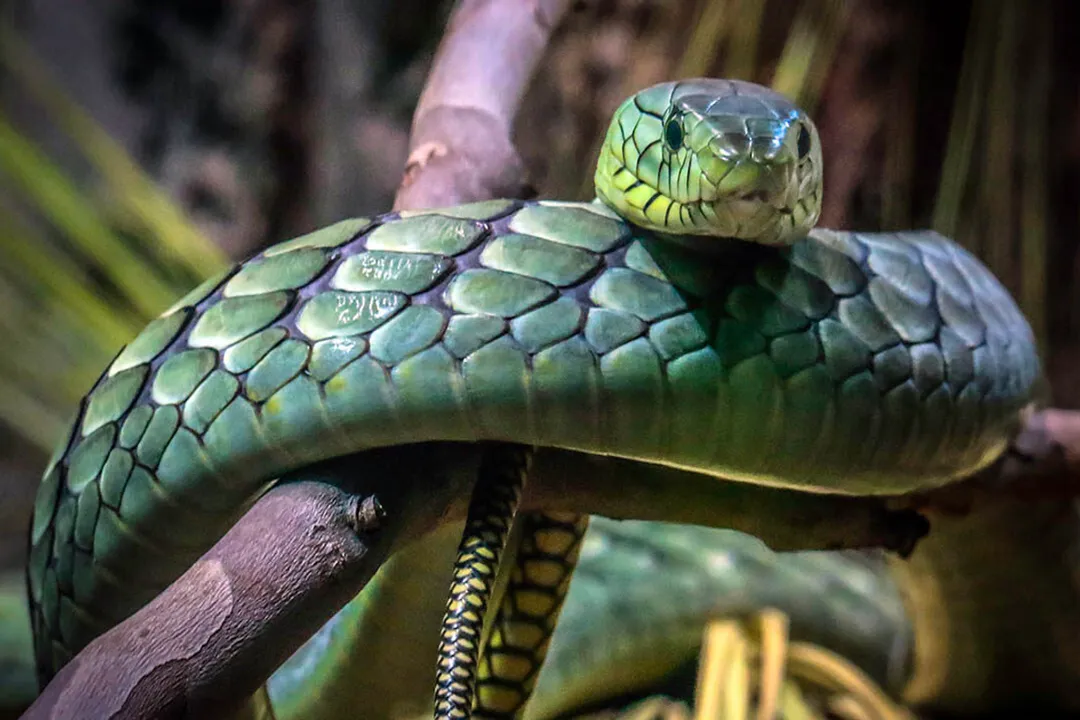
The name "green mamba" conjures immediate images of speed, vibrant color, and potent danger, making it one of Africa's most recognized, and feared, arboreal snakes. These reptiles belong to the genus Dendroaspis, a group that shares common lineage and a reputation for being highly venomous and exceptionally quick moving. While often spoken of as a single entity, the term frequently refers to two distinct, yet closely related, species: the Eastern Green Mamba (Dendroaspis angusticeps) and the Western Green Mamba (Dendroaspis viridis). Understanding these snakes requires looking past the striking emerald hue and delving into their specific habits, ranges, and the nuances of their venom delivery.
# Genus Identity
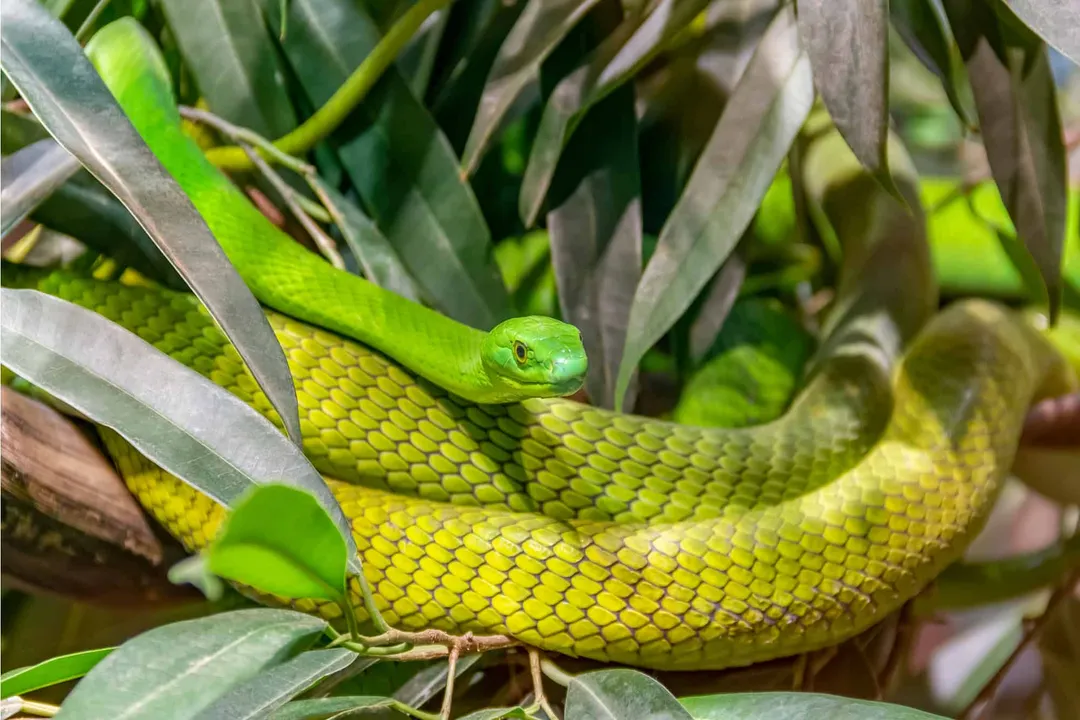
The genus Dendroaspis is comprised of four species, including the two green mambas and the famous black mamba (D. polylepis), though the green varieties are generally considered less aggressive toward humans than their darker relative. The common thread linking these snakes is their largely arboreal lifestyle, meaning they spend the majority of their lives high up in trees and dense vegetation. This preference for the canopy dictates much of their physical structure and behavior, favoring agility and camouflage over terrestrial hunting tactics.
Green mambas are generally characterized by their slender, elegant build, which allows them to navigate branches with remarkable ease. In captivity, keepers often note this slenderness contributes to their nervousness, as they appear to favor escape routes over confrontation. They possess large eyes, which are well-suited for spotting prey and predators in the dappled light of the forest ceiling.
# Species Distinction
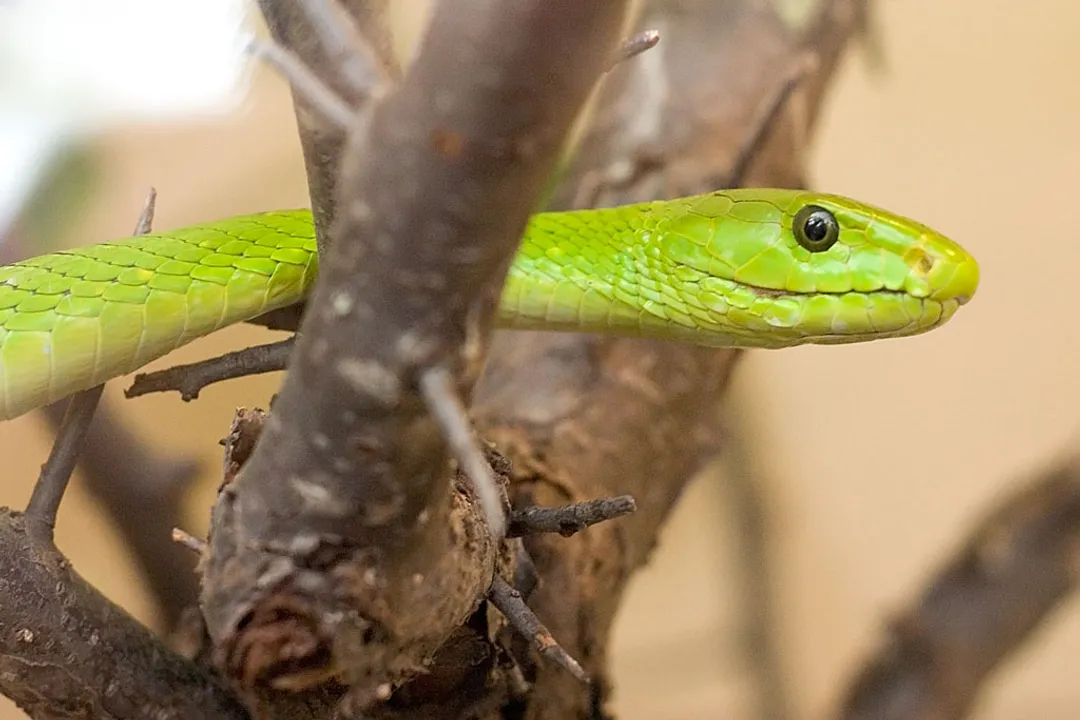
Although they share a common name and a general appearance, distinguishing between the Eastern and Western Green Mambas is crucial, particularly when considering regional medical responses.
The Eastern Green Mamba (D. angusticeps) is generally considered the larger of the two green species. Its distribution is concentrated in the coastal regions stretching from Somalia down through East Africa, encompassing countries like Kenya, Tanzania, and reaching South Africa’s eastern seaboard. The Pretoria Zoo, for instance, features this species, indicating its presence in the southern part of its range.
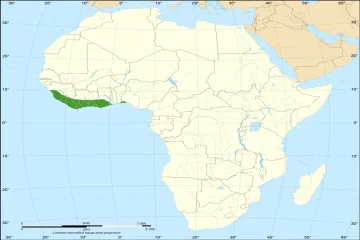
In contrast, the Western Green Mamba (D. viridis) inhabits West and Central African locales. Zoos like the Central Florida Zoo often house this species, reflecting its geographic sphere of influence in countries such as Sierra Leone, Ghana, and the Congo region. While both are vividly green, subtle differences in head shape or scale patterns might distinguish them for expert herpetologists, though the geographic separation is the most reliable identifier for field identification.
A key comparative point often highlighted by herpetological institutes is that while both possess medically significant venom, their specific geographic separation means that antivenom stocks must be tailored to the region where bites are most likely to occur.
Here is a brief table summarizing the primary distinctions drawn from regional focus:
| Feature | Eastern Green Mamba (D. angusticeps) | Western Green Mamba (D. viridis) |
|---|---|---|
| Primary Range | East Africa (Somalia to South Africa) | West and Central Africa |
| General Size | Typically the larger of the two green species | Generally smaller than the Eastern species |
| Habitat Focus | Coastal forests, riverine vegetation | Rainforests, primary forest areas |
It is important to note that general descriptions of "Green Mambas" sometimes blur the lines between these species, or even include the rarely seen Cafre or Bushveld Green Mamba (Dendroaspis jamesoni), which occupies a middle ground in terms of range and is less frequently displayed in major international collections than its eastern and western counterparts.
# Appearance and Scale
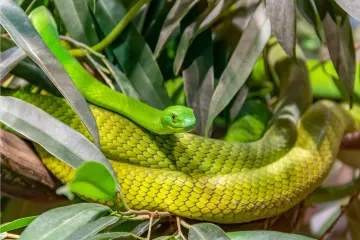
The signature bright green coloration of these snakes is a perfect example of cryptic camouflage within their verdant environment. This color is not uniform; rather, it ranges from a bright, almost lime green to a deeper emerald or even a yellowish-green. Their bellies are typically lighter, often creamy white or pale yellow, providing countershading that breaks up their silhouette against the sky when viewed from below.
While size estimates vary, particularly between captive specimens and wild populations, Eastern Green Mambas can reach lengths exceeding six feet, though averages are often closer to four or five feet. Their bodies are remarkably slender, giving them a whip-like appearance that aids in their swift, arboreal locomotion. The scales are smooth, contributing to their sleek profile.
One interesting observation, often shared by keepers working with these snakes, is the stark contrast between their daytime resting coloration and their defensive display. When threatened or stressed, the normally placid green can appear duller or even take on a slightly bluish cast, a physiological reaction that might be intended to look less conspicuous in deep shade or, conversely, as a visual warning signal when camouflage fails.
# Habitat and Range
Green mambas are primarily associated with dense, moist vegetation, generally preferring coastal forests, dense thickets, and riverine woodland areas where climbing opportunities are plentiful. They are strongly associated with trees and shrubs, and while they can descend to the ground to move between trees or hunt, they are far less common on open ground than the Black Mamba.
The Eastern Green Mamba's range follows the eastern coast of Africa, often found in areas with high humidity and significant tree cover. This ecological niche is critical; if human encroachment leads to the fragmentation of these dense, mature forests, their specialized habitat requirements mean they are more susceptible to local population decline than habitat generalists.
The Western Green Mamba shares a similar reliance on heavily forested zones but occupies the regions further west. The presence of these snakes is often an indicator of a relatively undisturbed, mature ecosystem, as they seem to shy away from heavily disturbed or heavily agriculturalized land where they lack sufficient overhead cover.
# Behavior and Predation
Green mambas are diurnal, meaning they are active during the day, which suits their visual hunting style. They are incredibly fast; this speed is not just for show but is a necessary component of escaping danger and ambushing agile prey. When startled, their first instinct is almost always to flee into the canopy, using their agility to disappear rapidly among the leaves.
Their diet consists mainly of small prey that share their arboreal home. This includes small mammals like rodents, birds and their eggs, and occasionally lizards. Their slender jaws allow them to swallow prey whole, even if it is relatively large in proportion to their body diameter.
Their movement through trees is often described as fluid and graceful, a stark contrast to the somewhat more cautious movements of some terrestrial elapids. In captivity, keepers have noted that while they can be surprisingly bold when feeding, they are generally reserved and prefer to hide, often only moving when necessary.
When provoked, especially if escape is blocked, the green mamba will adopt a defensive posture. This usually involves raising the front part of the body off the ground, spreading a narrow but distinct hood—though much less pronounced than that of a cobra—and hissing quietly. They rarely strike unless handled or cornered, but due to their speed, a defensive strike can happen before a person realizes they are too close.
# Venom and Medical Significance
Like all mambas, green mambas possess highly potent venom, classified as neurotoxic. This means the venom primarily attacks the nervous system, interfering with the transmission of nerve signals to muscles. Symptoms of a significant bite can include rapid onset of local pain, swelling, drooping eyelids (ptosis), blurred vision, slurred speech, and, eventually, respiratory paralysis.
The venom is an efficient weapon for subduing small, active prey quickly. For a human, a bite is a severe medical emergency requiring immediate hospital treatment with appropriate antivenom.
A point of comparison often made is between the Eastern and Western species' venom profiles. While both are neurotoxic, venom composition can vary even within a species depending on geographic locale, a concept known as venomics. The African Snakebite Institute emphasizes that while any green mamba bite must be treated as life-threatening, the specific antivenom formulation used locally should always be the primary concern for first responders.
In professional settings where venom is extracted for antivenom production, the process requires extreme caution. Experienced handlers, such as those seen in videos demonstrating the milking procedure, approach the task with meticulous planning, often using clear tubes or containers to capture the yield. These demonstrations underscore the sheer volume and speed with which the snake can strike, even when being carefully restrained. The yield itself, which is collected drop by drop, is then processed to create the life-saving antivenom, highlighting the essential, if risky, link between the snake and modern medical response.
# Life in Captivity
Zoos and specialized reptile facilities house green mambas to contribute to education, conservation, and antivenom research. For facilities like the LA Zoo or the Central Florida Zoo, maintaining the correct environment is paramount to the snake's well-being. This involves ensuring high humidity, warm temperatures, and providing substantial vertical structures for climbing and basking.
Working with these snakes in a controlled environment requires a high degree of expertise due to their inherent nervousness and speed. One observation made by those familiar with captive mambas is that while they can habituate to the routine of feeding and cleaning, they rarely lose their inherent flight response. A common behavioral trait noted in enclosures is the snake's preference for utilizing overhead hides or dense artificial foliage, reinforcing their need for visual barriers between themselves and perceived threats.
It is worth considering that the sheer speed these snakes possess translates into a very short reaction window for human caregivers. While a captive snake may appear docile resting high up, any sudden disturbance—a dropped tool, an unexpected door opening—can trigger an immediate, high-speed defensive maneuver. This rapid movement necessitates double-gloved handling techniques or the use of specialized clear barriers during any enclosure interaction, a standard practice that reflects an understanding of their experience in the wild.
# Conservation Context
While not currently listed as globally threatened, the conservation status of green mambas is tied directly to the fate of their specialized habitats. As previously mentioned, the Eastern Green Mamba relies on the coastal forests of East Africa. Deforestation for agriculture, logging, or urbanization directly reduces their available territory and food sources.
The situation presents a classic conservation paradox common in highly specialized species: the very characteristics that make them successful predators in a specific environment—their reliance on high canopy and their sensitivity to disturbance—make them vulnerable when that environment is altered. While generalist snakes might thrive near human settlements, the green mamba needs intact forest blocks. Any local population decline, often spurred by habitat loss or fear-driven killing (even if less frequent than with the Black Mamba), reduces the genetic resilience of the species in that area.
An insightful perspective here involves looking at the local human-wildlife interface. In areas where the Eastern Green Mamba borders agricultural land, for example, the primary conflict isn't usually an intentional hunt, but rather accidental encounters by farm laborers working close to the tree line, or by individuals attempting to remove the snake themselves after it has wandered into a less suitable area searching for prey. Successful long-term coexistence, therefore, hinges less on outright protection and more on maintaining ecological corridors that allow these arboreal specialists to move safely between viable forest patches.
# Responsible Interaction and Awareness
For the general public living near green mamba territory, awareness is the most effective preventative measure. Since these snakes favor the trees, the risk of an encounter is highest when one is pruning trees, climbing, or retrieving objects from high branches near a forested edge.
When observing these animals, whether in the wild or in educational exhibits, it is vital to maintain a respectful distance. The general guidance for any venomous snake applies: never attempt to catch, handle, or harass the animal. A good rule of thumb, synthesized from expert advice, is to maintain a distance where the snake cannot easily reach you even if it were to strike from a raised position—which, for a fast-moving arboreal snake, can cover a surprising amount of ground.
If an encounter occurs on the ground, the recommended action is to calmly back away and allow the snake ample room to retreat to the safety of a tree or bush. Given their preference for escape over conflict, providing that escape route is usually all that is needed to prevent a defensive bite. Attempting to scare them off with loud noises or aggressive movements can sometimes provoke the very reaction you are trying to avoid. This principle of defensive retreat is a fundamental aspect of managing dangerous wildlife encounters in Africa, relying on the animal's own behavioral bias towards self-preservation in cover.
#Videos
Green Mamba, The Best Pet Snake? - YouTube
Related Questions
#Citations
Eastern green mamba - Wikipedia
Green Mamba - Los Angeles Zoo and Botanical Gardens
GREEN MAMBA – National Zoological Garden, Pretoria
Green Mamba, The Best Pet Snake? - YouTube
Green Mamba - African Snakebite Institute
Green Mamba venom milking! - Facebook
Eastern Green Mamba - Facts, Diet, Habitat & Pictures on Animalia.bio
West African Green Mamba Attraction | Central Florida Zoo Animals
Green Mamba Animal Facts