Wels Catfish Facts
The Wels catfish, scientifically known as Silurus glanis, is one of Europe’s most formidable freshwater giants, inspiring awe and sometimes controversy among anglers and ecologists alike. [1][2] Reaching astonishing sizes, this species has a history stretching across large portions of Europe and Asia, though its presence has expanded beyond its native boundaries in recent times. [1][3] Understanding this fish requires looking past its sheer bulk to its unique biology and the ecological ripples its dispersal creates. [2][4]
# Massive Dimensions
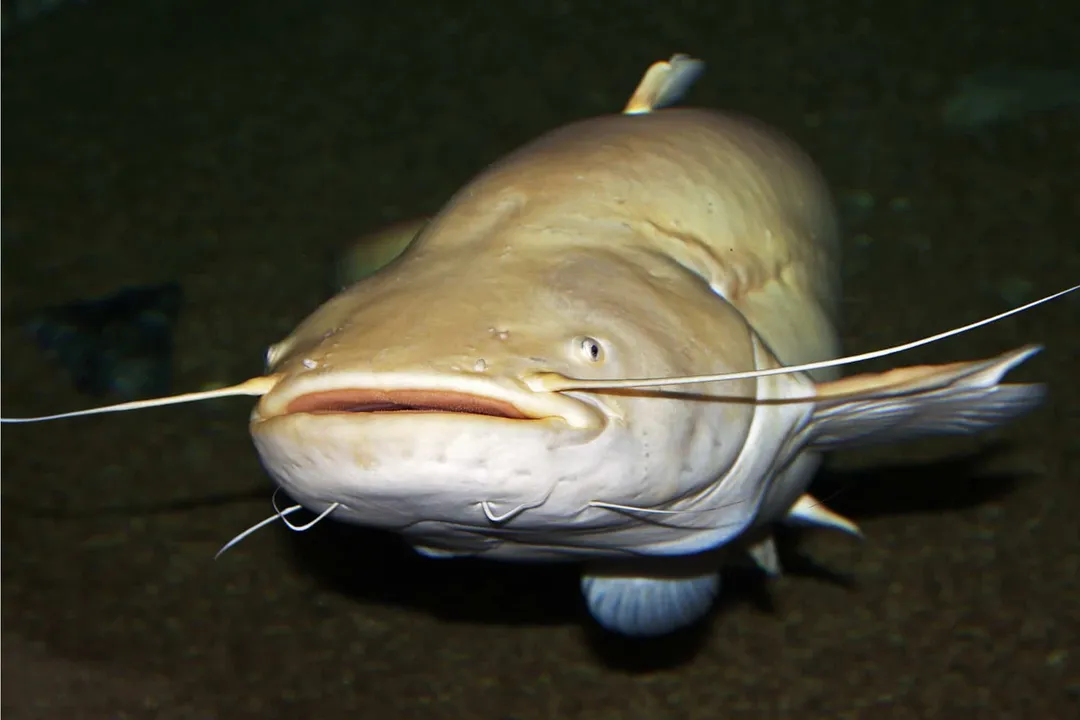
When discussing Wels catfish, size is often the first topic that comes up, and for good reason. These fish are built for longevity and mass. [1] While the fish most commonly encountered by anglers might average around 3 feet in length, the upper limits of their growth potential are truly staggering. [1] Some verified records indicate they can potentially reach lengths of up to 13 feet, which translates to about 4 meters, and weigh in excess of 300 pounds or 135 kilograms. [1][4] Furthermore, these slow-growing behemoths possess a substantial lifespan, sometimes exceeding eight decades. [1] This combination of size and age suggests that older individuals accumulate a vast amount of feeding experience, making them exceptionally wary of artificial lures or baits, a trait seasoned anglers often note when targeting specimens over 100 pounds. [4]
# Physical Traits
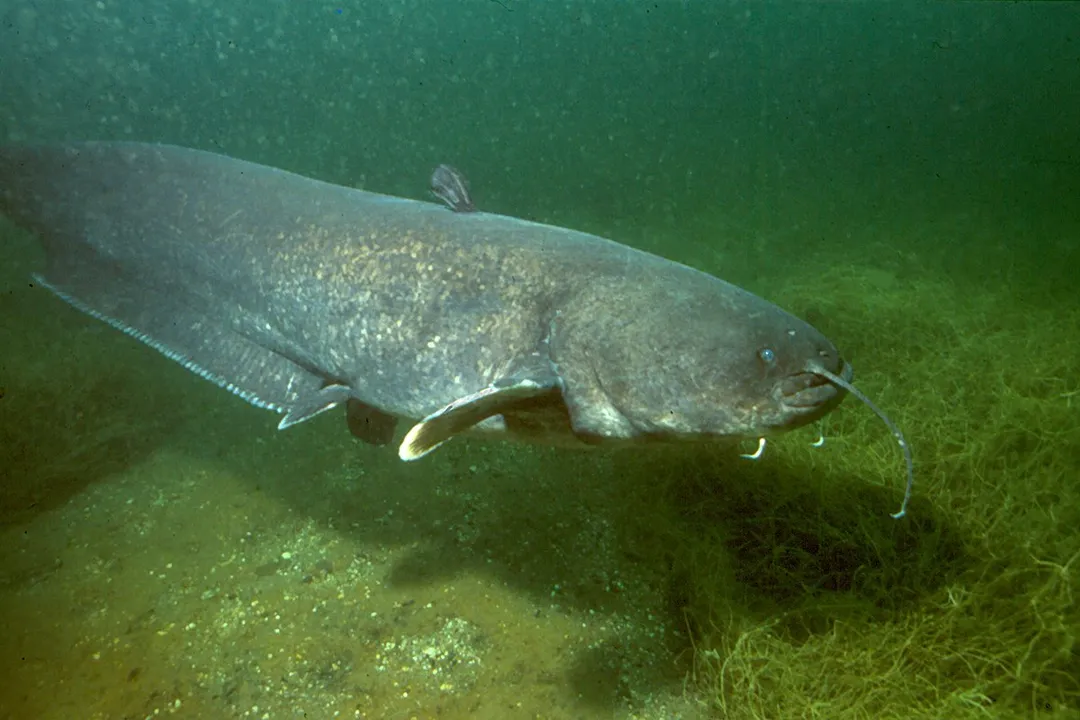
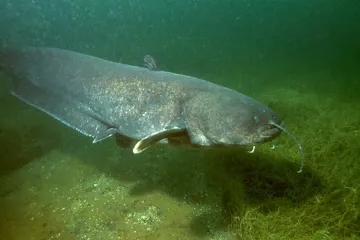
The visual profile of the Wels catfish is unmistakable, setting it apart from many other scaled freshwater fish. [5] They possess an elongated, powerful body structure, complemented by a head that is notably broad and flattened. [1][4] A key defining characteristic is the complete absence of scales; their skin is smooth and scaleless, covered in a thick layer of mucus that protects them. [1][5] Their coloration typically provides effective camouflage in murky water, presenting a dark, often olive, gray, or brownish back that gradually lightens toward a pale or white underside. [1][5]
Perhaps the most recognizable facial feature involves their sensory apparatus. They are equipped with six prominent barbels, often referred to as whiskers, surrounding their wide mouth. [1][5] There are two very long barbels extending from the upper jaw, acting as primary feelers, alongside four shorter barbels situated below. [1][5] Contrast this with many North American catfish species that possess eight barbels. Additionally, their eyes are relatively small when compared to their overall head size. [1] Finally, their tail fin is distinctly forked, assisting their powerful swimming motions. [1] They also possess sharp teeth situated in their mouths, all pointing backward. [1]

# Range Habitat
The natural, historical distribution of the Wels catfish is broad, spanning major river systems across Europe and into Asia. [1][2][3] They show a strong preference for environments that offer protection and stability, generally favoring slow-moving rivers, canals, or still bodies of water like lakes. [1][4] They tend to seek out deeper sections of these waterways, often finding refuge near submerged objects such as bridge supports, old snags, or beneath weirs. [1][4]
A fascinating biological trait that allows them to thrive in certain challenging environments is their high tolerance for low dissolved oxygen levels, a condition known as anoxia. [1][4] This adaptation means that while many other fish species move to shallower, more oxygenated areas during stagnant summer periods or winter stratification, Wels can remain comfortably in deep, murky, oxygen-poor holds—an environment that can be strategically advantageous for an angler aware of this tolerance, as it concentrates the large fish in predictable, dark locations. [1][4]
However, the species has been intentionally introduced outside its native range for sport fishing, leading to established populations in regions like Spain, France, and Italy. [2] More concerning from a conservation perspective is its presence in North America, where it is monitored as a potential invasive species, particularly around the Great Lakes region. [3][6] In places like Michigan, its introduction has raised flags due to the established ecosystems already present. [3][4]
# Predatory Habits
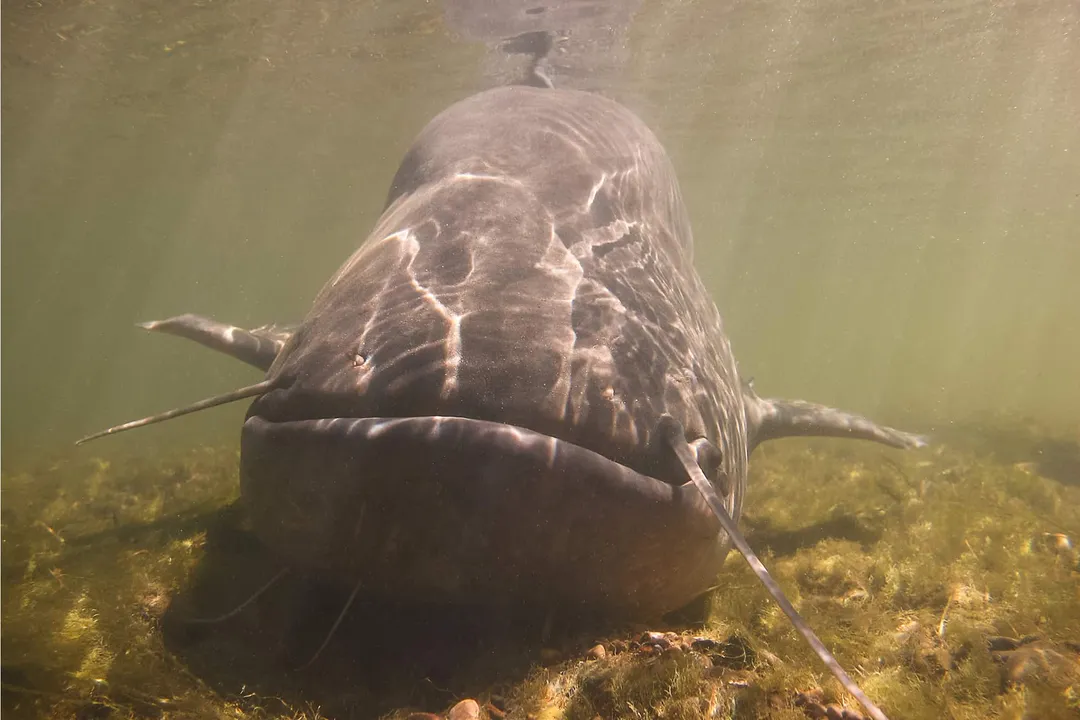
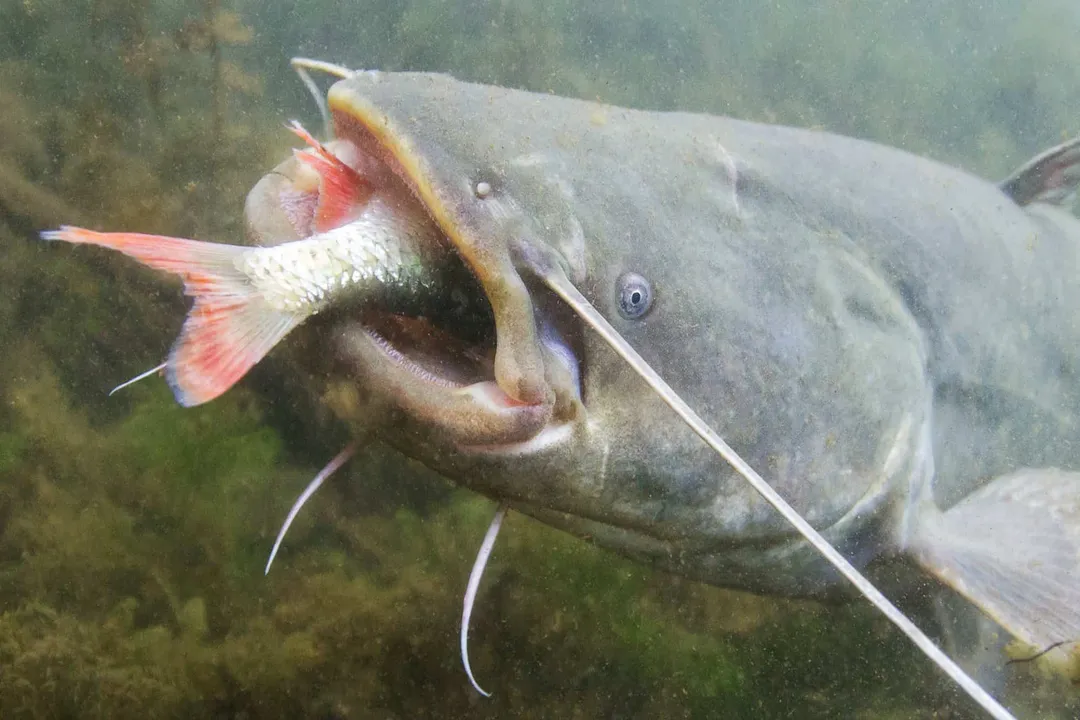
Wels catfish are generally solitary creatures whose most active period occurs after sunset. [1][4] They are considered opportunistic and predominantly nocturnal feeders, hunting near the bottom substrate. [1] Their diet is incredibly varied, fitting their omnivorous classification. [1][4][5] This menu can include aquatic insects, various crustaceans, amphibians, and native fish species. [1][4]
What captures public and scientific attention, however, is their capacity to consume much larger prey items. They are known to take substantial fish, and reports confirm that their diet can extend to small mammals and even birds that happen to alight on or fall into the water's surface. [4][5] This willingness to take prey from the surface suggests they sometimes move up the water column to ambush unsuspecting terrestrial animals that come too close to the edge. [5]
# Invasive Threat
When Wels catfish are introduced into a new environment where they have no natural predators and abundant food sources, their status shifts from native inhabitant to invasive species. [2][6] In areas where they have become established outside their historical range, significant concerns arise regarding their impact on native fauna. [3][6] Their large size and predatory nature mean they can exert considerable pressure on native sport and forage fish populations, such as bass, panfish, and walleye, especially in systems like the Great Lakes basin. [3][4]
The primary ecological concern is twofold: direct predation pressure and competition for resources. [2][6] They can potentially outcompete native predators for food, or simply consume too many of the native fish, disrupting the existing ecological balance. [2][6] Due to these risks, regulatory bodies in places like the UK strictly control the movement and stocking of this species, recognizing it as non-native and potentially damaging to the local freshwater fish stocks. [7] In areas where they are considered invasive, management often defaults to aggressive removal rather than catch-and-release practices common in sport fishing jurisdictions where they are welcomed for the challenge they present. [7] It is a complex situation where the fish's desirability as a sport catch clashes directly with conservation mandates when it crosses international or ecological borders. [4][7]
# Breeding Cycle
The reproductive phase for the Wels catfish is tied closely to warmer water temperatures, typically occurring in the late spring or early summer months. [1] During this period, males take on the demanding role of nest construction and defense. [1] The male is responsible for building a nest, usually situated in shallow water areas that often feature submerged vegetation or other cover for protection. [1] Once the eggs are laid, the male guards them assiduously until they successfully hatch, ensuring the next generation has the best chance of survival. [1]
The successful establishment of Wels populations, whether native or introduced, is fundamentally linked to this dedicated parental care exhibited by the male, which enhances survival rates compared to species where eggs are left unguarded. [1]
Related Questions
#Citations
Wels catfish
Wels Catfish
Wels catfish : Silurus glanis
Invasive Species: Wels Catfish
Wels catfish Facts for Kids
Species Profile - Wels Catfish
Facts About Catfish (Wels)
Wels Catfish Facts For Kids | AstroSafe Search
Wels Catfish Fish Facts - Silurus glanis