What are the characteristics of the De Brazza's monkey?
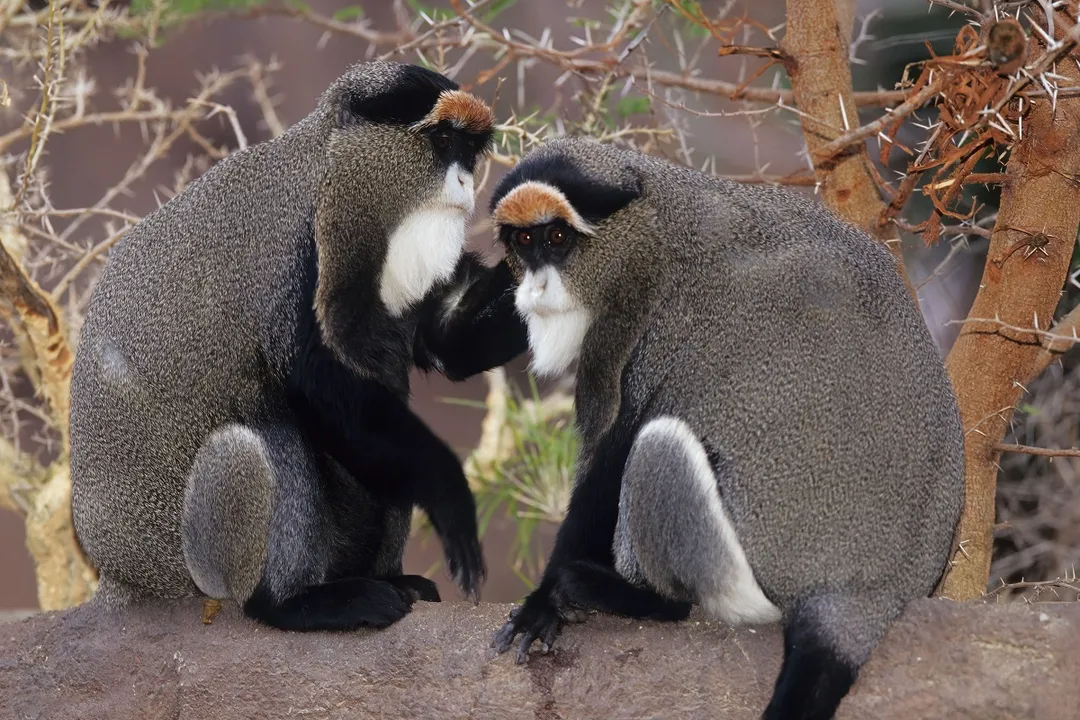
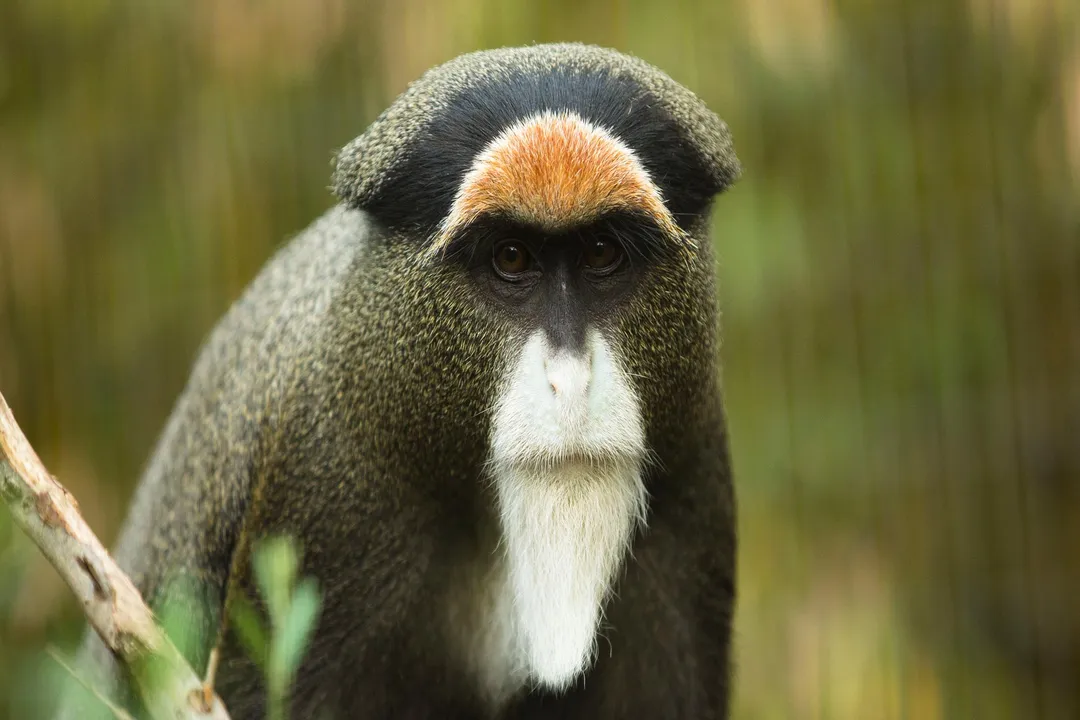
The De Brazza’s monkey presents one of the most distinct and memorable appearances among African primates, immediately setting it apart with its dramatic facial furnishings. This medium-sized Old World monkey, scientifically known as Cercopithecus neglectus, is instantly recognizable due to its prominent white beard and moustache. [2][4] It is named after the Italian explorer Pierre Savorgnan de Brazza. [2] While they share the canopy with other monkeys, their unique aesthetic—a combination of dark fur contrasting sharply with bright white and fiery orange—makes them stand out in field guides and in the wild. [5][6]
# Distinctive Features
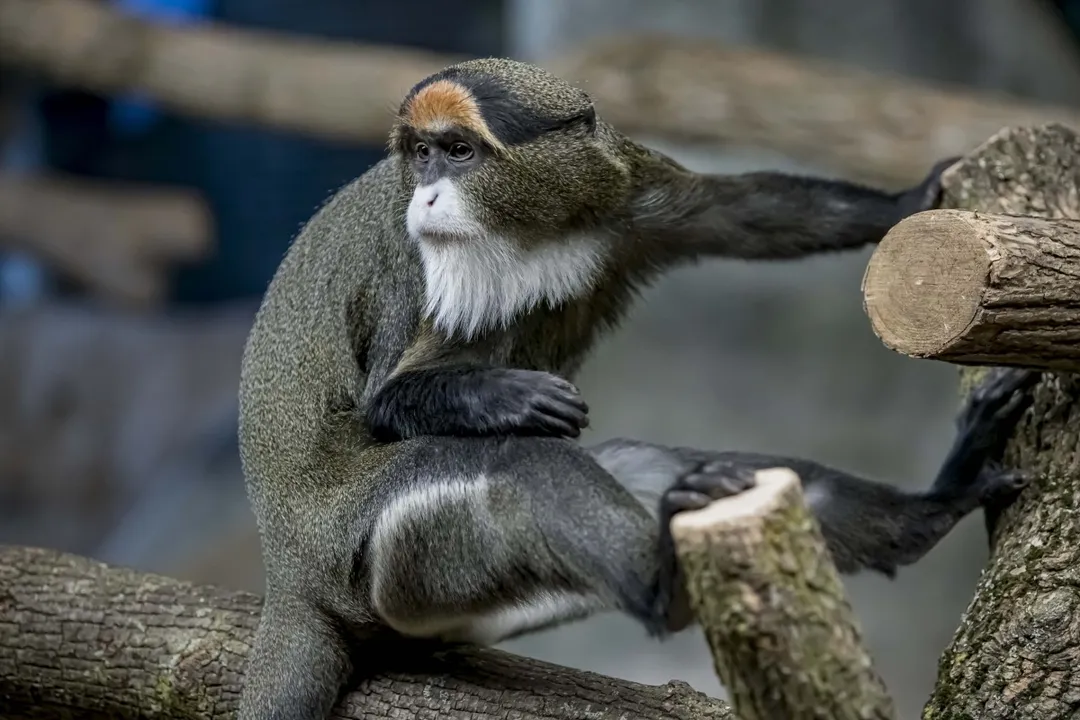
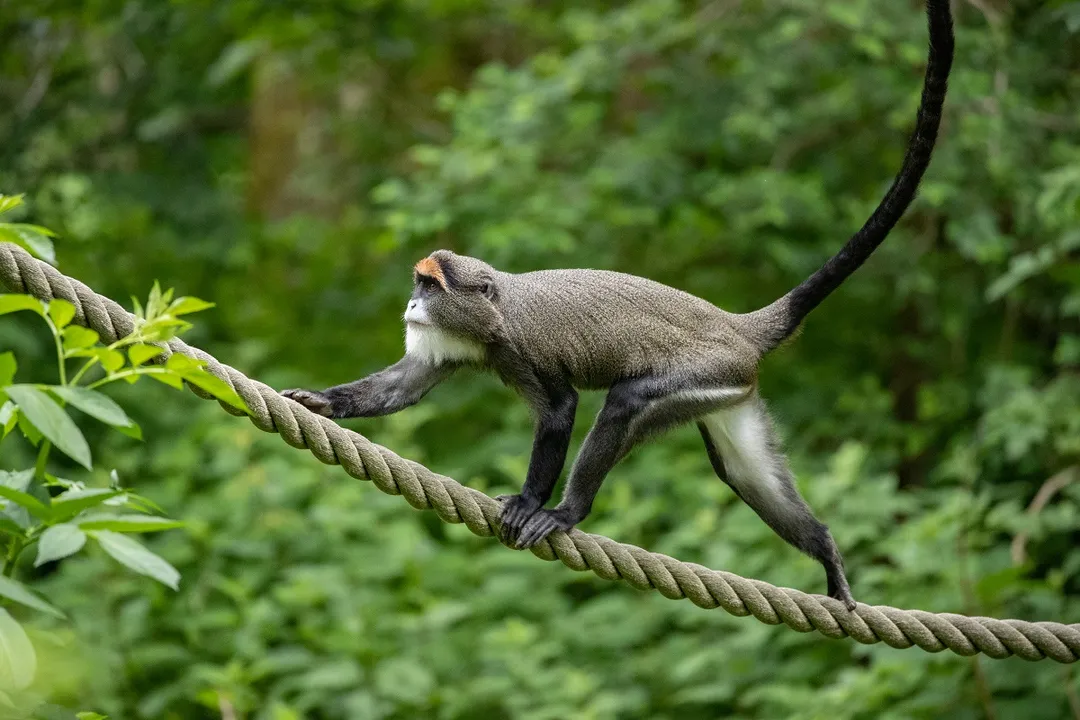
The coloration of the De Brazza’s monkey is a mosaic of muted earth tones punctuated by vibrant highlights. The main body fur is generally described as dark grey or brownish-grey. [1][6] Their limbs, however, contrast sharply with the body, often appearing black. [5][7] A key feature, shared by both sexes, is a striking white stripe running along the outer side of each thigh, sometimes described as a white 'saddle'. [3][9]
Perhaps the most visually arresting elements are the head markings. Encircling the face is a fringe of white fur that frames the dark eyes and leads into the famous white beard and muzzle patch. [2][3] Above the eyes, they possess a white brow band. [2] Set against this white is a distinct patch of reddish-orange or orange fur situated on the forehead, which provides a splash of warmth to the otherwise muted palette. [1][4][7] Interestingly, while the white markings serve as clear identifiers, one might theorize that these bright patches, particularly the beard against the dark forest understory, function as subtle visual signals within their tight social groups, perhaps aiding recognition in the dim light of their preferred habitat. [1][5] Males tend to be slightly larger than females, displaying mild sexual dimorphism. [1][3]
| Characteristic | Description |
|---|---|
| Scientific Name | Cercopithecus neglectus |
| Primary Body Color | Dark grey to brownish-grey |
| Facial Markings | Thick white beard, white muzzle patch, white brow band |
| Head Highlight | Reddish-orange/orange crown patch |
| Limb Coloring | Black |
| Thigh Markings | White stripe on the outer thigh |
# Range and Habitat
De Brazza's monkeys inhabit a significant, though fragmented, portion of Central Africa, found across several countries. [2] Their distribution spans areas including Gabon, Cameroon, Equatorial Guinea, Republic of the Congo, Democratic Republic of the Congo, Uganda, and potentially Kenya. [2] They demonstrate a strong preference for specific types of environments, primarily favoring forested areas adjacent to water. [4][6] Specifically, they thrive in swamp forests and gallery forests—the strips of woodland that line rivers and streams. [2][5][8]
These environments often mean they spend time both above ground and on the forest floor. They are known to be arboreal, moving through the trees, but they are also comfortable descending to travel terrestrially. [3][5] This adaptability in movement is likely crucial for navigating the dense, seasonally flooded landscapes where they reside, allowing them to access food resources both in the canopy and on the ground, a necessity that contrasts with many strictly arboreal primate species. [3]
# Dietary Preferences
The feeding habits of the De Brazza’s monkey classify them generally as omnivores, though their diet leans heavily toward plant matter. [4][9] Their primary food sources consist of leaves and fruits. [5][7] They are considered both frugivorous and folivorous, meaning they consume a substantial amount of fruit and foliage. [2][7]
However, like many monkeys, they supplement this vegetable base with animal protein when available. [3][9] This includes foraging for insects, seeds, and occasionally smaller vertebrates such as frogs. [2][3][8] A detailed breakdown shows that while fruit provides important sugars and energy, the bulk of their sustenance likely comes from the leaves, demanding an efficient digestive system capable of processing fibrous material. [5] This mixed diet provides dietary flexibility, which can be advantageous when seasonal changes impact the availability of preferred fruits. [1]
# Group Dynamics
In terms of social life, the De Brazza’s monkey typically lives in small, cohesive family groups. [1][4][6] The most commonly observed configuration is a small unit comprising one adult male, several adult females, and their associated young. [1][3] While the typical group size hovers around three to eight individuals, some sources indicate that larger aggregations of up to 30 have been observed. [2][3]
This suggests a social organization that can exhibit fission-fusion tendencies, where the primary social unit remains small and stable, but individuals might temporarily join larger foraging parties when resources are abundant or when traveling between feeding grounds. [2] They are diurnal, meaning they are active during the day, spending their waking hours feeding, socializing, and traveling through their territory. [2][7]
# Communication and Longevity
Communication within these groups relies on a variety of sounds appropriate for a dense forest setting. They produce distinct contact calls to maintain cohesion while moving, especially when sight lines are broken by vegetation. [3] When a threat is perceived, they rely on clear alarm calls to warn group members. [1][3] In addition to these louder communications, quieter contact sounds, sometimes described as 'coos' or 'barks,' help maintain proximity during less stressful activities. [3]
Regarding their lifespan, De Brazza’s monkeys have a respectable longevity for a primate of their size. In managed care settings, such as zoos, they have been known to live for over 20 years. [2]
# Conservation Outlook
The International Union for Conservation of Nature (IUCN) currently lists the De Brazza’s monkey as Least Concern. [1][6] Despite this classification, this status can be misleading, as the species is experiencing notable population declines in many localized areas. [1][3]
The threats they face are largely tied to human activity within Central Africa. The primary pressures include habitat loss and degradation, driven by deforestation for agriculture, logging, and human encroachment into their preferred swamp and gallery forest ecosystems. [4][5] Furthermore, they are subject to hunting, often serving as a source of bushmeat. [4][6] For conservation efforts to remain effective, monitoring these localized pressures is essential, as an overall "Least Concern" status can mask serious regional extinctions or severe population fragmentation. [3] Protecting the integrity of their swamp and riparian forest homes is therefore the most direct action supporting their long-term survival.
Related Questions
#Citations
DeBrazza's Monkey, Cercopithecus neglectus
De Brazza's monkey - Wikipedia
Cercopithecus neglectus (De Brazza's monkey) - Animal Diversity Web
Minnesota Zoo De Brazza's Monkey - Animals
De Brazza's Monkey | Franklin Park Zoo
Monkey, De Brazza's - Safari West
De Brazza's monkey - Twycross Zoo
De Brazza's Monkey - Milwaukee County Zoo
De Brazza's Monkey | Birmingham Zoo