Are emperor geese rare?
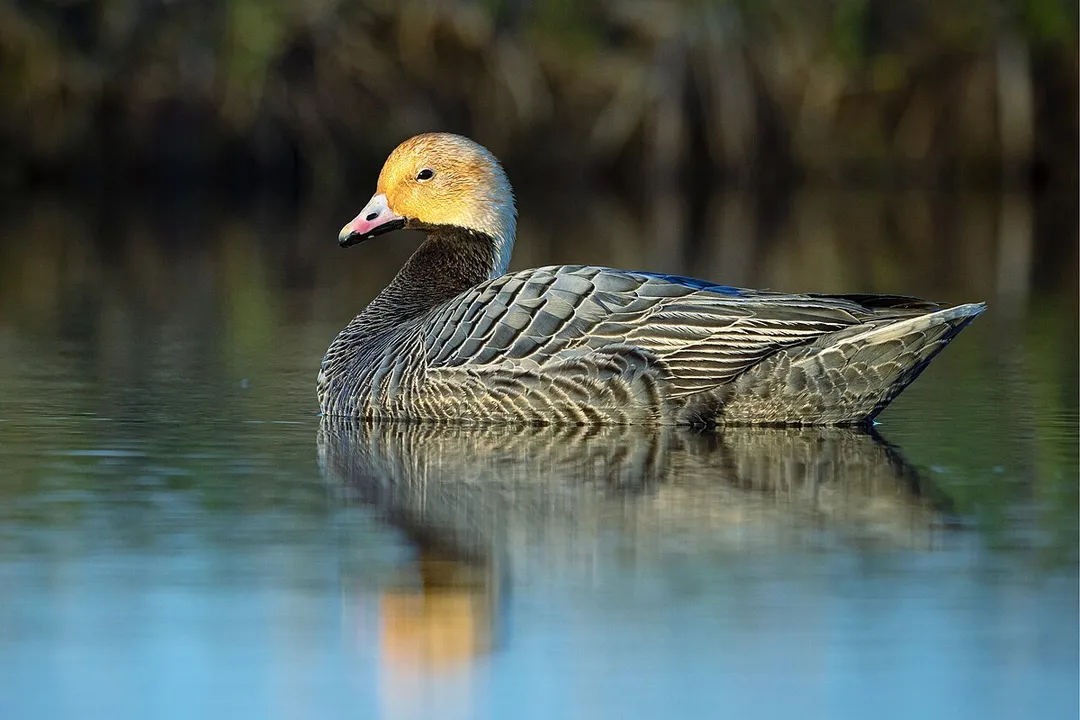
The Emperor Goose often sparks discussion among bird enthusiasts, particularly regarding its conservation status, with some sources suggesting it is one of the rarest birds globally. [9] Whether they are truly rare depends heavily on the context—geographical location, time of year, and the specific population segment being observed. These geese are instantly recognizable, featuring a brilliant white head and neck contrasted sharply against a body covered in dark, scalloped barring that gives them a gray, smoky appearance. [1][5] Their stout bills are typically pinkish, and their legs and feet are dark. [5] This striking black-and-white plumage sets them apart immediately from other gray geese found in the same regions. [8]
# Range Habitat
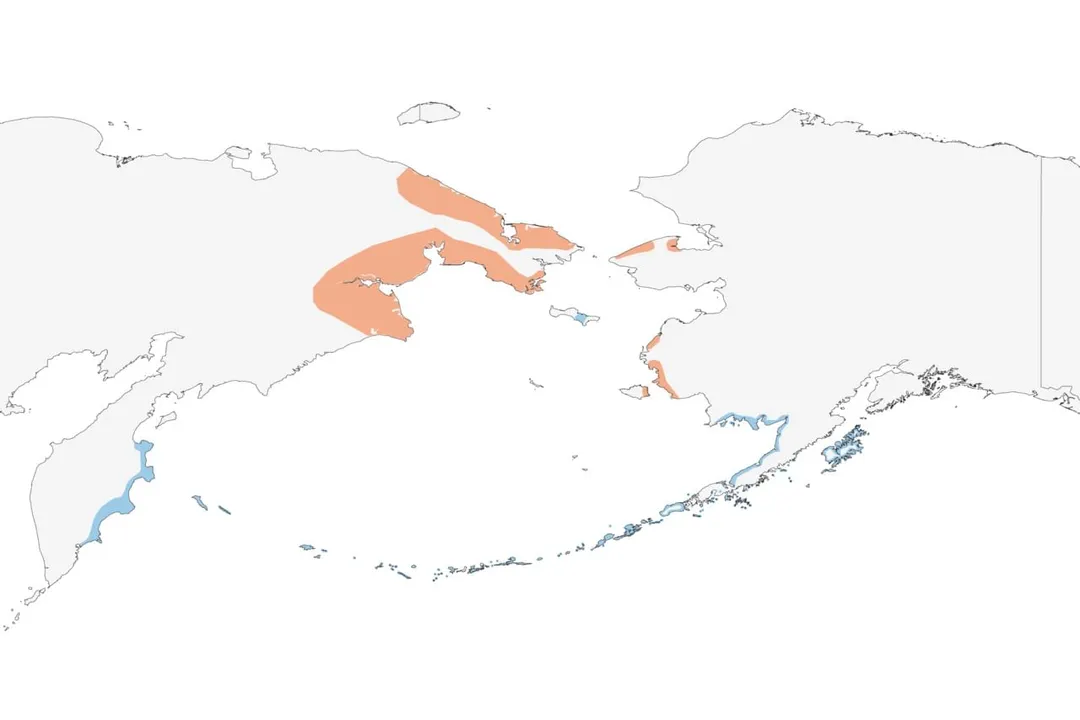
Emperor Geese maintain an extremely restricted breeding distribution. They nest almost exclusively on the coastal tundra of the Bering Sea, primarily in the far western portion of Alaska and across the Bering Strait into Chukotka, Russia. [1][6] This tight geographical focus on the subarctic coast is a defining characteristic of their life history. [4]
When the nesting season concludes, the entire population undertakes significant migratory flights, though these routes are also highly channeled. [4] The majority of the population heads south along the Pacific Flyway. [7] While their breeding range is minute, their wintering grounds stretch along the coastlines of southern Alaska, British Columbia, Washington, and Oregon. [1][7] During migration, they can occasionally be seen further inland or south than their typical year-round haunts, which is why birders in states like Oregon might catch a glimpse during the fall or winter months. [7] Their habitat preference remains resolutely coastal, utilizing estuarine areas, salt marshes, and mudflats where they forage on aquatic vegetation, grasses, and invertebrates. [6]
# Status Numbers

Addressing the question of rarity requires looking at population estimates, which can fluctuate, leading to different conservation classifications over time. [4] Historically, the species has faced significant declines, which fueled the perception of extreme rarity. [4] During periods of decline, the population dropped below 40,000 individuals, which certainly placed them in a precarious position. [4]
However, conservation efforts, including hunting management and habitat protection, appear to have had a positive impact on certain subpopulations. [4] For example, the population segment breeding in Alaska and wintering south has shown signs of recovery and stabilization in recent surveys, sometimes exceeding 80,000 birds. [4] This recovery means that while they are certainly less common than some other geese, the label of "rarest bird on the planet" may apply more to historical context or specific, unrecovered satellite populations, rather than the entire species aggregate today. [9] It is more accurate to classify them as a species of concern or regionally vulnerable rather than universally rare, given the apparent rebound in the main migratory cohort. [4]

# Breeding Cycle

The nesting habits of the Emperor Goose are tied directly to their specialized environment. Females construct their nests directly on the ground, typically concealed within the dense grasses or sedges of the coastal tundra. [1] This nesting strategy means that the success of the entire species hinges on the stability and accessibility of those narrow coastal breeding zones in Alaska and Russia. [6]
The female generally lays a clutch of four to six eggs. [4] Once incubation begins, the female does the vast majority of the sitting, while the male often acts as a vigilant sentinel nearby, providing protection against predators. [6] Because their breeding season is compressed into the short Arctic summer, timing is everything for reproduction. This reliance on the specific, often harsh, environment of the Bering coast means that even minor climatic shifts or localized disturbance can have a disproportionate impact on overall productivity. [1]
# Viewing Tips
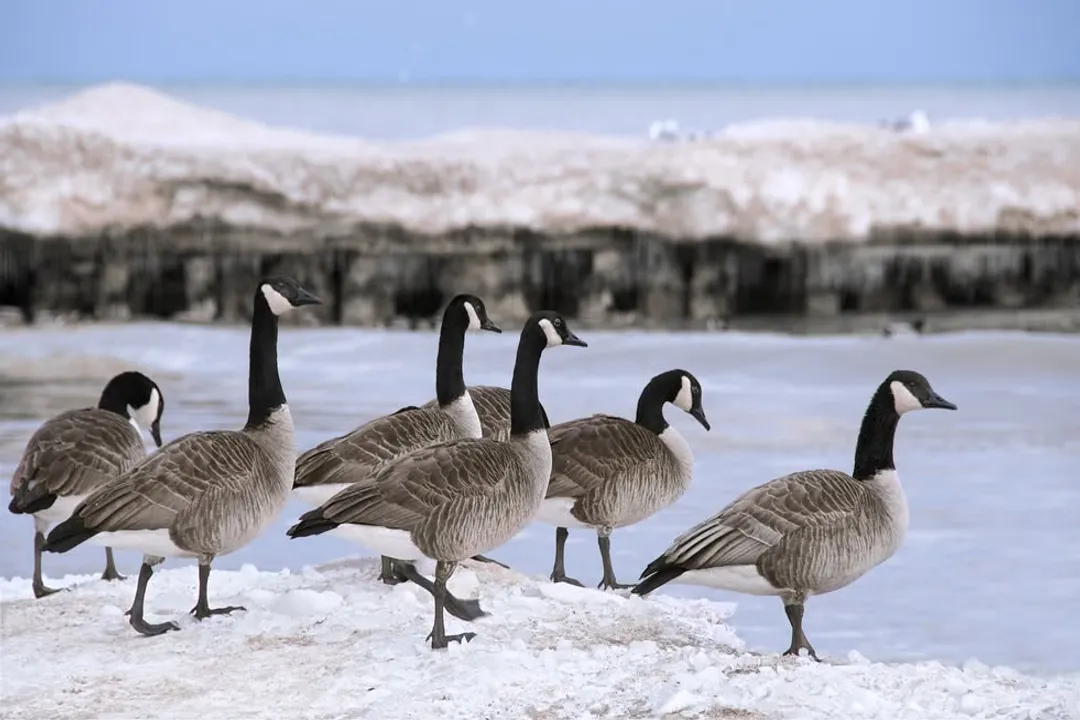
For birders hoping to see this distinctive goose, timing and location are everything, reflecting the species' highly directional migration. Outside of the main breeding areas, the best chances occur during migration or on the wintering grounds. [7] If you are situated along the Pacific Flyway, early to mid-fall is when large flocks are often moving south through coastal British Columbia and down to Washington and Oregon. [7]
One interesting consideration for the dedicated observer, especially one outside of Alaska, is recognizing the density of their wintering groups. While the species as a whole has a limited range, where they do stop to winter, they can congregate in relatively high numbers in specific estuaries or mudflats. [6] If one knows the historical wintering sites in Oregon or Washington, the chances of seeing several individuals simultaneously are much higher than randomly spotting one along an inland river. It is often a location-specific, rather than random, sighting opportunity. This phenomenon—being rare globally but occasionally locally concentrated—is key to understanding sightings reports.
# Management Efforts
Conservation of the Emperor Goose has involved extensive collaboration between governmental agencies and hunters, reflecting its status as a game bird in some areas. [8] Because their breeding areas are remote and difficult to monitor effectively, management often relies heavily on harvest data and surveys along the migration and wintering routes. [4]
Regulations concerning hunting are strict and often vary by jurisdiction, recognizing the species' history of decline and its relatively small total numbers compared to more widespread geese like Snow or Canada Geese. [8] For instance, specific bag limits, open seasons, and permit systems are put in place to ensure that the harvest remains sustainable, especially for the population segment heading to the lower 48 states. [4] The very fact that such focused management is required underlines the species’ sensitivity to external pressures.
# Rarity Contextualized
To truly grasp the "rarity" of the Emperor Goose, one must consider their geographic concentration versus their total population size. If the entire known population nests in an area covering perhaps only a few thousand square miles of remote tundra, while they may number close to 100,000 birds, they are an endemic specialist of extreme concentration. [1][6] For an aerial survey flying over the central United States, finding an Emperor Goose would be almost impossible, supporting the idea that they are rare in that context. Conversely, a researcher flying over St. Lawrence Island, Alaska, in July might find them locally abundant within their nesting habitat. This distinction between endemic concentration and overall species numbers often fuels the differing opinions on their rarity status in the public sphere. [4] Unlike a species that is thinly spread across a continent, the Emperor Goose is heavily reliant on the health of just two or three major coastal breeding complexes. Therefore, any major threat in those specific areas—pollution, oil spills, or catastrophic weather events—poses an existential threat to the species disproportionately high for their current population count. This tight geographic bottleneck is the primary driver behind their elevated conservation attention.
Related Questions
#Citations
Emperor Goose Overview, All About Birds, Cornell Lab of Ornithology
Emperor Goose Species Profile, Alaska Department of Fish and Game
Emperor Geese are considered relatively rare due to their restricted ...
Emperor goose - Wikipedia
Emperor Goose | Audubon Field Guide
Emperor Geese: Habitat, Life History, and Hunting - Project Upland
Emperor goose | Oregon Department of Fish & Wildlife
Emperor Goose | Ducks Unlimited