What is unique about emperor tamarins?
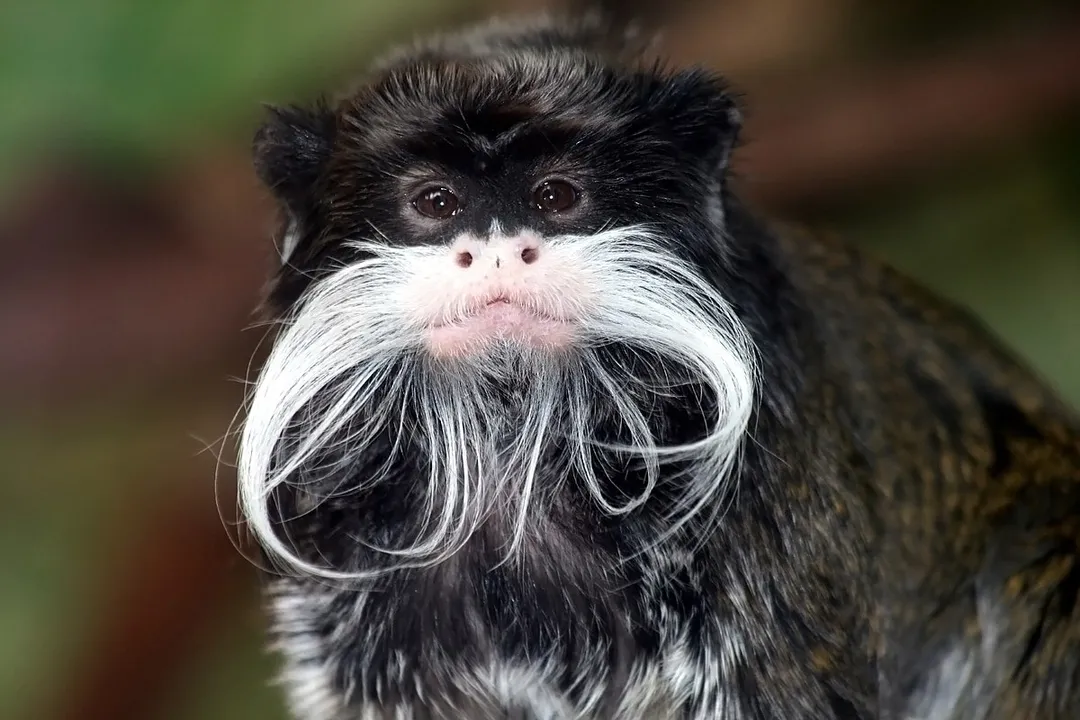
The animal that sports one of the most recognizable facial accessories in the primate world is the emperor tamarin, a tiny monkey whose appearance immediately sets it apart from its smaller, often less adorned cousins. Its claim to fame is undeniably the long, flowing white mustache that cascades down its chest, a feature so distinct it inspired its royal moniker. [1][2][3][4] This iconic facial hair, often described as drooping, gives the tamarin a distinguished, almost ancient look, though these primates are rarely larger than a squirrel. [5][9]
# Mustache Marvel
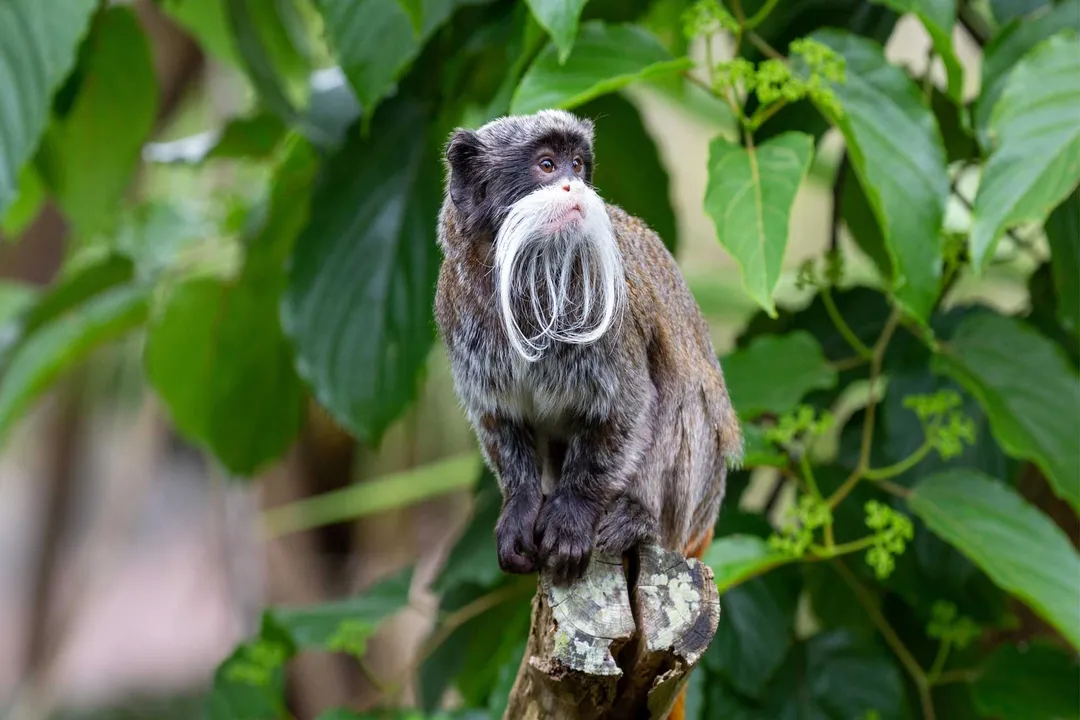
The visual signature of Saguinus imperator is not merely a quirky trait; it’s the defining characteristic that gives the species its common name. [4] This impressive white mustache sweeps down from the upper lip, contrasting sharply with the otherwise drab coloration of their head and face. [1][2] Beyond this prominent feature, their coats display a mix of grayish-brown fur across the body. [5][9] Look closer, though, and you’ll notice streaks of reddish-orange or yellowish coloration along their shoulders, back, and thighs, adding subtle warmth to their overall look. [1][2][9]
Emperor tamarins are truly diminutive residents of the Neotropics. Weighing in at just around 100 to 150 grams, they are among the smaller primates. [2][5][9] This small stature means that an adult tamarin is easily dwarfed by a common house cat, yet they possess the energy and complex social structures required to thrive in the demanding environment of the Amazonian rainforest. [5] Their physical makeup includes slender bodies and long tails, which assist them in balance as they navigate the canopy. [1]
# Rainforest Niche

The native habitat of the emperor tamarin is confined to a specific region in the upper Amazon basin of South America. [1][2][5] Their territory spans southwestern Brazil, southeastern Peru, and northern Bolivia. [1][9] They are not typically found deep within the primary, undisturbed forest interior. Instead, they show a strong preference for lower-growing secondary forests and the edges of established forests. [1][5] This preference for the edge habitats suggests they are highly adaptable to areas where the forest structure is more broken or younger, perhaps offering better access to the specific food resources they seek or providing easier movement through the understory. [5]
While they spend much of their time moving along branches, their foraging behavior often brings them down low, closer to the ground compared to some other arboreal monkeys. [5] Their small size allows them to access thin branches and navigate dense vegetation with agility. Though widespread enough that the International Union for Conservation of Nature (IUCN) currently lists them as Least Concern, the fragmentation of their specialized rainforest home due to human activity remains an ongoing threat to long-term population stability. [2][5]
# Feeding Habits
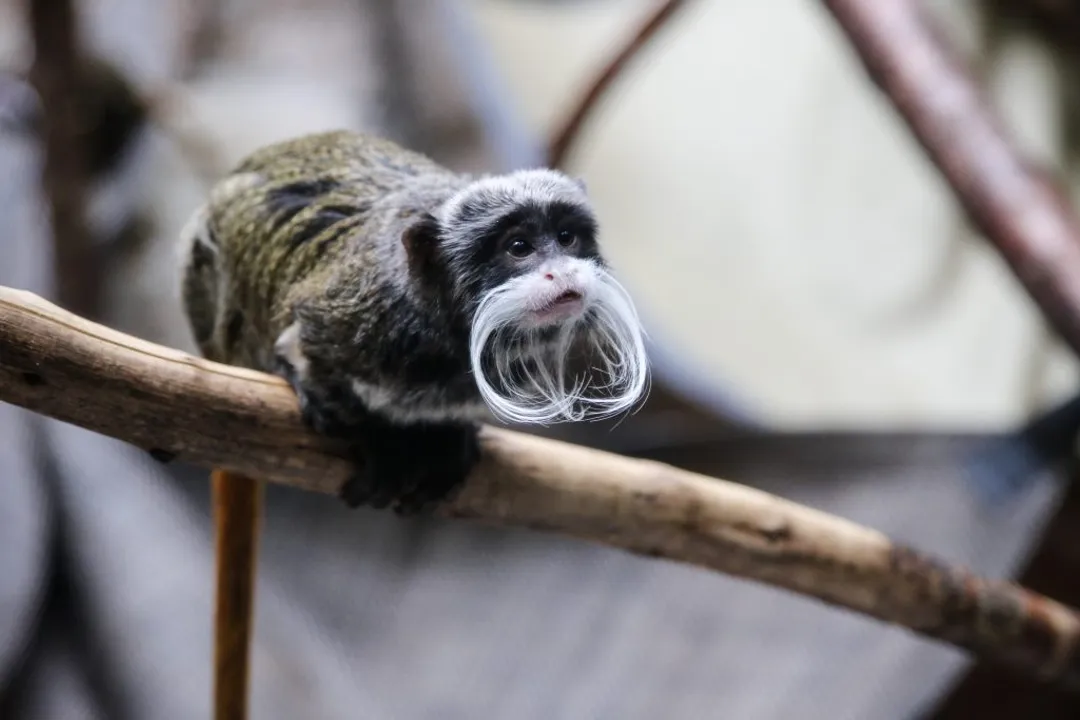
What an emperor tamarin eats is as unique as how it looks, demonstrating an adaptation that sets it apart from many other primates whose diets lean heavily on just fruit or insects. [1][5][9] While fruit forms a major component of their daily intake—making them primarily frugivorous—they have developed an unusual technique for accessing additional high-energy sugars. [1][5]
This supplementary food source is tree sap, and the tamarins have evolved physical tools perfectly suited for this purpose. They possess specialized, sharp lower incisor teeth that they use to actively gnaw small holes into the bark of certain trees. [1][9] Once the wound is made, the tamarin laps up the flowing sap, a behavior known as gummivory. [5][9] This specialized feeding strategy provides them with essential carbohydrates, particularly when fruit is less abundant. To supplement this plant-based diet, they will also opportunistically consume insects and occasionally small vertebrates. [1][5] This dietary flexibility—shifting between fruits, insects, and lapped sap—is a key element of their survival strategy in a fluctuating ecosystem.
# Family Bonds
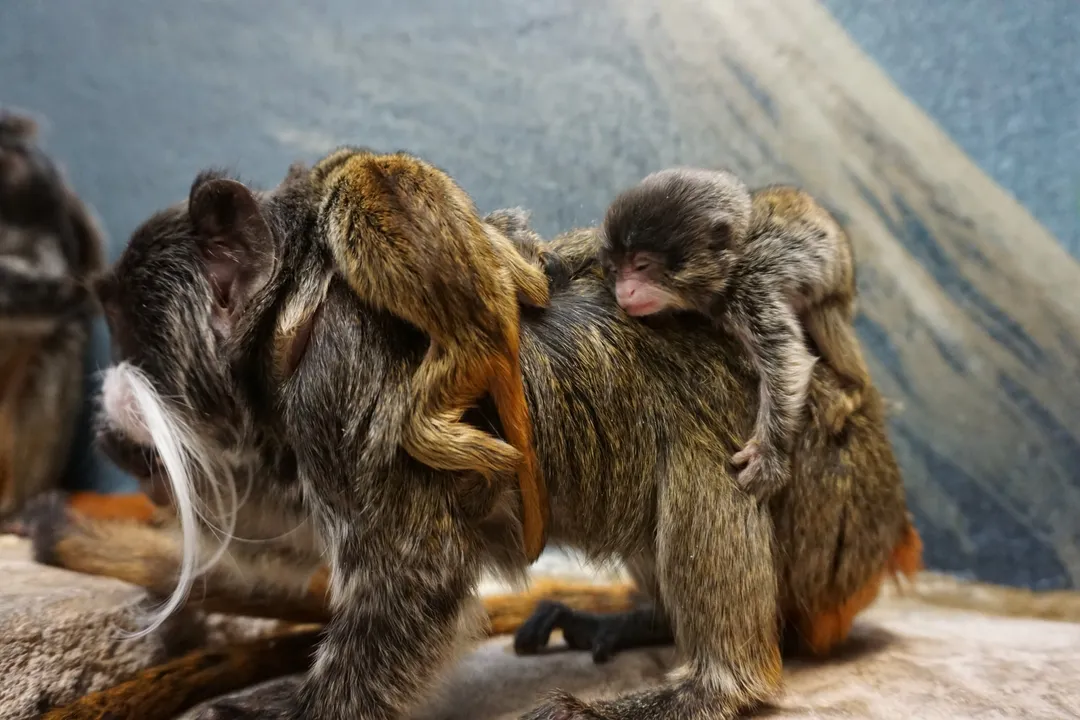
Perhaps the most fascinating aspect of emperor tamarins, moving beyond their striking looks, lies in their highly structured and cooperative social lives. [1][2][4] Emperor tamarins live in small, tight-knit family groups, generally comprising between two and eight individuals. [1][5][8] Crucially, these groups usually center around a single breeding female, her mate, and their offspring from various litters. [5][8]
What makes this arrangement so remarkable is the extensive cooperative breeding system they employ. [1][3][5] In many primate species, parental duties are largely restricted to the mother, but among emperor tamarins, all members of the group participate actively in raising the young. [1][3][5] This includes the father and older siblings who are not currently breeding. [1][8]
The level of paternal and sibling involvement is intense. Adult males are responsible for carrying the infants, often transporting them on their backs for the majority of the time, only returning the babies to the mother for nursing sessions. [1][5] It is not uncommon for a male to carry twins, which is a significant energy demand for an animal weighing barely over 100 grams. [5] The rest of the group aids in foraging and defending the infants. [3]
When a female gives birth, she typically has twins, although single births or triplets occasionally occur. [1][5] The gestation period lasts approximately 140 days. [5] In these small, highly interdependent units, the involvement of non-parents in rearing the young is likely an evolutionary adaptation that significantly increases the survival rate of vulnerable infants in a densely populated, competitive environment. The investment required from the entire group suggests that successfully raising offspring to independence is a challenging task where shared responsibility is the key to reproductive success.

# Complex Communication
Like many social primates, emperor tamarins rely on intricate communication methods to maintain group cohesion, warn of danger, and coordinate foraging. [2] They possess a varied repertoire of vocalizations that allow for subtle signaling within the dense forest understory where visual cues might be limited. [2]
While the exact meaning of every call is subject to ongoing study, their communication system facilitates complex social interactions required by their cooperative breeding structure. Imagine a group moving through the canopy; vocalizations ensure that no member is left behind and that potential threats, like birds of prey or ground predators, are immediately communicated across the troop, allowing for swift, coordinated defensive maneuvers. [2] Their ability to communicate nuanced information is essential for the smooth functioning of a family where everyone has a defined, shared role in childcare.
Related Questions
#Citations
Bearded emperor tamarin - National Zoo
Emperor tamarin - Wikipedia
Pro: Emperor Tamarin | New England Primate Conservancy
Emperor Tamarin Fact Sheet - Adelaide Zoo
[PDF] Emperor Tamarin fact sheet - the Racine Zoo
Emperor Tamarin | Lincoln Park Zoo
Emperor tamarins | Primates - Auckland Zoo
Emperor tamarin - Twycross Zoo
Emperor Tamarin - Como Zoo Conservatory