What is the new species of goby fish?
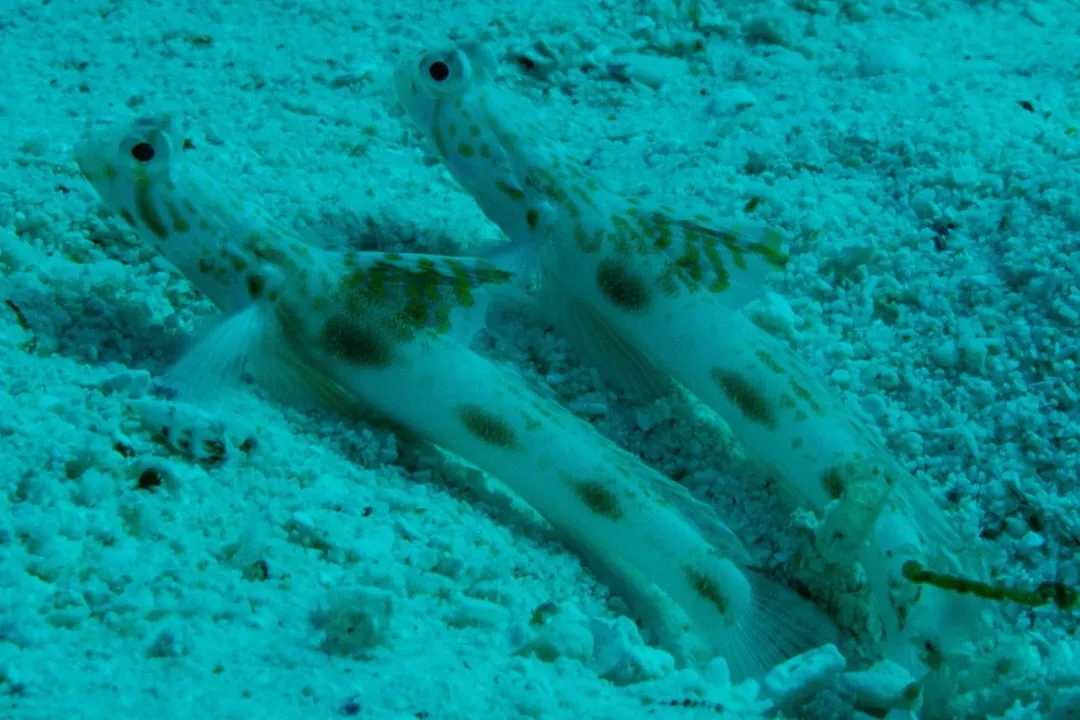
The world of gobies, those small, often overlooked bottom-dwelling fishes, is currently experiencing an exciting period of expansion as researchers worldwide continue to uncover previously unknown forms inhabiting freshwater streams, coral reefs, and even dark marine crevices. The term "the new species of goby fish" is, in fact, a collective banner under which several distinct and fascinating discoveries have recently been announced, each representing a unique chapter in evolutionary biology from vastly different corners of the globe. These findings underscore how much biodiversity remains hidden, even in well-surveyed regions, often requiring detailed genetic analysis or very close observation to reveal distinct lineages hiding in plain sight or subtle habitats.
# Freshwater Secrets Asia
A significant portion of recent goby discoveries has centered on Asian freshwater systems, revealing intricate speciation patterns in the Lentipes and Rhinogobius genera. These findings highlight how isolated stream environments can drive rapid evolutionary divergence, even among species whose larvae travel to the ocean.
# Okinawan Spirits Lentipes
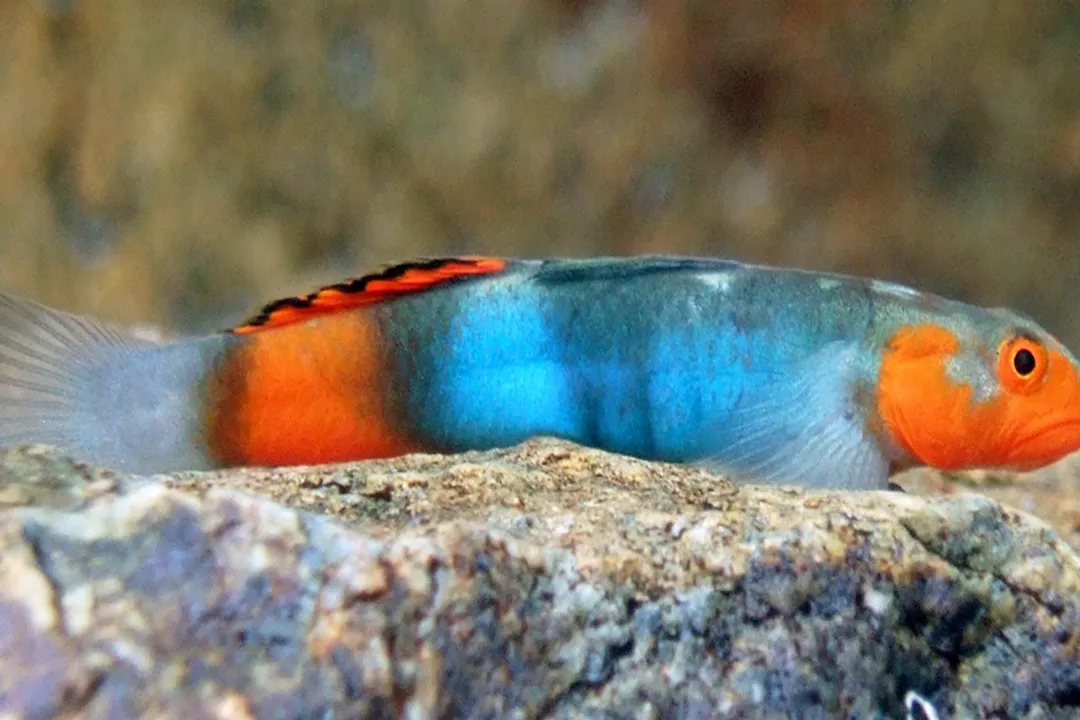
In a remarkable study focusing on Japan and the Philippines, scientists identified three new species belonging to the genus Lentipes. Two were found in the subtropical island streams of Okinawa, Japan, and one from Palawan in the Philippines. What immediately distinguishes these finds is the striking sexual dimorphism in coloration: the males of all three new species display unique patterns featuring red markings, while the females of all species look virtually identical with dull coloration. The Okinawan species received names inspired by local folklore: Lentipes kijimuna and Lentipes bunagaya, named after red-colored wood spirits known in Okinawan mythology. The third, Lentipes palawanirufus, translates fittingly to the "red Lentipes goby of Palawan".
The scientific verification of these new species was achieved through phylogenomic approaches, analyzing the nuclear DNA, as mitochondrial DNA analysis showed little variation, suggesting a relatively recent divergence time. This reliance on nuclear markers over mitochondrial markers in speciation studies is a key development, showing that species boundaries can solidify even before the slower-evolving mitochondrial genes show significant change. An interesting ecological note is that these Lentipes species are amphidromous; adults live and breed in freshwater streams, but their larvae wash out to the ocean before returning to fresh water, meaning the Okinawan populations might have originated elsewhere in Southeast Asia.
# Colorful Chinese Rhinogobius
Simultaneously, researchers surveying streams in the mountainous Upper Youshui River area of Chongqing, China, uncovered two distinct, previously unknown species of Rhinogobius, named Rhinogobius sudoccidentalis and Rhinogobius lithopolychroma. These findings are significant because they expand the known diversity of this widespread genus, especially in inland Chinese streams, and showcase clear ecological segregation.
These two species, though found geographically close, can be sharply differentiated by careful morphological examination:
| Trait | Rhinogobius sudoccidentalis | Rhinogobius lithopolychroma |
|---|---|---|
| Pectoral Fin Rays | 14–15 | 13–15 (13 most common) |
| Longitudinal Scale Series | 22–24 (Mode 23) | 30–33 (Mode 31) |
| Total Vertebrae | 29 (12+17) | 30 (12+18) |
| Predorsal Scales | Absent (0) | Absent (0) |
| Male Coloration | Creamy white; black stripe under eye; densely spotted ventral side | Light gray; irregular orange markings on cheeks/opercle; six large, inconspicuous horizontal black lines |
R. sudoccidentalis was found in slower-flowing water over large cobblestones, whereas R. lithopolychroma preferred faster-flowing, shallower streams with cobble substrates. This fine-scale habitat segregation is one reason speciation can occur even when larval dispersal is possible. Furthermore, both new species exhibit characteristics—specifically large eggs (1.6–2.1 mm for sudoccidentalis, 1.5–2.1 mm for lithopolychroma)—that link them to stream specialization, contrasting with local relatives like R. similis that prefer reservoirs and produce small eggs.
# Reef and Cave Narratives
Beyond inland waters, new gobies have surfaced in marine environments, illustrating that complexity and undescribed diversity exist right up to the shoreline and even in deep reef structures.
# Symbiosis on the Reef
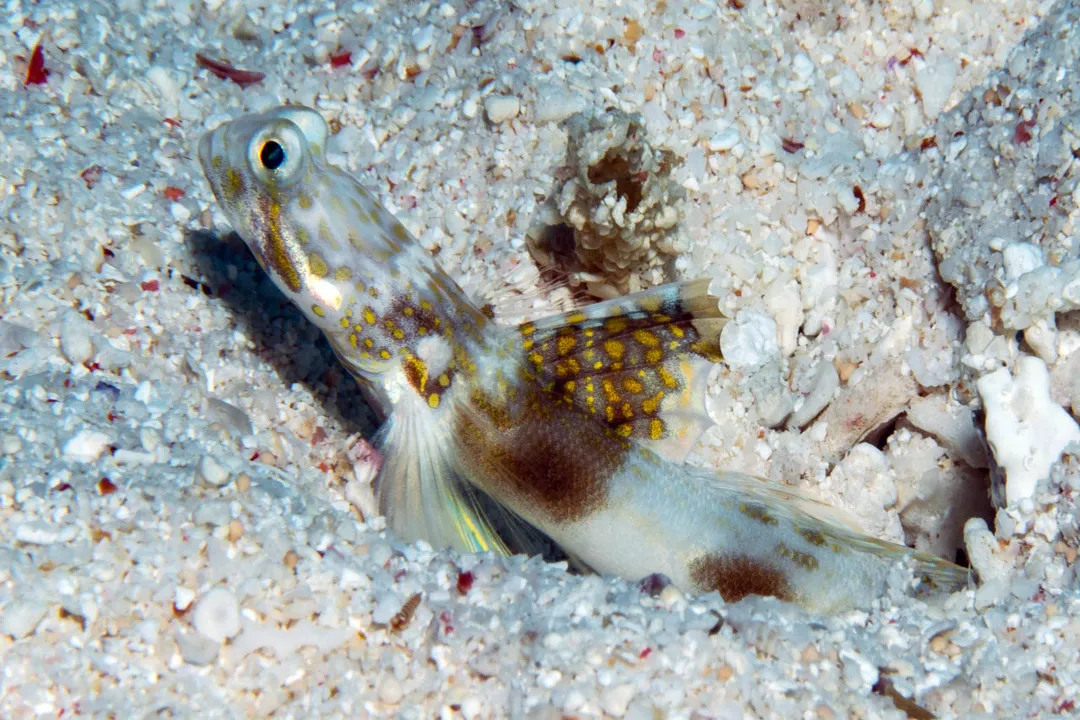
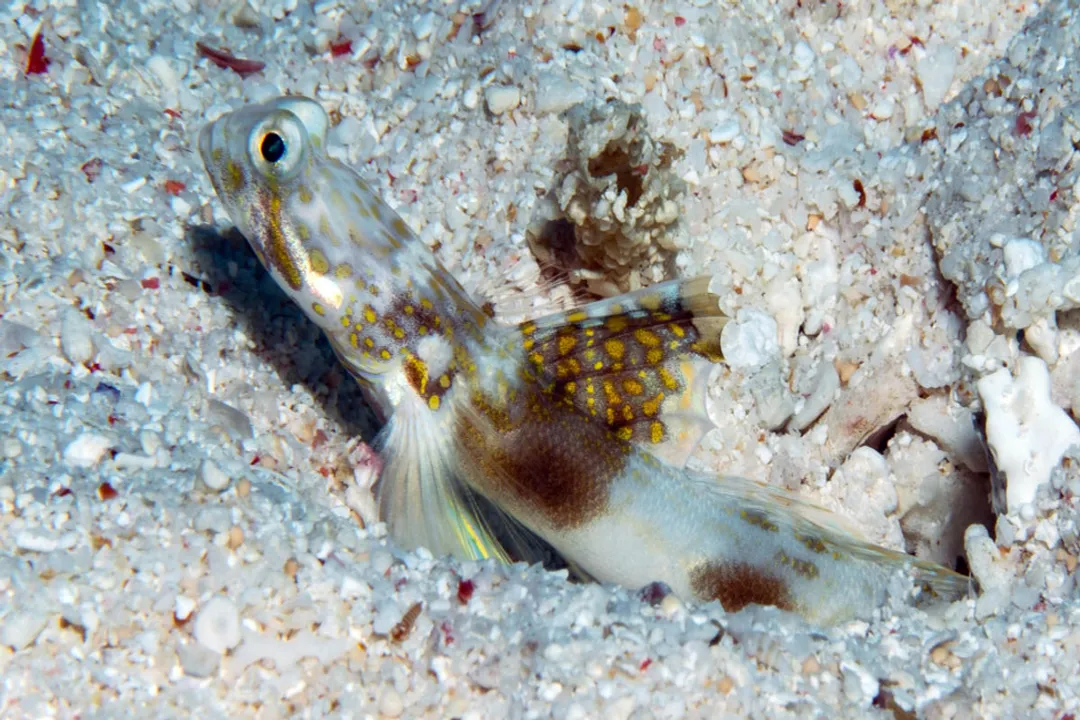
Off the coast of Australia, in the southern Great Barrier Reef, researchers identified the Lady Elliot Shrimp Goby, formally named Tomiyamichthyes elliotensis. Its description is significant because new species are typically found in the deep sea, not in the shallows of such a well-studied ecosystem. This small, white goby, distinguished by brown spots, yellow-orange bands, and a prominent sail-like first dorsal fin, exhibits a classic symbiotic relationship. It shares its sand burrow home with alpheid snapping shrimps, providing lookout warnings against predators in exchange for the shrimp maintaining the shelter. This partnership showcases a specialized lifestyle that supports the goby's cryptic nature, as they are often overlooked by both divers and scientists due to their small size and hidden behavior.
# The Grumpy Cave Dweller
Perhaps the most visually distinct new discovery comes from the Red Sea: Sueviota aethon, nicknamed "The Grumpy Dwarf Goby". Measuring a mere 9 to 17 millimeters long, its memorable name comes from its peculiar facial expression, complete with two large, protruding canine teeth on both upper and lower jaws. This species seems to favor low-light habitats, dwelling in overhangs, small caves, and crevices, usually between 10 and 30 meters deep.
What makes S. aethon scientifically arresting is a surprising morphological absence: it completely lacks the cephalic sensory canals and pores common to many fish dwelling in dark environments, which are normally crucial for detecting food and predators. This evolutionary trade-off for life in shadowed spaces presents a puzzle for understanding sensory biology in gobies. It is classified within the Sueviota genus and may be related closely enough to warrant future reclassification, possibly even with the Eviota genus.
# Scientific Tools for Separation
The process of confirming these varied finds highlights the indispensable combination of traditional morphology and modern molecular techniques. For instance, when differentiating the Lentipes species, color patterns were the initial cue, but the final confirmation required analyzing the whole genome to find the subtle genetic splits that established them as separate lineages.
In the case of the Chinese Rhinogobius pair, morphology was essential for initial distinction. For example, R. sudoccidentalis is set apart from its closest relative, R. reticulatus, by having no predorsal scales, whereas R. reticulatus has 3–6. Similarly, R. lithopolychroma differs from R. cliffordpopei by having 13–15 pectoral fin rays compared to the latter's 17–21.
A fascinating pattern emerges when comparing the freshwater species to their known relatives, a potential area for future study. Research on other Rhinogobius species suggests a correlation between egg size and habitat: small-egg species often have an amphidromous lifestyle (like the Lentipes), while large-egg species tend to be restricted to streams. The two new Chinese stream gobies are both large-egg types, and the authors noted that species in inland streams tend to have higher total vertebrae counts than their coastal relatives—R. sudoccidentalis has 29 and R. lithopolychroma has 30, contrasting with the 26–27 counts in some coastal relatives. This vertebral count may represent an adaptation to flowing water environments. It suggests that specific environmental pressures, such as current velocity, directly shape skeletal structure over time, a phenomenon worth tracking across the entire Gobiidae family.
# The Value of Hidden Biodiversity
The sheer number of new goby species described recently, spanning from the freshwater systems of China and Okinawa to the marine environments of the Great Barrier Reef and the Red Sea, speaks volumes about the gaps in our knowledge of fish diversity. Discoveries like the Lady Elliot Shrimp Goby emphasize that even the most visually exposed areas can hold secrets, especially among the cryptobenthic (hidden-bottom dwelling) fish that form a vital food source for larger reef predators.
Conversely, the specialized habitats of the freshwater gobies highlight their vulnerability. The R. lithopolychroma population in China, for instance, is restricted to narrow alpine streams, putting it at risk from habitat degradation, such as manganese ore collection in the headwaters of where R. sudoccidentalis resides. Protecting these diverse micro-habitats is just as critical as celebrating the creatures that define them. Each newly described species, whether it relies on mythological colors for courtship, trades sensory canals for cave-dwelling safety, or benefits from a symbiotic burrow, provides an essential data point for understanding how life adapts and diversifies across the world’s varied aquatic landscapes.
Related Questions
#Citations
Three new species of freshwater goby fish found in Japan and the ...
Two new species of freshwater goby (Teleostei, Gobiidae ... - ZooKeys
Researchers find new fish species in Great Barrier Reef
New Fish Species Discovered: “The Grumpy Dwarf Goby” (Sueviota ...