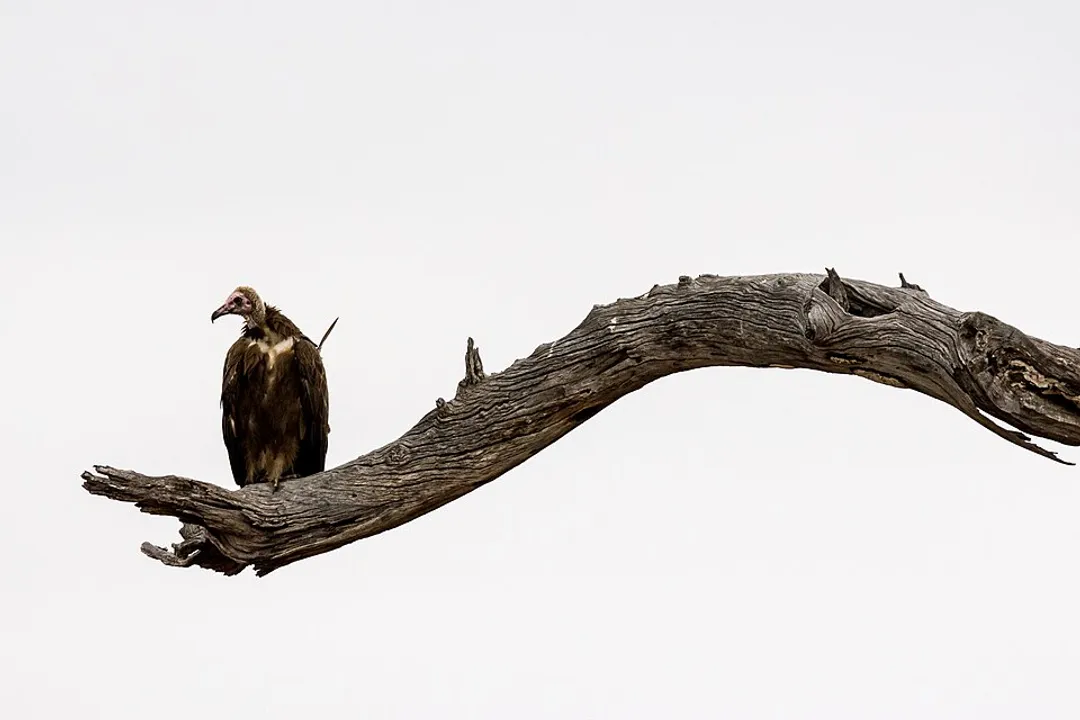
Why is the head and neck of a vulture featherless?
Answer
To maintain hygiene while feeding, as feathers would otherwise collect matted gore and bacteria.
The featherless head and neck are a direct physiological adaptation to the vulture's carrion-based diet. When feeding, vultures often submerge their heads deep into the carcass. If they possessed feathers on their heads and necks, these would inevitably become matted with blood, tissue, and decaying fluids. This contamination would not only harbor harmful bacteria and parasites but would also impede effective heat loss. Bare skin is easier to clean via rain or sun, and it also helps sanitize the surface of the skin through the absorption of solar radiation.
Related Questions
Why is the head and neck of a vulture featherless?What approximate wingspan can the Andean Condor reach?Which flight characteristic distinguishes the Turkey Vulture from the Black Vulture?What specific ability aids the Turkey Vulture in finding food in dense forests?What is the primary function of the horaltic pose?How does the beak of a Black Vulture differ from that of a Turkey Vulture?Why are vulture feet structurally distinct from those of hawks or eagles?What purpose does dark plumage serve for most vulture species?What physical evidence can identify a Black Vulture while it is flying?What allows larger vultures to stay aloft for hours with minimal energy expenditure?