Vulture Physical Characteristics
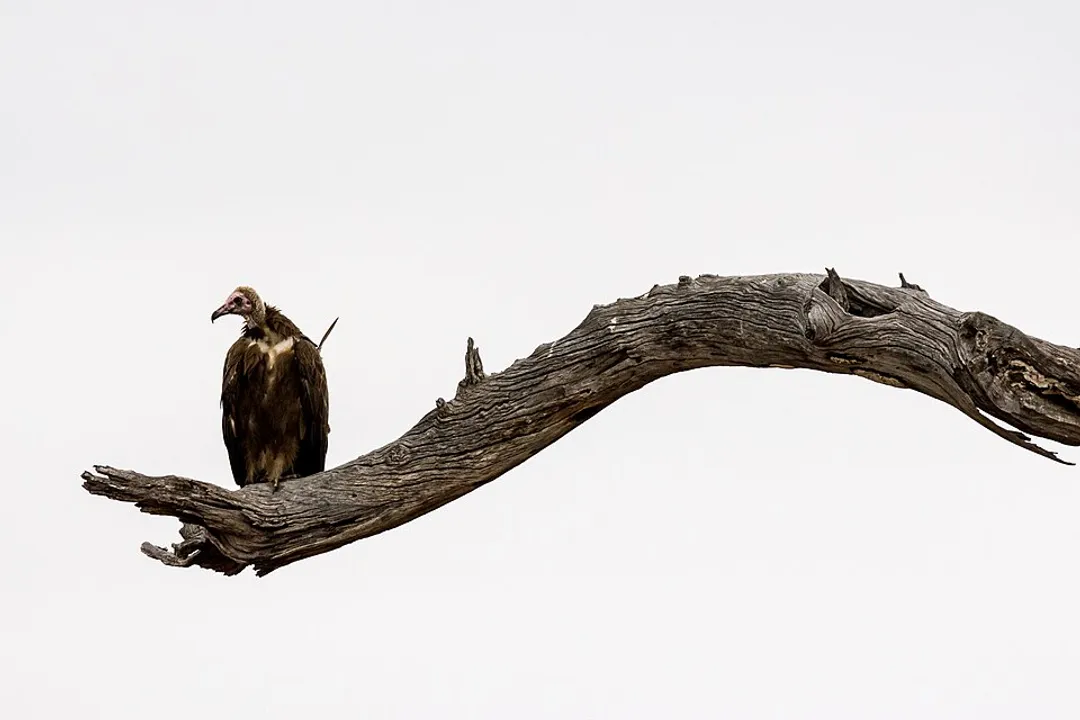
The appearance of vultures immediately signals their specialized role in the ecosystem, a stark departure from the sleek profiles of birds of prey like falcons or eagles. Perhaps the most arresting feature across many species is the featherless head and neck, a striking adaptation directly related to their diet of carrion. [3][6] This bare skin, often vibrantly colored with shades of red, orange, or black, is crucial for hygiene; when a vulture buries its head deep inside a carcass to feed, feathers would become matted with gore, potentially harboring harmful bacteria and impeding heat loss. [3][6][4] The skin absorbs solar radiation, helping to sanitize the surface, while the relatively sparse feathering on the neck allows for easier cleaning by rain or sun. [3][4]
# Size Variation
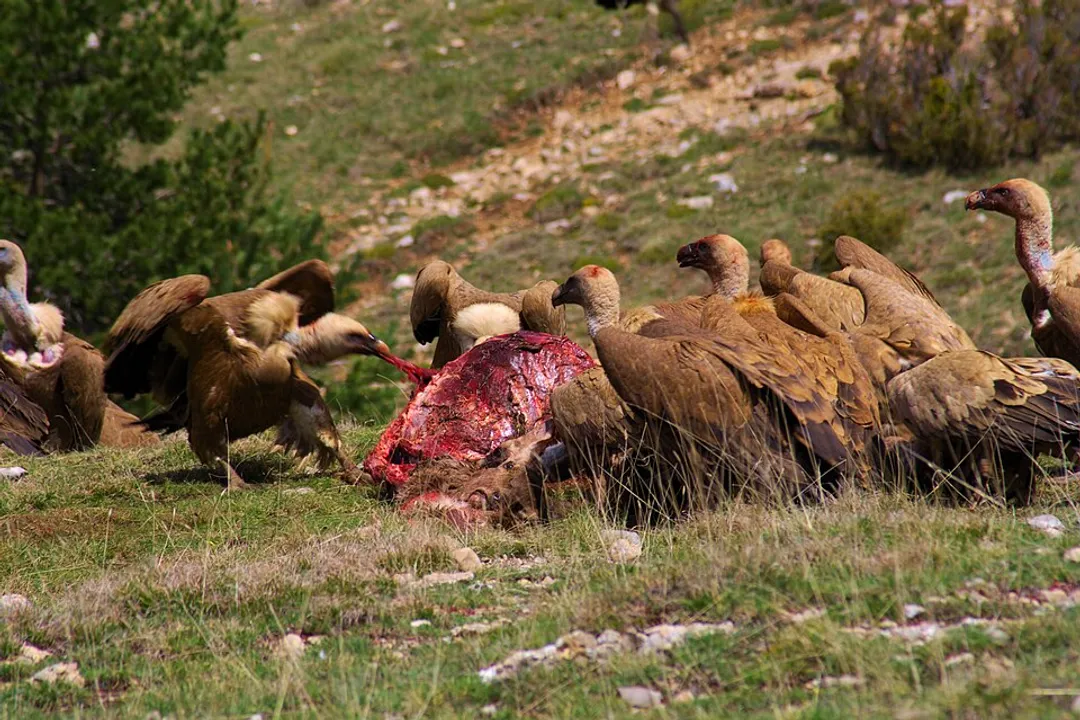
Vultures display a broad range of sizes, reflecting the diversity across the globe and within the New World versus Old World groupings. [1] Generally, they are among the largest soaring birds. For instance, the Andean Condor, one of the largest flying birds in the world, can boast an impressive wingspan reaching up to about 10 feet, or around 3 meters. [1] In contrast, smaller species like the Black Vulture, common in parts of the Americas, are significantly more compact, weighing around 4 to 5.5 pounds and possessing a wingspan typically between 4.5 and 5 feet. [4] This size differential directly impacts their flight style; larger vultures rely heavily on thermal currents to stay aloft with minimal effort, while smaller ones might exhibit more active flapping interspersed with gliding. [1]
# Plumage and Color
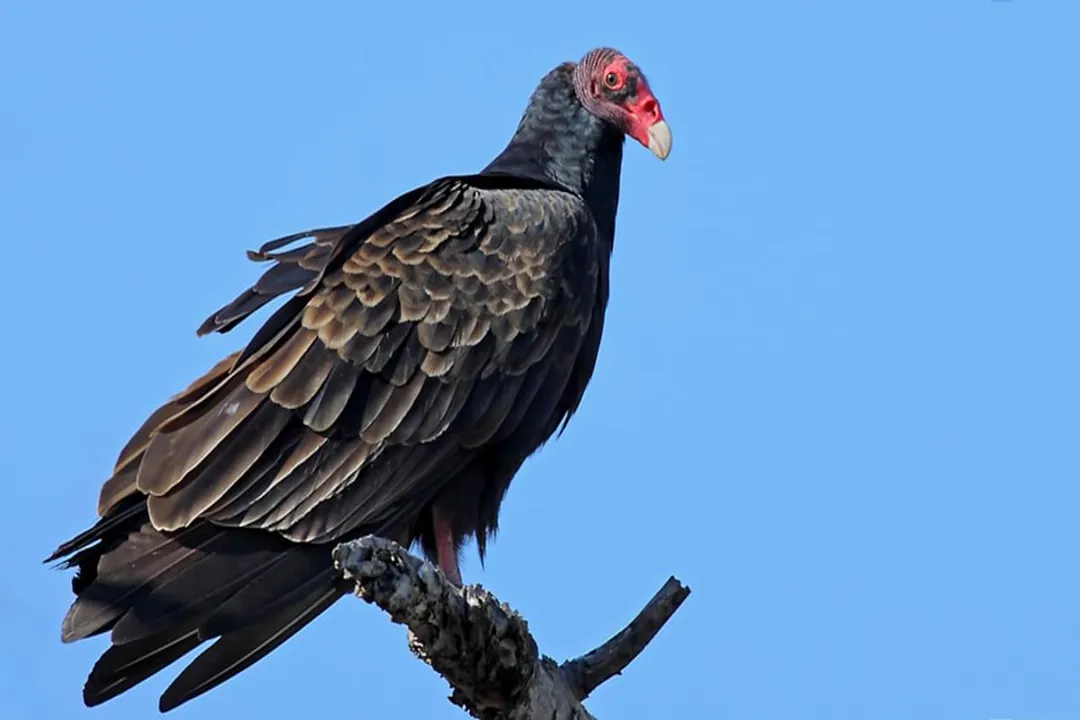
The body plumage of vultures is typically dark, which aids in thermoregulation by absorbing heat efficiently, particularly important for a creature that spends much of its time waiting for warm air currents to rise. [6] Most species exhibit shades of black or dark brown. [1][6] The Turkey Vulture, for example, showcases a reddish-brown body, which, combined with its dark flight feathers, can look almost black in poor light. [6][7] The Black Vulture, as its name suggests, is predominantly black, though some may show grayish-white patches under the wings that become visible when they fly. [4] A fascinating contrast is seen in species like the Hooded Vulture or the White-backed Vulture from Africa, which incorporate lighter, sometimes creamy-white, feathers into their otherwise dark plumage, perhaps offering slightly better solar reflection during intense midday heat—a subtle but potentially significant adaptation when comparing desert versus tropical scavengers.
# Wings and Flight
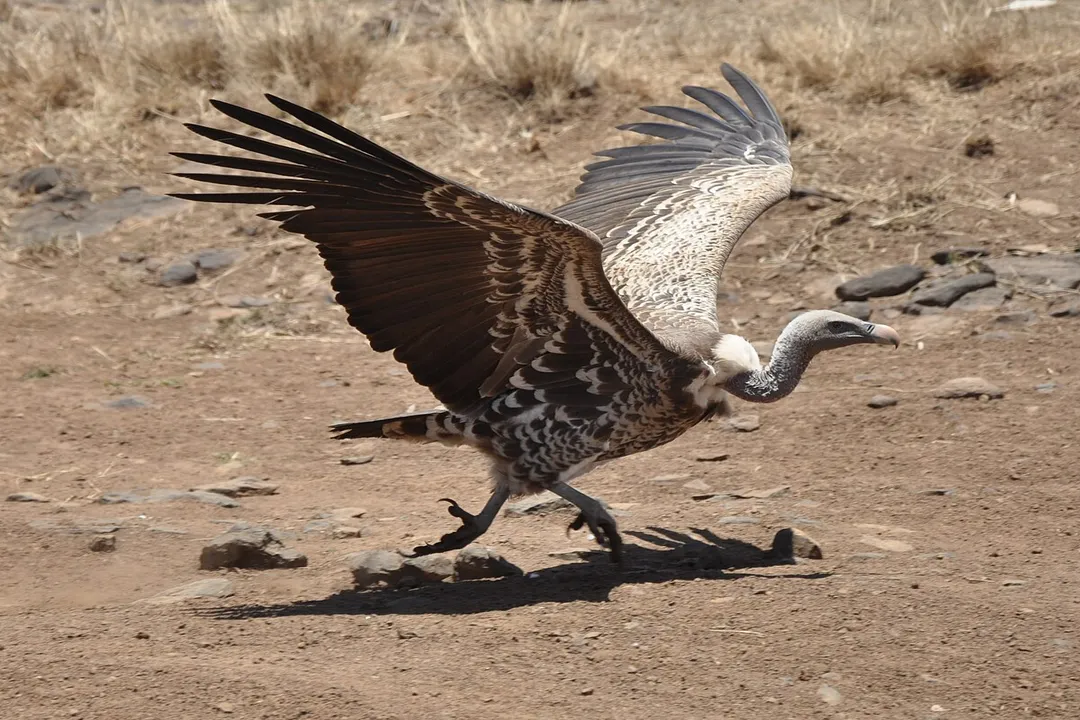
The wing structure of vultures is a testament to their aerial mastery, evolved for energy-efficient soaring. Their wings are generally long and broad, providing a high lift-to-drag ratio. [1] This morphology allows them to ride thermals—rising columns of warm air—for hours while scouting vast territories for food, minimizing the need for tiring flapping flight. [1][3]
A key distinction in flight behavior, which hints at underlying structural differences, involves the flight style between two common North American species: the Turkey Vulture and the Black Vulture. The Turkey Vulture's long, broad wings are often held in a slight dihedral (a shallow "V" shape) when soaring. [6][7] They are known for a noticeably wobbly or teetering flight pattern when riding the air currents. [7] The Black Vulture, by comparison, tends to hold its wings flatter, without the pronounced dihedral, and its flight often appears more direct, involving shorter periods of flapping interspersed with short glides. [4] Observing this subtle difference in flight signature is an excellent field identification trick, providing immediate insight into which vulture species is utilizing the air above you.
# Head and Beak Morphology
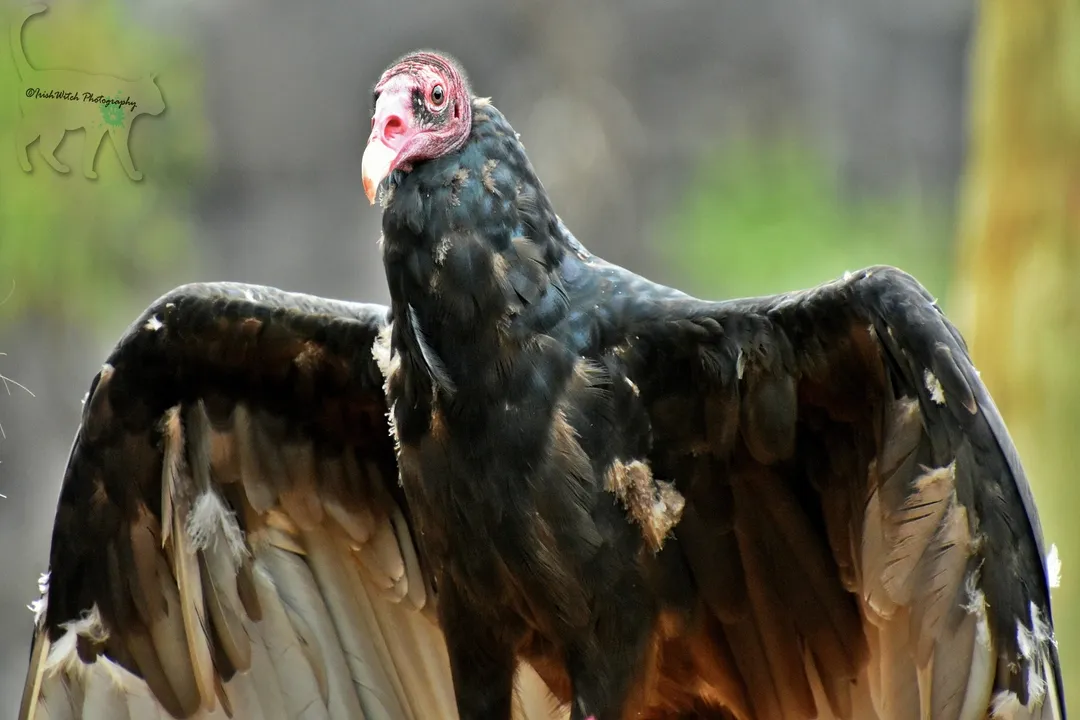
Beyond the featherless skin, the structure of the head and beak is critical for processing carrion. Vultures possess powerful necks and strong beaks designed for tearing through tough hides. [3] The beak itself is usually stout, hooked at the tip, and exceptionally strong. [1]
For instance, the Black Vulture's beak is shorter and thicker than that of the Turkey Vulture, giving it superior leverage for ripping into tougher tissues once a carcass has been opened. [4] This often leads to a behavioral dynamic where the larger, sight-oriented Turkey Vulture may locate a carcass, but the more aggressive, physically stronger Black Vulture can dominate the feeding site, using its robust bill to tear larger pieces. [4] This division of labor, inferred from their differing tool—the beak—highlights how slight variations in physical characteristics drive community dynamics.
# Feet and Locomotion
Unlike the raptors they are often confused with, vultures have less powerful feet adapted more for walking and perching than for grasping and killing prey. [3][1] This difference is fundamental to their ecological niche; since they eat only dead animals, they don't require the sharp talons necessary for subduing live victims. [3]
- Talons: Vulture talons are generally flatter and straighter compared to those of eagles or hawks. [1][3]
- Grip: Their toes are relatively long and weak. [3] They primarily use their feet to stand on the ground or perch on branches while feeding or resting, rather than for carrying prey. [1]
The structure of their feet emphasizes their terrestrial feeding habit. A Turkey Vulture's toes are slightly curved, but they primarily use them for steadying themselves on the ground while eating. [7] In essence, their feet are built for walking on a meal, not carrying one away, a defining physical difference between scavengers and predators.
# Sensory Apparatus
While visual acuity is important for soaring and locating distant sights, one New World vulture species possesses an additional, highly specialized characteristic: an acute sense of smell. [1][6] The Turkey Vulture has the most developed olfactory sense of any bird, using specialized receptors in its nostrils to detect the gases produced by decaying flesh, such as ethyl mercaptan. [6][7] This ability allows them to find food even when carcasses are hidden under dense forest canopies, an advantage that other vultures, like the Black Vulture, which rely primarily on sight, do not share. [6][4]
If one were to map out the average territory of a successful Turkey Vulture, it would likely need to include a higher percentage of dense, opaque forest cover compared to a Black Vulture territory, simply because the former can exploit food sources that are visually inaccessible. This unique sensory adaptation is an extension of their physical makeup—the specialized nasal passages—that defines their foraging strategy entirely.

# Comparative Table: Key Physical Traits
To better illustrate the variations, especially between two widely recognized American species, a comparison of their surface characteristics is useful:
| Feature | Turkey Vulture (Cathartes aura) | Black Vulture (Coragyps atratus) |
|---|---|---|
| Head Color (Adult) | Bright red [6][7] | Gray to black [4] |
| Plumage Color | Reddish-brown body, dark flight feathers [6] | Solid black; pale gray/white wing patches visible in flight [4] |
| Flight Style | Dihedral (slight "V" shape); wobbly soaring [6][7] | Wings flatter; more direct, active flapping mixed with gliding [4] |
| Foraging Sense | Excellent smell (olfactory) and sight [6] | Primarily sight [4] |
| Beak/Bill | Relatively slender [4] | Shorter and thicker (better for tearing) [4] |
# Adaptations for Flight and Thermoregulation
The sheer mechanics of how a vulture maintains its body temperature while soaring high in the atmosphere involve several physical traits working in concert. Their dark plumage absorbs solar energy, providing passive heating while they are exposed to the sun. [6] When conditions become too hot, either from intense sun exposure or post-feeding gorging, the unfeathered skin on the head and neck becomes a radiator. By holding their wings outspread, often called "horaltic pose," they can expose the sparsely feathered areas to the air currents, allowing excess heat to dissipate rapidly. [3] This deliberate posture, which looks like basking but serves a cooling function, is a direct behavioral manifestation of their physical design for high-altitude, hot-weather foraging. This behavior is particularly common in species like the Black Vulture early in the morning as they warm up, or mid-day to cool down. [4]
In summary, the physical characteristics of vultures—from the bald head essential for sanitation, to the broad wings designed for energy-efficient soaring, and the specialized beak and foot structure—are all finely tuned features that reflect a life dedicated to scavenging. These traits, while appearing unusual, are highly efficient solutions to the challenge of consuming carrion across varied environments. [1][3]
Related Questions
#Citations
Vulture
Vulture | Characteristics, Species, & Facts
Vulture - San Diego Zoo Animals & Plants
Black Vulture
Vulture Facts
Turkey Vulture Identification
Turkey Vulture Fact Sheet
Old World vs. New World vultures: What sets them apart?