Why is the female Vermilion Flycatcher's brownish-gray coloration considered an important evolutionary trait?
Answer
It provides necessary camouflage while nesting
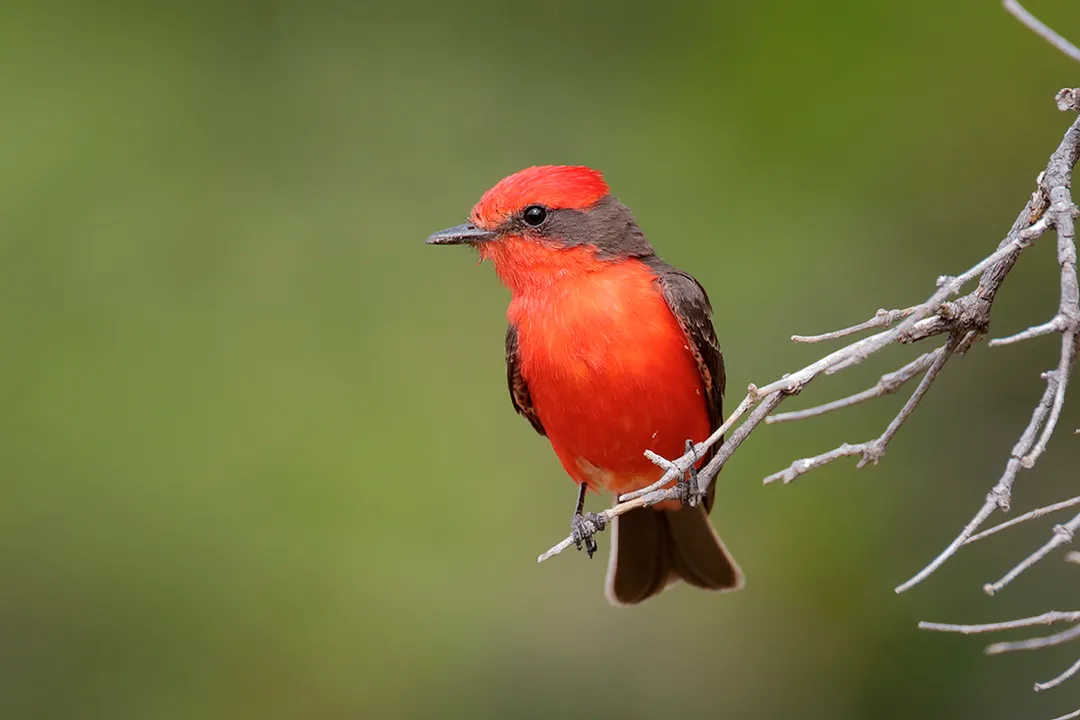
The subdued, earth-toned appearance of the female Vermilion Flycatcher, characterized by brownish-gray upperparts, is an adaptation for survival. This coloration allows the bird to blend into its surroundings, particularly in the brush and riparian habitats where it is often found. This camouflage is critical for the female, especially during the nesting phase, as it helps protect her from predators while she tends to the nest.
Related Questions
What does the scientific name Pyrocephalus rubinus translate to in English?Which specific body parts of the male Vermilion Flycatcher exhibit the brilliant scarlet red coloration?What physical trait helps to distinguish an adult female Vermilion Flycatcher from other similarly colored birds?What is the standard length range for the Vermilion Flycatcher?How do juvenile Vermilion Flycatchers differ in appearance from adult females?What behavior is characteristic of the Vermilion Flycatcher while foraging for insects?Where is the red crown situated on the male Vermilion Flycatcher?Why is the female Vermilion Flycatcher's brownish-gray coloration considered an important evolutionary trait?What physical structure contributes to the upright, sassy posture of the Vermilion Flycatcher?How do Vermilion Flycatcher subspecies vary across their wide geographical range?