Why is recognizing numerous subspecies important for managing *O. virginianus* populations?
Answer
It acknowledges locally adapted gene pools shaped by specific ecological pressures like climate or forage.
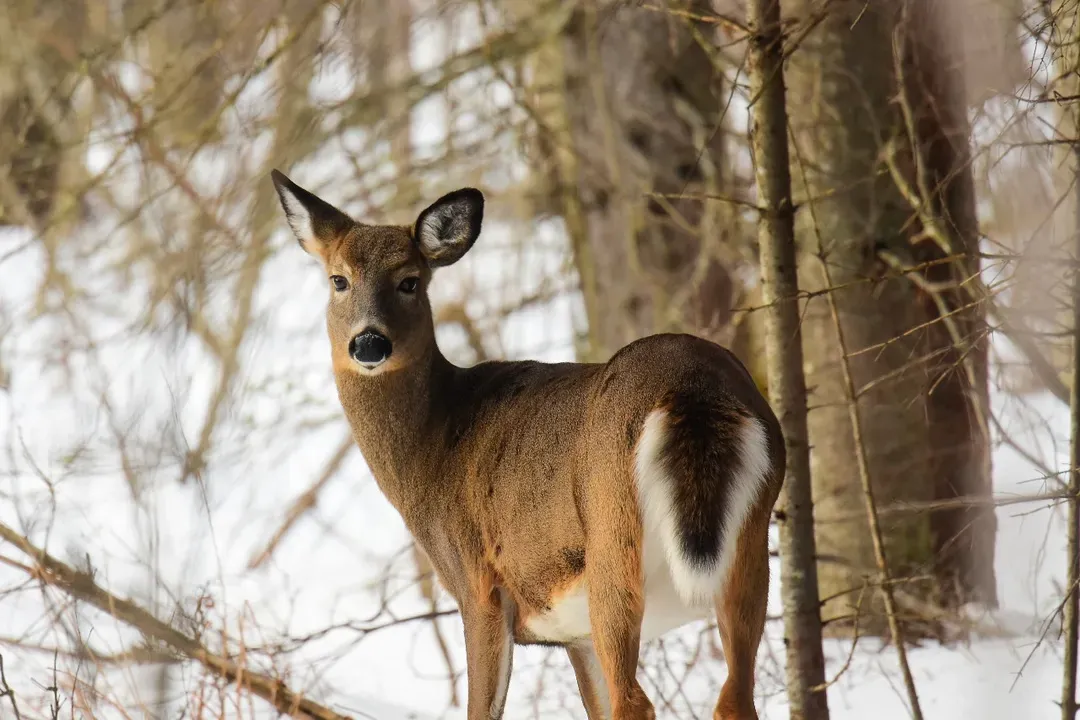
Although the species classification *Odocoileus virginianus* is stable, the species covers an immense geographic range spanning from southern Canada into Central and northern South America. This vast distribution means localized populations face diverse ecological pressures, such as varied climates or distinct forage availability. Recognizing subspecies (like *O. v. borealis* versus tropical southern forms) allows conservationists and wildlife managers to account for these locally adapted gene pools when designing specific regional management strategies.
Related Questions
What specialized foot structure defines the Order Artiodactyla placement for the white-tail?What characteristic separates the Family Cervidae from bovids like cattle?Why is the specific epithet *virginianus* used in *Odocoileus virginianus*?What defining feature places *O. virginianus* in the Class Mammalia?What shared structural trait unifies all members of the Phylum Chordata?What behavior is universally recognized as the white-tailed deer's signature alarm signal?How does the antler branching in the genus *Odocoileus* typically differ from generalizations for other deer genera?What is the fundamental nutritional requirement defining membership in Kingdom Animalia?Why is recognizing numerous subspecies important for managing *O. virginianus* populations?What conservation status designation is given to *O. virginianus* by NatureServe?What physiological system relates the Order Artiodactyla classification to a ruminant diet?Which developmental feature within the subphylum Vertebrata solidifies the deer's placement?