Why is chemical intervention, such as spraying with fipronil, the mainstay management technique on mainland Australia rather than biological control?
Answer
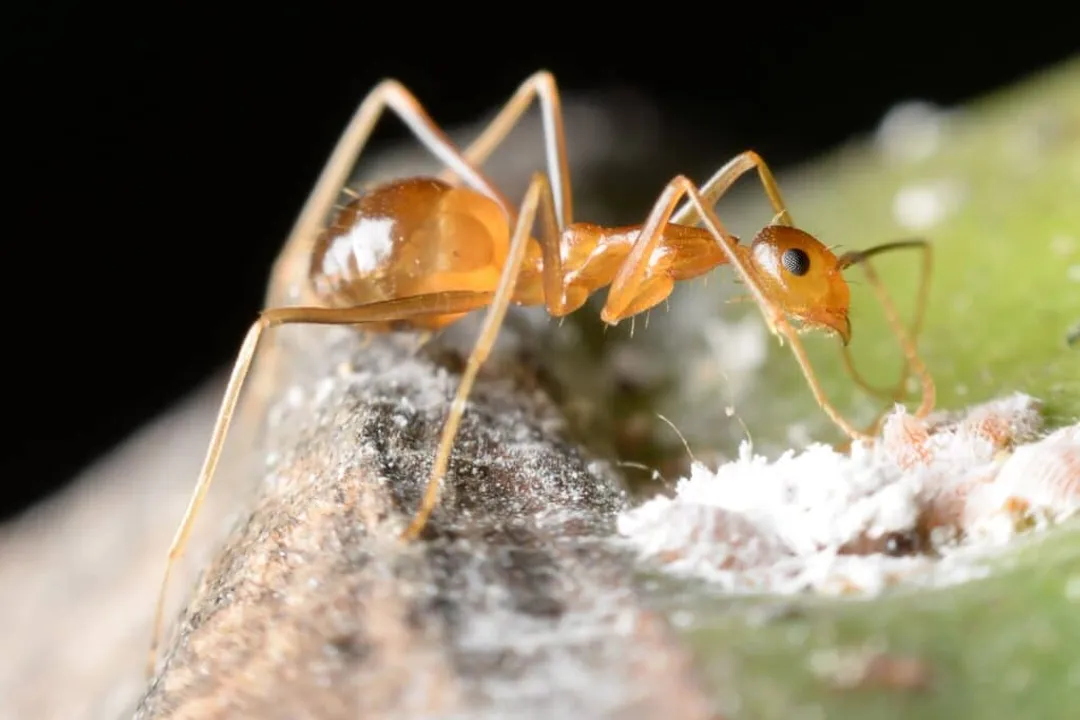
The ants feed on a dozen or more different honeydew-producing insects, not just one primary source.
The indirect biological control method used on Christmas Island (attacking the primary scale insect) is less viable on the mainland because the ants utilize a diverse diet of over a dozen different honeydew-producing insects, making comprehensive starvation tactics impractical.
Related Questions
What physical attribute does the species epithet *gracilipes* specifically reference?Which trait is NOT listed as a characteristic enabling *A. gracilipes* to be categorized as a 'tramp ant'?What is scientifically unique about the chromosome count in male yellow crazy ants compared to most other ant species?What groundbreaking reproductive discovery was identified in the male yellow crazy ants?How is the social organization of the yellow crazy ant described when discussing supercolony formation?What mutualistic exchange fuels the massive growth engine of the yellow crazy ant supercolonies?On Christmas Island, what direct mechanism do the ants use to systematically eradicate keystone land crabs?What secondary ecological consequence results from the eradication of keystone land crabs on Christmas Island?In continental settings like Queensland, what impact does the invasion have on the local native ant community?Why is chemical intervention, such as spraying with fipronil, the mainstay management technique on mainland Australia rather than biological control?What condition allowed the dispersal rate of *A. gracilipes* to reach as high as 1,100 meters per year on Christmas Island?