What is the scientific name for salmon snailfish?
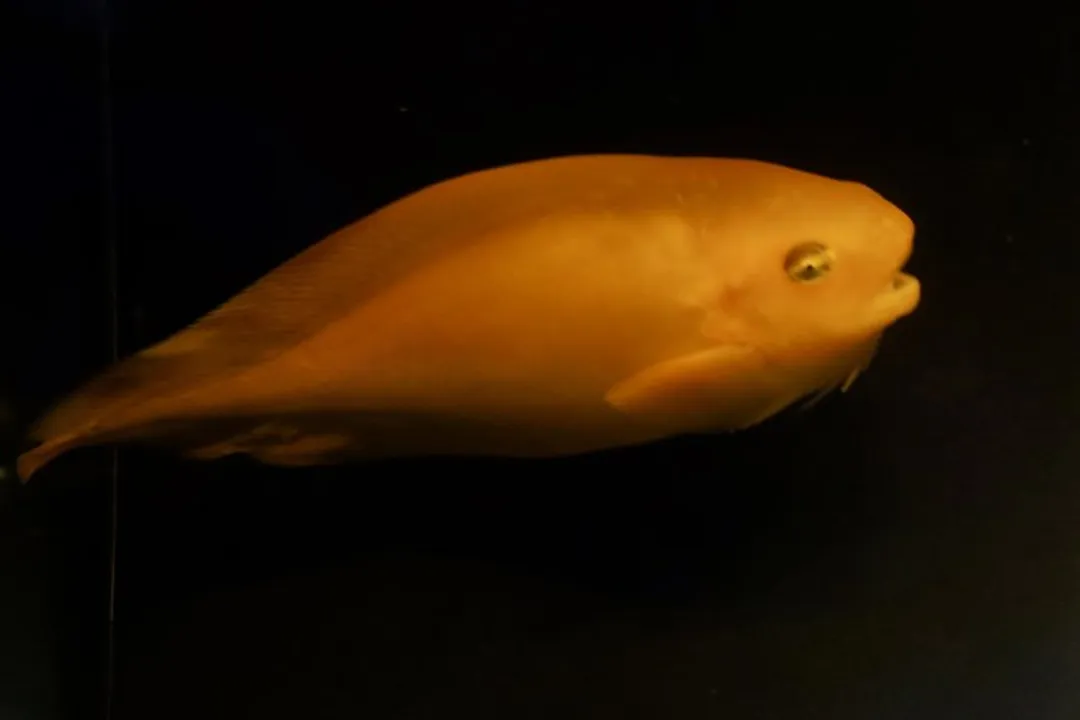
The scientific name for the creature commonly known as the Salmon Snailfish is Careproctus rastrinus. [3][5][8] This designation places it within a fascinating group of deep-sea fishes known collectively as snailfishes. [2] While the common name might suggest a link to the familiar, ocean-dwelling salmon, the connection is purely superficial, hinting more at a reddish or pinkish coloration rather than any shared evolutionary lineage with the Oncorhynchus genus. [2] Understanding this scientific label unlocks the door to its true biological context, separating it from the numerous other deep-water species with which it is frequently confused. [2]
# Genus Identity
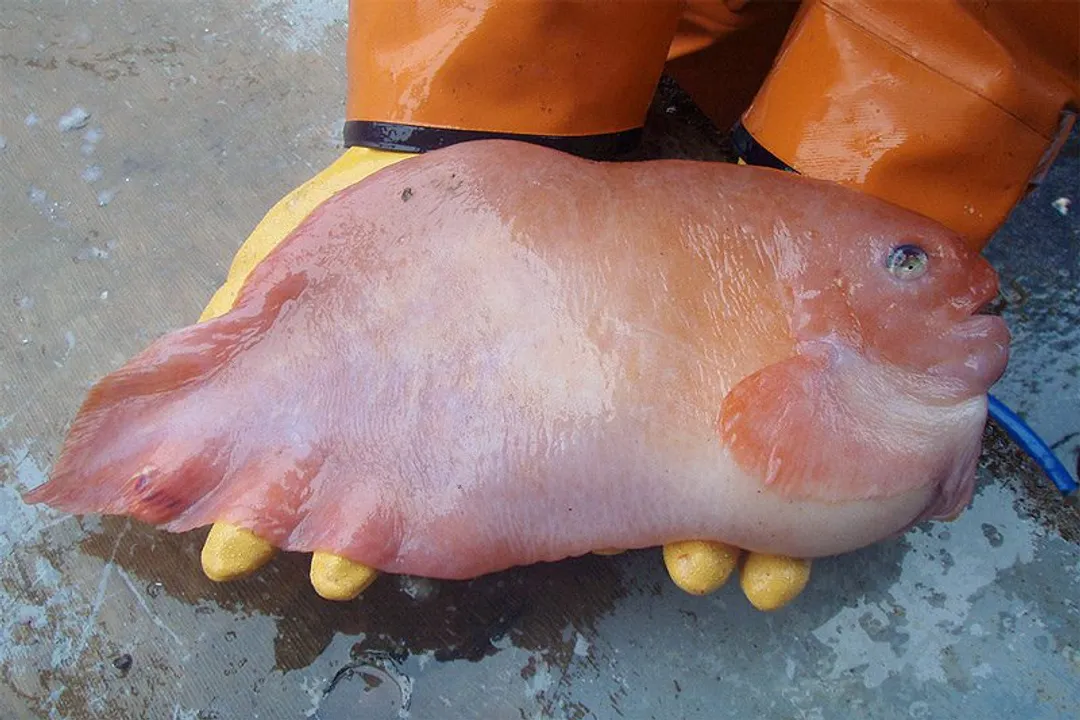
The species belongs to the genus Careproctus. [1][5] This genus groups together several species of snailfish, all sharing fundamental physical and genetic characteristics that distinguish them from other fish groups. [1] As a member of the family Liparidae, Careproctus rastrinus is part of a highly diverse family, sometimes colloquially referred to as 'sea-toads' due to their somewhat tadpole-like appearance in some forms, though the term isn't universally applied. [2][5] The Liparidae family itself is quite varied, often thriving in environments where other, more recognizable fish cannot survive, a testament to their specialized adaptations. [2]
# Taxonomic Placement

Classifying Careproctus rastrinus precisely involves looking further up the evolutionary tree. It resides within the order Scorpaeniformes, though some classifications place related groups within Cottoidei, which generally encompasses sculpins and related bottom-dwelling fish. [5][8] The deep-sea environment shapes the entire family, and the structural similarities among Liparidae often cause taxonomic challenges, making precise identification crucial for researchers. [2] When scientists first encounter a specimen, determining if it fits the established characteristics of the Careproctus genus—such as scale patterns or skeletal structure—is the first step to confirming its identity as C. rastrinus. [1]
# Physical Markers
The appearance of the Salmon Snailfish offers some clues to its identity, even though visual identification in its natural habitat is rare. [2] These fish typically present with a pinkish or reddish hue. [2] A key feature noted by observers is that they possess small scales. [2] Furthermore, an interesting anatomical detail is the noted absence of teeth. [2] They are not massive creatures; specimens have been recorded reaching up to approximately 14 inches, or about 35.6 centimeters, in length. [2] Considering the crushing pressures of their environment, their bodies are generally soft and gelatinous, a common adaptation among bathypelagic fish. [2]
If we consider the typical morphology across related deep-sea catches, a specimen of C. rastrinus would present a relatively streamlined profile compared to some of the more globular, flabby deep-sea inhabitants, though its overall structure is clearly adapted for life close to the substrate rather than fast pelagic swimming. [4] The delicate nature of their bodies, combined with their deep-water habitat, means that bringing them up to surface pressure often results in significant damage, making in-situ observation the gold standard for understanding their true form. [2]
# Range and Depths
The geographic distribution of Careproctus rastrinus is centered along the Pacific coast of North America. [2] Specifically, their range extends from the waters off Alaska all the way down to Baja California. [2] This significant north-south spread suggests an ability to tolerate variations in near-bottom water temperatures across that latitude band.
The depth at which this snailfish resides is a defining characteristic. Available data suggests a significant depth tolerance, with occurrences reported from as shallow as 25 meters down to depths of 450 meters. [8] This places them firmly in the sublittoral and upper bathyal zones. To put this into perspective, a dive to 450 meters means the fish is experiencing pressures over 45 times greater than at the surface. Living within this band of perpetual twilight, or even near darkness, necessitates the biological traits already described, such as reduced or specialized sensory organs and soft tissue consistency. [8]
One area of difficulty for amateur naturalists and even seasoned field biologists is discerning C. rastrinus from its numerous congeners. Given the general description—pinkish, small scales—it’s easy to see why they are often confused with other deep-sea snailfish species. [2] For instance, if one were examining a trawl net from the deep waters off the Pacific Northwest, sorting through the various Liparidae could be an exercise in subtle morphometrics. A quick rule of thumb, if one had a preserved specimen and could examine the fin ray counts or gill raker structure, would be necessary to definitively separate it from a closely related Careproctus species like C. gilsonianus or others documented in the region, as color alone is notoriously unreliable in deep-sea fish identification. [1][5]
The very act of observing Careproctus rastrinus contributes immensely to our knowledge base, yet it highlights a significant gap in general marine biology: the study of deep benthic fauna. Unlike surface-dwelling fish, these organisms cannot be easily observed with standard snorkeling or even typical scuba gear. [2] Observations usually rely on specialized remotely operated vehicles (ROVs), deep-sea trawls, or bottom-tethered camera systems. [4][9] When we learn that a species like the Salmon Snailfish inhabits the area between 25 and 450 meters, it tells us that a vast ecological zone remains largely undocumented by direct, sustained human observation. The data points we have, like the maximum size of 14 inches, come from rare capture events, which introduces potential sampling bias—we only capture what the gear can grab, which might not be the healthiest or most typical individual. [2]

# Comparative Adaptations
When thinking about the challenges of the deep sea, it is instructive to consider the contrast between the Liparidae family and other large, bottom-dwelling fish that might occupy shallower, but still deep, waters. For instance, in some freshwater systems, giant catches of unidentified bottom fish, sometimes nicknamed after fictional characters like "Jabba the Hut," make headlines due to their sheer bulk. [4] While those individuals, perhaps belonging to species like Liparis fucus in certain contexts, represent a peak size in their respective ecosystems, the adaptation strategy is different. [4] The Salmon Snailfish's success isn't about brute size; it is about maintaining structural integrity under immense pressure using softer, less mineralized skeletons and bodies full of water rather than gas-filled swim bladders that would collapse. [2] This difference in adaptive strategy—bulk vs. pressure resistance—is fundamental when comparing a freshwater giant to a deep-sea specialist like C. rastrinus.
Furthermore, the lack of teeth in Careproctus rastrinus suggests a diet likely composed of soft-bodied invertebrates, such as amphipods, small worms, or slow-moving crustaceans found in the benthic zone. [2] This contrasts sharply with the heavily toothed predators found in the mesopelagic or shallower, more active predatory zones. For a fish living at 400 meters, the energy expenditure required for hunting must be minimized. Therefore, an ambush or slow-foraging strategy relying on small, easily captured prey makes more sense than developing large jaws and teeth for high-speed chases or fighting off larger competitors—a clear trade-off dictated by the scarcity of resources and the physical constraints of its habitat. [8]
# Documenting the Species
The documentation of Careproctus rastrinus relies heavily on museum specimens and citizen science input through platforms like iNaturalist, which aggregate observations from researchers and the public alike. [3][5] The existence of the species within databases confirms its presence in the marine ichthyofauna of the Eastern Pacific. Visual records, whether photographs from submersibles or preserved specimens, are essential for confirming the specific meristic counts—the number of fin rays, vertebrae, or scales—that definitively separate this species from its close relatives within Careproctus. [1][9] Every confirmed sighting, even if just of the genus, helps map the ecological boundaries of this species, filling in the blanks between the Alaskan and Californian extremes of its known range. [2]
Related Questions
#Citations
Careproctus - Wikipedia
Salmon snailfish | Animals | Monterey Bay Aquarium
Salmon Snailfish (Careproctus rastrinus) - iNaturalist
Flashback Friday: Jabba the Hutt - FISHBIO
Careproctus rastrinus - Salmon Snailfish - iNaturalist NZ
This salmon snailfish (Careproctus rastrinus) is a member of the new ...
Image - Careproctus rastrinus (Salmon Snailfish) - BioLib.cz
Salmon snailfish, careproctus rastrinus - Guide to All Fishes
Salmon Snailfish - ZooChat