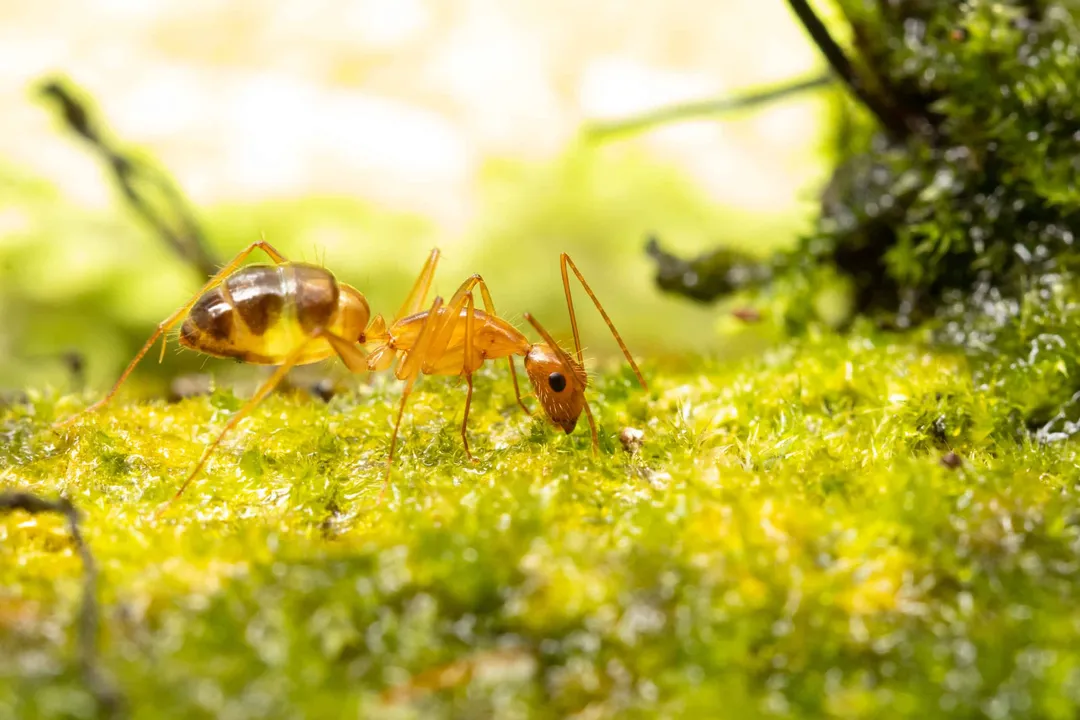
Why does the broad diet of the Yellow Crazy Ant complicate chemical control measures like baiting programs?
A bait attractive during high-protein demand may be ignored during high-carbohydrate demand phases.
The complexity arises because the nutritional requirements of the colony shift based on the availability of local resources and the current stage of brood production, leading to fluctuating foraging priorities. If a bait is formulated to mimic rich honeydew (carbohydrate) but the colony is simultaneously undergoing rapid brood growth requiring high protein intake, the sugar bait will likely be ignored. Conversely, a protein bait might fail if the colony has recently scavenged ample dead biomass but urgently needs fast-acting carbohydrate energy to support increased foraging flights. Effective management often necessitates recognizing and adapting to this dietary duality, sometimes requiring rotation or simultaneous application of both bait types.