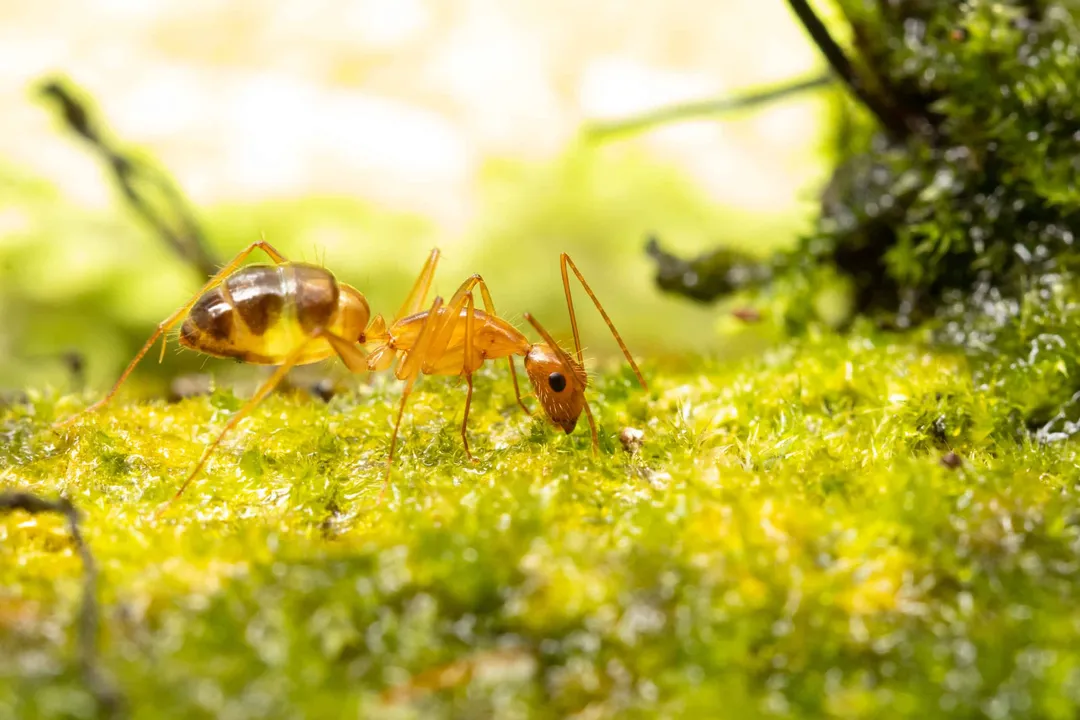
In a relatively pristine, non-agricultural area where scale insects are scarce, what must the dietary focus of *A. gracilipes* shift toward?
Scavenging dead biomass and opportunistic predation for protein.
When the managed carbohydrate source—honeydew from scale insects or aphids—is not readily available, such as in pristine areas lacking dense populations of those host insects, the colony's immediate nutritional strategy must pivot to fulfill its protein and fat requirements necessary for survival and baseline maintenance. This shift forces the foraging efforts heavily toward opportunistic predation on local fauna and scavenging recently deceased biomass. This reliance on obtaining vital growth materials via predation intensifies the pressure on local wildlife during periods when their preferred, cultivated sugar source is scarce, highlighting the opportunistic nature of their omnivory.