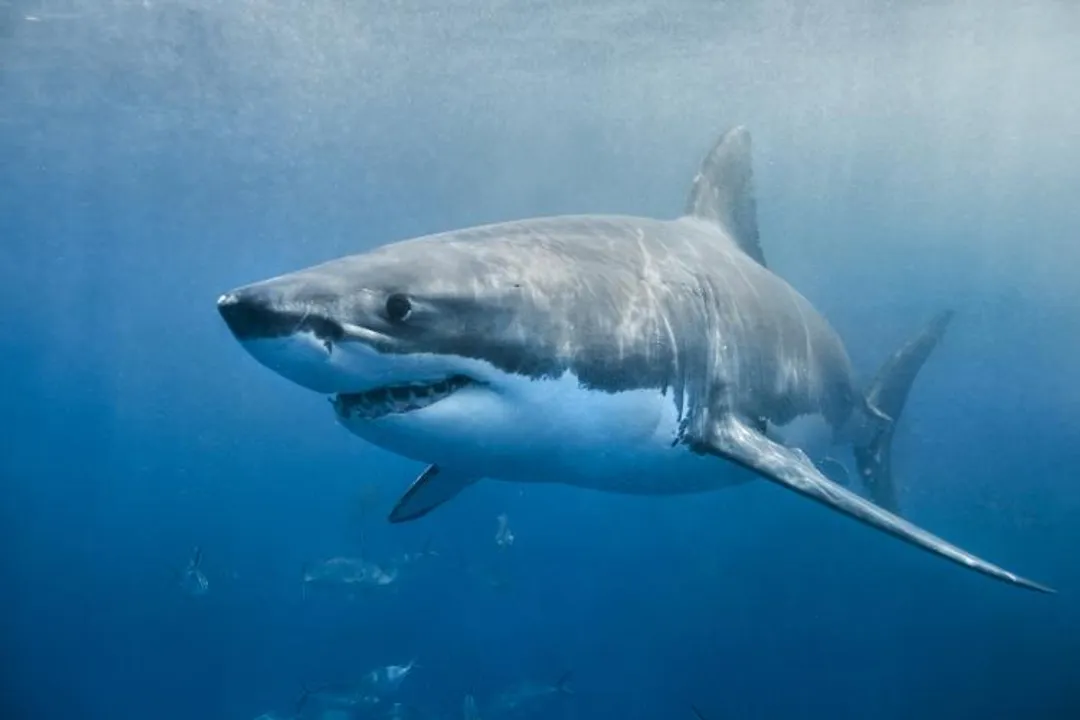
Why do observers from above often witness only a fraction of the feeding ecology of white sharks?
They spend significant time foraging closer to the seabed
The iconic image of a great white shark hunting, often involving its dorsal fin cutting the water surface, is partially misleading due to a significant observational bias. While spectacular breaching events occur, the majority of the shark's actual feeding activity takes place away from the surface. This is partly because juveniles have a preference for benthic (bottom-dwelling) prey, and partly an adaptation for stealth against surface prey. The characteristic hunting structure relies on ambushing prey from below towards the surface. If the shark were routinely stalking visible at the surface, prey animals like seals would quickly learn to avoid the threat, thus minimizing the portion of their feeding behavior visible to surface observers.