White Shark Diet
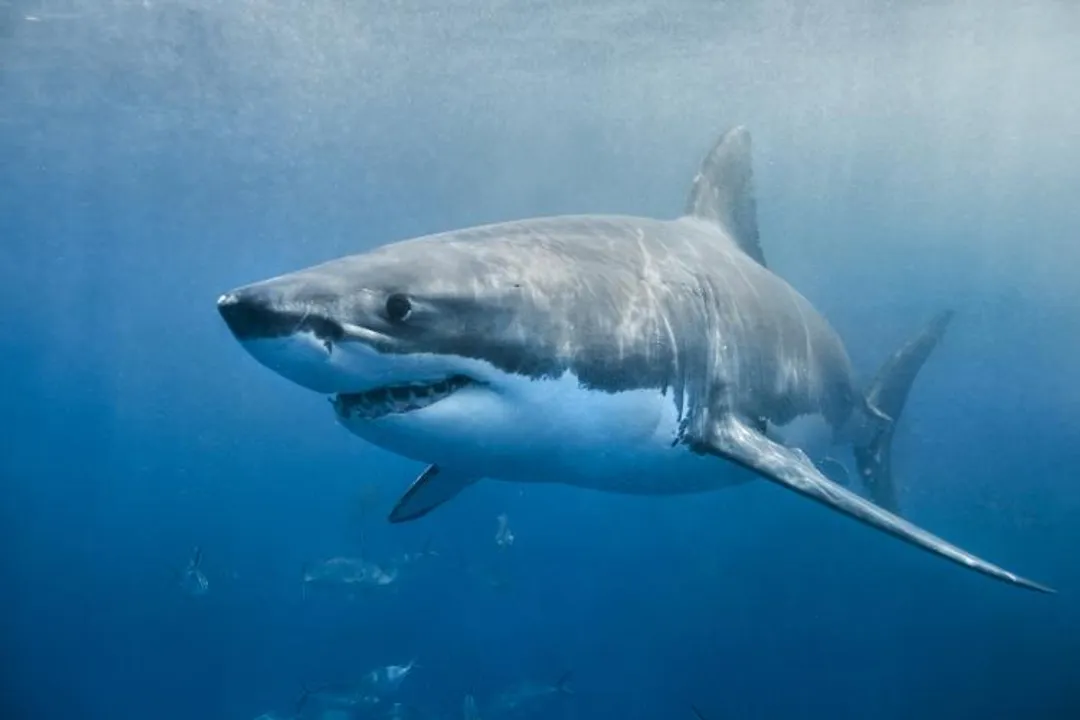
The life of the great white shark, Carcharodon carcharias, is fundamentally defined by its role as an apex predator whose diet shifts dramatically as it grows, moving from smaller, near-surface prey to large, energy-rich marine mammals. These majestic, robustly built sharks inhabit temperate and subtropical seas globally, congregating in highly productive coastal waters where their preferred food sources are most abundant. While their fearsome reputation is cemented in popular culture, the reality of their feeding ecology is nuanced, opportunistic, and heavily dependent on both geography and the predator’s current physical capability.
# Life Stage Diet

The white shark’s diet is not static; it evolves across its lifespan, a necessity dictated by changing jaw strength and the size of prey it can physically overpower. Juveniles, which are born relatively large at about 1 to 1.6 meters (3.3 to 5.2 feet) in length, have jaws strengthened by less mineralized cartilage, making them unsuited for tackling large, tough-skinned marine mammals.
# Young Predators
Newly born white sharks must begin feeding immediately to sustain themselves, relying on smaller prey items abundant near coastlines. For very young sharks, the diet consists primarily of fish and other smaller sharks. In specific nursery habitats, such as off Southern California, this early diet heavily features schooling fish and invertebrates, with one documented staple being the California Grunion during its spawning season—a reliable, calorie-dense source for newborns. As juveniles increase in size, reaching about 2 to 3 meters (about 6.6 to 9.8 feet), their dietary scope expands to incorporate larger, more mobile pelagic fish like tuna and mackerel.
It is worth noting the difference between a "diet shift" and a "diet expansion." Some observers suggest a sharp shift occurs around 3 meters, where they stop eating fish for mammals. However, the evidence suggests a continuous expansion of capability; they do not stop eating fish, but rather add large marine mammals to their menu once they are large enough to successfully hunt them. This ability to incorporate new, higher-calorie items without abandoning established food sources allows for adaptability.
# Adult Staples
Once a white shark surpasses approximately 3 meters (9.8 feet), it gains the size and jaw strength—including fully serrated teeth capable of cutting flesh effectively—to target marine mammals. The high-fat content found in marine mammals is highly desirable for fueling their immense bodies and extensive migratory habits.
The primary adult prey category includes pinnipeds (seals and sea lions) and cetaceans (dolphins and small whales). Targeted seal species are regionally specific: Cape fur seals off South Africa, California sea lions and harbor seals off western North America, and various seals off eastern North America.
# Geographic Influences

Because white sharks are opportunistic, their specific menu reflects local availability, even if their preference leans toward fatty prey. A shark’s migration pattern often follows the seasonal abundance of its preferred local food source.
# Pacific Coast Ecology
Along the western North American coast, the presence of recovering seal and sea lion colonies directly correlates with the seasonal aggregation of white sharks. Sea lions are a major food source, and sharks frequently employ an ambush tactic from below, sometimes grabbing the torso, which can lead to the sea lion breaking free initially but being weakened enough for a second capture. In the northeast Pacific, the diet of adults is heavily skewed towards these marine mammals. Observations from the Shark Research Committee noted that even large adults in the Pacific would consume benthic (bottom-dwelling) prey when available, citing the discovery of numerous bat ray stingers embedded in the jaws of one captured female, alongside remnants of a harbor seal and an elephant seal.
# Southern Africa and Oceania
Off the coast of South Africa, prey includes Cape fur seals, where the hunting strategy often involves dramatic breaching—launching completely out of the water during an upward ambush from depth. Seabirds, such as Cape cormorants and African penguins, are also attacked, though rarely consumed, suggesting these may be investigatory strikes or attacks of opportunity.
In contrast, a detailed study of juvenile white sharks off the east Australian coast revealed a surprising reliance on fish, challenging the universal "mammal-only" narrative for sub-adults. While pelagic fish like eastern Australian salmon dominated the stomach contents of these younger sharks, the analysis also showed significant consumption of bottom-dwelling fish (stargazers, sole), reef fish (wrasse, gropers), and rays (stingrays and eagle rays). This suggests that in regions where large marine mammal colonies are less accessible or where juveniles are still developing, the ecosystem's available fish population forms the nutritional bedrock.
# Cephalopods and Other Items
Cephalopods, such as squid and cuttlefish, are consistently present in the diet across various locations and sizes. Younger sharks (under 2.5 meters in South Africa) tend to consume coastal or bottom-dwelling species, while larger individuals appear to prefer open-ocean squid species. Sea turtles are also consumed, with shell fragments found in stomachs in the Mediterranean, and bite marks observed on leatherbacks off central California.
# Efficient Calories and Carrion
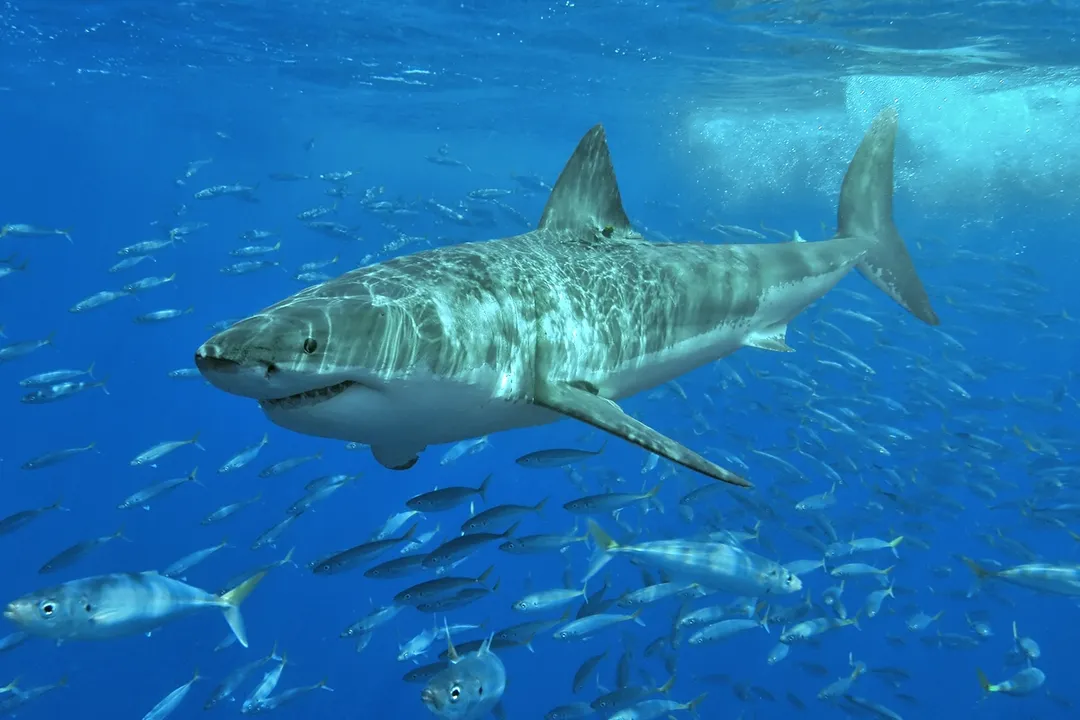
Despite their formidable hunting prowess, great whites are highly efficient feeders who do not ignore easy meals. Feeding on the energy-rich blubber of whale carcasses represents a low-expenditure, high-reward strategy, with multiple sharks often observed gorging on a single carcass. For an adult shark requiring substantial energy for long-distance travel, scavenging eliminates the risk of injury and the energy output required for active predation. It is difficult to quantify exactly how much of an adult's energy comes from this source, but its prevalence suggests it is a crucial component of their nutritional maintenance.
The physical evidence of their prey selection is written in their teeth. The triangular, serrated teeth are designed to cut and tear flesh, not chew. Furthermore, teeth morphology in males changes as they mature, with the third upper lateral tooth angling backward, possibly to better grip females during mating—an interesting, albeit separate, factor influenced by sexual maturity coinciding with dietary maturity.
The preference for fat-rich prey is clear; the liver itself is an energy store, containing lipids and fatty acids that are more energy-dense than whale blubber, which aids in buoyancy and travel. This points to a fundamental nutritional goal: maximizing energy intake relative to energy spent.
One fascinating aspect of their feeding behavior is the apparent use of their teeth as mechanoreceptors when consuming carrion. Sharks have been noted to shake large pieces of whale carcass only to spit some chunks out, possibly judging them as too low in energy content based on the feedback received through their teeth during the tearing action. This level of selective consumption, even when presented with an overwhelming food source, speaks to a sophisticated caloric assessment system. It is fascinating to consider that a creature capable of exerting a bite force estimated in the thousands of newtons might also pause to "taste-test" a piece of blubber before swallowing, indicating that not all massive attacks are purely driven by pure hunger, but by precise energy budgeting.
# Surface Behavior and Observation Bias
The image of a great white hunting, often portrayed with its dorsal fin slicing the water surface, may misrepresent the majority of its feeding activity. While breaching to capture seals is a spectacular reality, research shows that sharks spend a significant amount of time foraging closer to the seabed. This preference for benthic (bottom-dwelling) prey among juveniles, or simply an adaptation to hunt where prey is less wary of a surface threat, means that observers from above only witness a fraction of their feeding ecology.
The very structure of their hunting—ambushing from below toward the surface—is designed for stealth. If the shark regularly displayed its fin while stalking, its primary prey like seals and sea lions would adapt to avoid it. Therefore, when a fin is seen circling, it often suggests a different context, perhaps investigating something novel, or feeding on prey that has been driven to the surface, such as when fishing activity concentrates food sources. A shark showing investigative behavior near a boat or cage, even biting an object, is rarely a true predatory attempt but rather an exploratory investigation into a novel, non-preferred silhouette.
This observational bias highlights an essential consideration for interpreting data: when we see an aggregation of sharks in one location, it often signals a convergence on a predictable, high-fat food source, whether that source is a seal colony or a season-long upwelling of pelagic fish. The presence of this apex predator is a direct indicator of the health and availability of the prey populations beneath the waves, making their dietary patterns a mirror of ecosystem productivity.

# Opportunism and Scavenging
White sharks are not "ferocious man-eaters" by nature; human encounters are generally attributed to curiosity or mistaken identity, where the silhouette of a surfboard resembles a seal. Their true feeding strategy is pure opportunism tempered by physical limitation. If a large whale carcass is available, it becomes the meal of choice, requiring minimal energy expenditure compared to chasing down a fast-moving dolphin or a powerful adult elephant seal. The ability of an adult to overpower a massive elephant seal, which can be as large as the shark itself, requires calculated aggression and timing. Conversely, their documented consumption of invertebrates, stingers, and even consuming unfertilized eggs inside their mother while gestating, confirms that the overarching principle is maximizing available energy, regardless of prey type or size, provided the shark is capable of capture. This incredible flexibility—from the slow, energy-saving meal of a floating whale to the explosive, high-risk ambush on a seal—is what allows the great white to dominate across diverse, temperature-variable oceans.
Related Questions
#Citations
White shark | Size, Diet, Habitat, Teeth, Attacks, & Facts | Britannica
What Do Great White Sharks Eat? - Xplore Our Planet
White Shark | NOAA Fisheries
Distribution and Diet of Pacific Coast White Sharks
Great White Sharks: Facts, Diet, Behavior, and Conservation IFAW
The first ever detailed study of the diet of great white sharks ... - Reddit
Great white shark diet surprises scientists - The University of Sydney
Great white shark - Wikipedia